El Dorado, San Antonio
Updated · 2,492 residents
El Dorado is a vibrant residential community in northeast San Antonio known for its high walkability and quiet, peaceful streets. Residents enjoy access to local dining and green spaces, benefiting from a neighborhood environment that remains largely insulated from industrial noise and flood risks.
Key Highlights
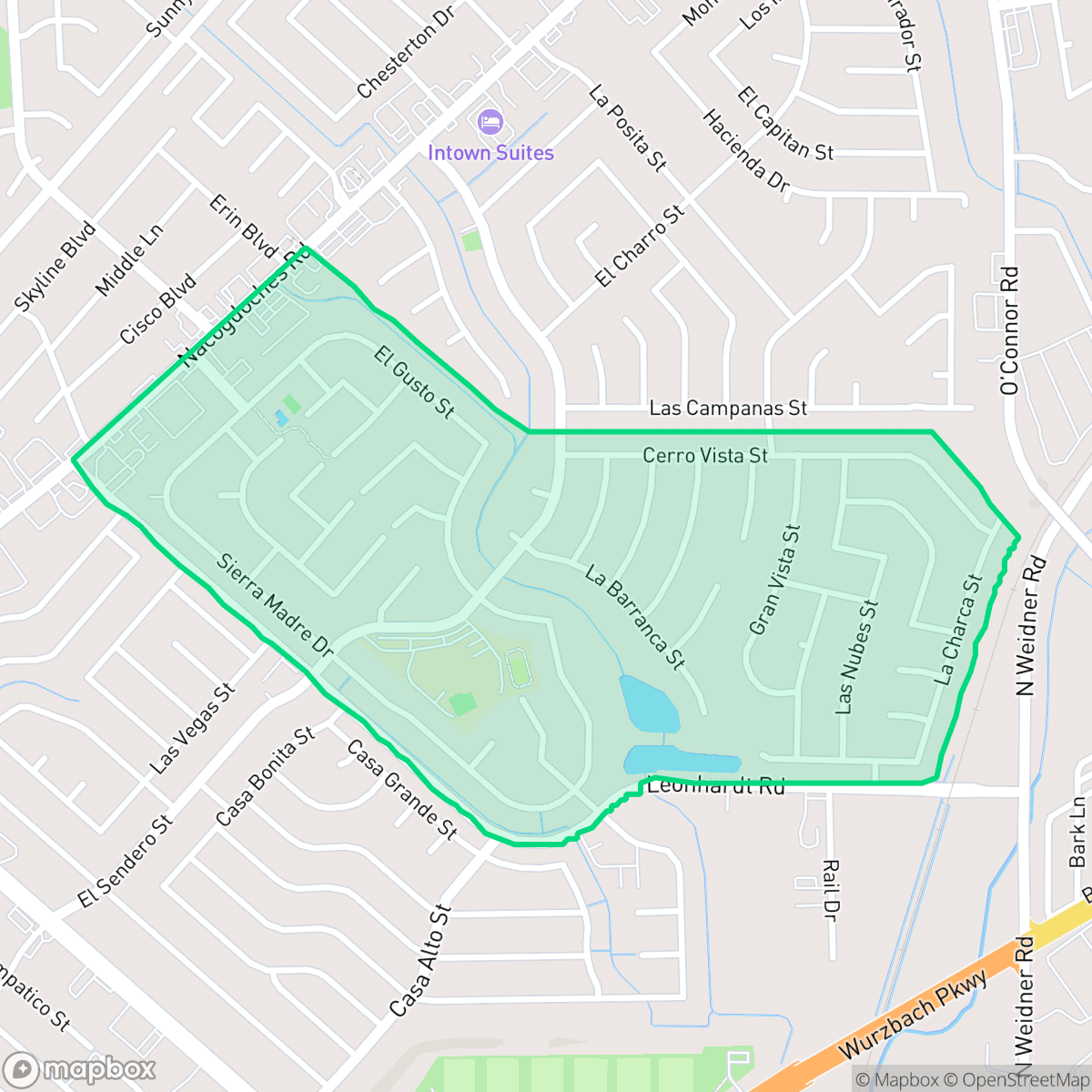
About El Dorado
Incorporated as a homes association in September 1969, the El Dorado neighborhood in northeast San Antonio was originally developed outside the city limits by Shepherd & Burris and Morton/Southwest. Before its suburban transformation, the area was rural farmland where cattle grazed in bluebonnet fields, deer roamed, and seven windmills operated around a central lake that served as a cow pond. Major thoroughfares like Nacogdoches and Perrin Beitel roads were then just two-lane country lanes. Developed primarily during the 1970s, the neighborhood evolved into an established suburban community of midsize single-family homes. Complete with its own local elementary school, park, and community pool, El Dorado successfully transitioned from its pastoral origins into a vibrant part of Uptown San Antonio.
The area stands out for its balance of suburban comfort and urban accessibility. According to iHuus data, the neighborhood maintains a high level of acoustic comfort and stands out for its walkability compared to the wider San Antonio region. Local establishments like Molino Rojo Cafe and The Dogfather II contribute to a distinct, lively atmosphere that distinguishes the community from surrounding residential pockets. The layout favors pedestrian movement, making it a practical choice for those who prefer to navigate their immediate surroundings on foot.
Prospective residents should consider that while the neighborhood offers a secure, flood-resistant environment, it is served by El Dorado Elementary, which carries a lower rating than the broader North East Independent School District. The area is well-suited for families and individuals seeking a stable, established community with a strong sense of place. While the neighborhood provides a high degree of privacy and residential isolation from industrial zones, residents should weigh the local school performance against the benefits of the neighborhood's overall livability and quiet character.
Neighborhood Scores Across 15 Qualities
Residential lots feature a moderate density with some buffer between neighbors, which is slightly higher than the San Antonio average. According to iHuus data, houses are typically spaced at intervals consistent with standard suburban layouts.
Established sidewalks and a low-traffic residential grid provide safer movement for pedestrians than the San Antonio average. While larger commercial parking lots can create occasional barriers, many areas within El Dorado allow for easy walking throughout the neighborhood.
Uniform tract housing and apartment complexes define the landscape, offering tidy yards and occasional private pools. This level of visual variety is roughly in line with the San Antonio average.
Abundant green corridors, wide street verges, and proximity to a large golf course provide ample space for pets. According to iHuus data, the availability of connected walking paths and athletic fields makes this area significantly more dog friendly than the San Antonio average.
Residential areas feature a mix of single-family homes and commercial strips, offering a slightly more developed landscape than the more rural outskirts of San Antonio. According to iHuus data, the area provides a balance of suburban density and nearby open space.
A noticeable concentration of social hubs and local dining options provides a more active atmosphere than the San Antonio average. While many areas are car-dependent, the presence of diverse eateries and community spaces contributes to a vibrant local energy according to iHuus data.
Local traffic from nearby busy streets creates a steady hum; however, acoustic comfort remains higher than the San Antonio average according to iHuus data.
Air quality in this area fluctuates between acceptable and unhealthy levels, though it remains notably better than the San Antonio average according to iHuus data. Sensitive groups may experience occasional concern during certain periods.
Residential life remains largely undisturbed by heavy industry, though some warehouse-style buildings and storage units are present along the central commercial corridor. This level of industrial proximity is slightly lower than the San Antonio average, as the area maintains a predominantly residential and light commercial character.
Health insurance access is roughly in line with the San Antonio average. According to iHuus data, a significant portion of the population remains uninsured.
Political leanings in this area are more balanced than the San Antonio average, featuring a liberal majority alongside a notable presence of opposing viewpoints.
Residents live alongside a balanced mix of young adults, families, and seniors. This demographic spread is slightly more varied than the typical age profile found across San Antonio.
Flood risk is notably higher than the San Antonio average due to some residual risk within the 500-year floodplain, according to iHuus data.
Address-Level Insights for El Dorado


iHuus Neighborhood Intelligence Insights
Get address-level neighborhood insights for El Dorado
- Street-level scores — see how individual blocks compare, not just neighborhood averages
- Micro-zone boundaries — identify quiet pockets, flood boundaries, and walkable clusters before you visit
- 15 dimensions in full — walkability, noise, air quality, school quality, insurance coverage, population age profile, urban/rural index, and more
- Boundary risk alerts — know if your address sits near a block boundary where scores drop, the kind of detail no listing will ever mention
- School insights — individual school ratings and insights, not just district-level data
- Compare before you commit — side-by-side data across neighborhoods, down to block precision
No credit card required
Compare with Any Neighborhood
| Dimension | El Dorado | 145 Association |
|---|---|---|
| 🚶 Walkabilityavg 6.44 | ||
| 🔊 Acoustic Comfortavg 4.07 | ||
| 🤫 Privacy Indexavg 5.75 | ||
| 🎨 Visual Appealavg 6.11 | ||
| 🐕 Dog Friendlinessavg 5.91 | ||
| 🗺️ Urban-Rural Indexavg 6.87 | ||
| ✨ Neighborhood Vibeavg 4.35 | ||
| 🏥 Health Insurance Coverageavg 5.94 | ||
| 🌿 Air Qualityavg 2.27 | ||
| 🏭 Industrial Proximityavg 8.31 | ||
| 🌊 Flood Safetyavg 4.2 | ||
| 🗳️ Ideological Leanavg 7.37 | ||
| 👥 Population Age Profileavg 4.68 | ||
| 🔥 Fire Safety | ||
| 🏫 School Quality |
El Dorado Rankings
School Districts Serving El Dorado
School Insights for El Dorado
Below average outcomes; significant attendance and academic challenges.
School Insights
See what's really behind every school rating near El Dorado
- Individual school ratings — each school's own score with outcome context, not just a district average
- Enrollment & class size data — student-to-teacher ratio and how it compares to the state average
- Full demographics breakdown — ethnicity and gender composition for every school in the enrollment zone
- Every school in the district — all schools within the enrollment boundary ranked by rating, not just the closest one
- Grade levels & benchmarks — elementary through high school, with below/above state-average flags
No credit card required