Edison, San Antonio
Updated · 3,281 residents
Edison is a vibrant, mid-century suburban community in north-central San Antonio defined by its strong Mexican-American cultural roots and proximity to local landmarks like Kenwood Park. While the area offers a lively atmosphere, residents should be aware of elevated noise levels from nearby road traffic and significant industrial proximity.
Key Highlights
About Edison
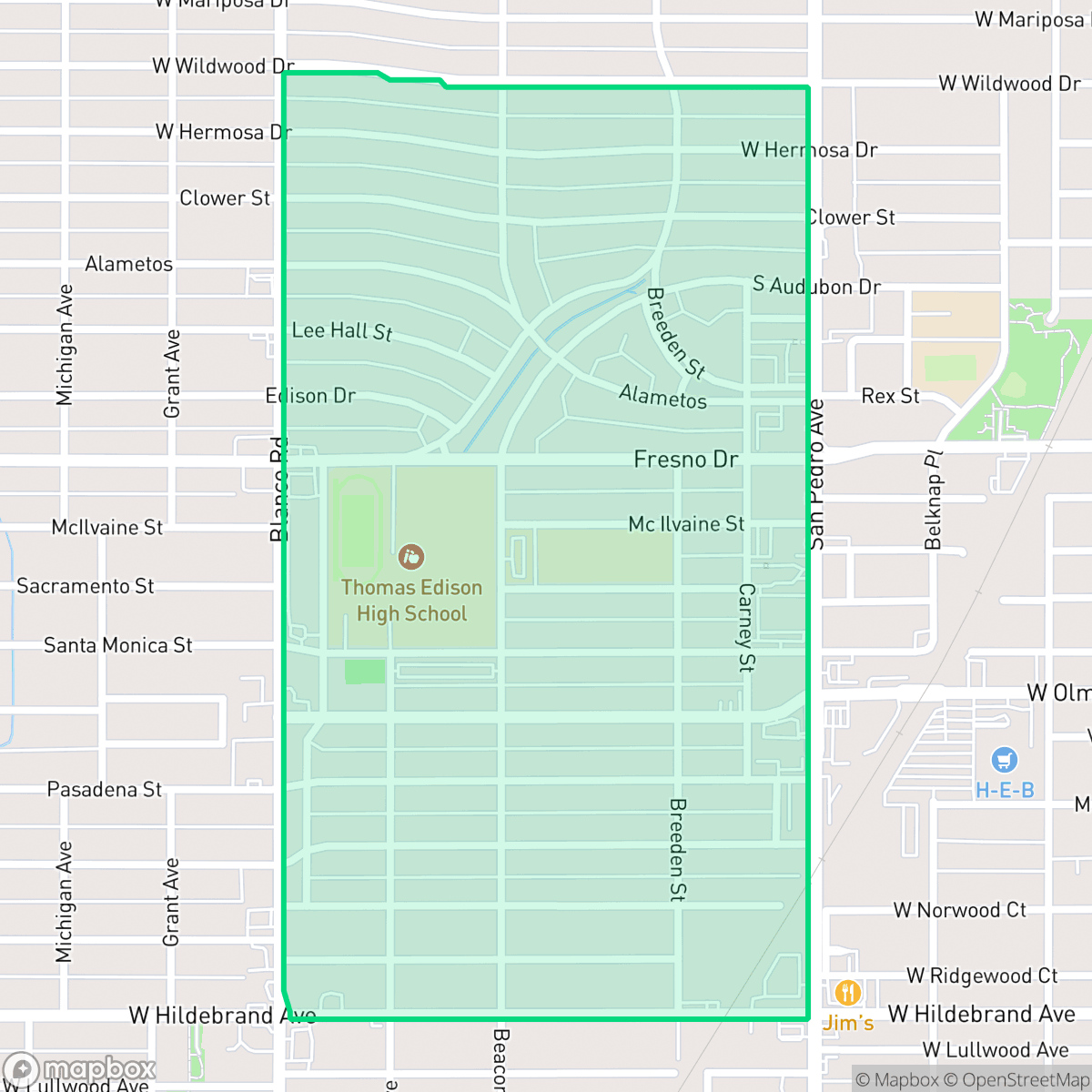
Located in north-central San Antonio, the Edison neighborhood developed primarily around Thomas A. Edison High School, which originally opened in 1929 as Los Angeles Heights High School on Edison Drive. The neighborhood is highly defined by its post-World War II housing boom; more than 85% of its residential stock consists of well-established mid-century homes built between 1940 and 1969. Culturally, Edison is a vibrant, predominantly Mexican-American community, with a significant majority of residents sharing Mexican ancestry and speaking Spanish at home. Supported by the active Edison Neighborhood Association, the area maintains a distinct mid-century suburban character, bordered by historic districts like Olmos Park Terrace and Los Angeles Heights.
The area is characterized by its residential focus, with open green spaces and quiet streets that contrast with its higher-than-average liveliness score. Residents benefit from access to community hubs like St. John Evangelist Catholic Church and local recreational areas. The neighborhood maintains a distinct suburban feel, with a housing stock that remains largely consistent with its mid-century origins. Prospective residents should consider the trade-offs of living in this part of the city, including higher noise levels primarily driven by road traffic and lower air quality metrics. While the area provides a strong sense of community, those seeking a quiet retreat or high walkability may find the environment challenging. It is best suited for those who prioritize cultural connection and a well-established residential setting over proximity to modern, high-density amenities.
Neighborhood Scores Across 15 Qualities
Residential spacing in Edison provides a moderate level of separation between homes. According to iHuus data, the density of structures is slightly higher than the San Antonio average, featuring closely packed houses with modest yard buffers.
Low traffic volumes on residential streets make for safe strolls, though sidewalk continuity is less consistent than the San Antonio average. Trees often obscure paths, and certain edges near the industrial district lack pedestrian infrastructure.
Standard tract housing with uniform rooflines and compact lots defines the local landscape. According to iHuus data, the area lacks luxury amenities and features less greenery than the San Antonio average.
Private fenced yards are common, but there is a lack of accessible public parks and wide green verges compared to the San Antonio average. According to iHuus data, the area features narrow sidewalks and few visible communal spaces for off-leash activity.
Low-density residential grids and small commercial structures define this area. This layout is slightly more urban than the San Antonio average, featuring more concentrated housing patterns than the surrounding semi-rural landscape.
Diverse dining options and social hubs are interspersed with quiet, green residential blocks. This area offers a more active atmosphere than the San Antonio average, though many amenities remain separated by suburban streets and railway features.
Steady sounds from nearby thoroughfares are common here; however, acoustic comfort remains slightly higher than the San Antonio average according to iHuus data.
Frequent unhealthy air quality levels pose a significant risk to sensitive groups. According to iHuus data, the atmosphere in this area is slightly worse than the San Antonio average.
Residential tranquility dominates the area with only light commercial and small warehouse structures located near the eastern edge. This lack of heavy industry is slightly more pronounced than the San Antonio average, according to iHuus data.
Health insurance accessibility is lower in this area than the San Antonio average, according to iHuus data. Residents may face more challenges accessing comprehensive medical coverage compared to the rest of the city.
Voting patterns and census indicators reflect a notably more liberal political leaning than the San Antonio average, according to iHuus data.
A balanced mix of young adults, families, and older residents characterizes the area. According to iHuus data, this demographic spread is slightly more varied than the typical San Antonio profile.
Flood risk in this area is slightly higher than the San Antonio average; however, according to iHuus data, the precise level of danger remains undetermined due to incomplete local flood studies.
Address-Level Insights for Edison


iHuus Neighborhood Intelligence Insights
Get address-level neighborhood insights for Edison
- Street-level scores — see how individual blocks compare, not just neighborhood averages
- Micro-zone boundaries — identify quiet pockets, flood boundaries, and walkable clusters before you visit
- 15 dimensions in full — walkability, noise, air quality, school quality, insurance coverage, population age profile, urban/rural index, and more
- Boundary risk alerts — know if your address sits near a block boundary where scores drop, the kind of detail no listing will ever mention
- School insights — individual school ratings and insights, not just district-level data
- Compare before you commit — side-by-side data across neighborhoods, down to block precision
No credit card required
Compare with Any Neighborhood
| Dimension | Edison | 145 Association |
|---|---|---|
| 🚶 Walkabilityavg 6.44 | ||
| 🔊 Acoustic Comfortavg 4.07 | ||
| 🤫 Privacy Indexavg 5.75 | ||
| 🎨 Visual Appealavg 6.11 | ||
| 🐕 Dog Friendlinessavg 5.91 | ||
| 🗺️ Urban-Rural Indexavg 6.87 | ||
| ✨ Neighborhood Vibeavg 4.35 | ||
| 🏥 Health Insurance Coverageavg 5.94 | ||
| 🌿 Air Qualityavg 2.27 | ||
| 🏭 Industrial Proximityavg 8.31 | ||
| 🌊 Flood Safetyavg 4.2 | ||
| 🗳️ Ideological Leanavg 7.37 | ||
| 👥 Population Age Profileavg 4.68 | ||
| 🔥 Fire Safety | ||
| 🏫 School Quality |
Edison Rankings
School Districts Serving Edison
School Insights for Edison
Below average outcomes; significant attendance and academic challenges.
School Insights
See what's really behind every school rating near Edison
- Individual school ratings — each school's own score with outcome context, not just a district average
- Enrollment & class size data — student-to-teacher ratio and how it compares to the state average
- Full demographics breakdown — ethnicity and gender composition for every school in the enrollment zone
- Every school in the district — all schools within the enrollment boundary ranked by rating, not just the closest one
- Grade levels & benchmarks — elementary through high school, with below/above state-average flags
No credit card required