Dignowity Hill-St. Paul Square, San Antonio
Updated · 3 residents
Dignowity Hill-St. Paul Square offers a highly walkable, urban environment defined by its proximity to downtown San Antonio and a dense, high-energy atmosphere. Residents benefit from immediate access to diverse dining and cultural landmarks, though they must contend with significant noise levels from heavy road traffic and limited air quality.
Key Highlights
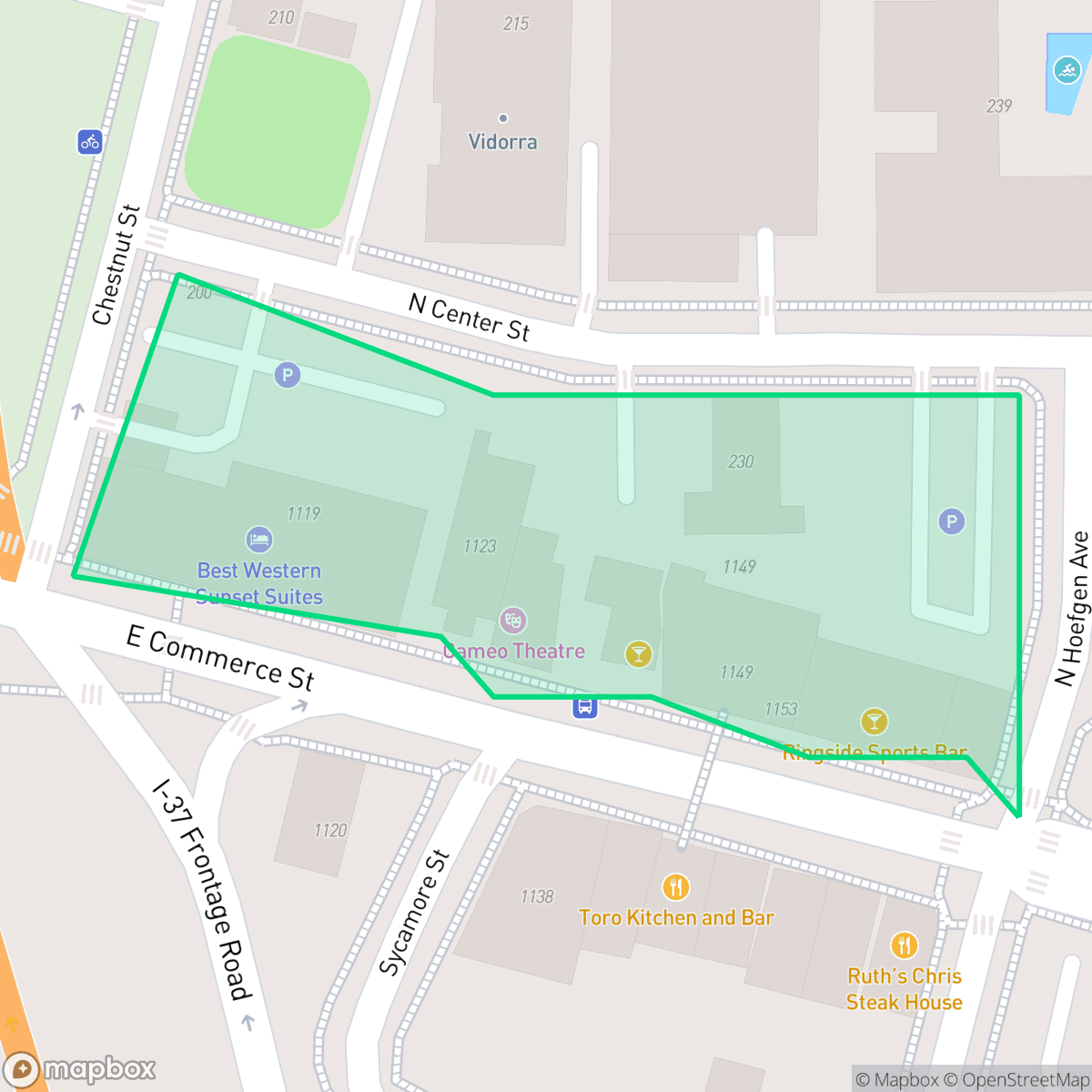
About Dignowity Hill-St. Paul Square
Established in the 1850s by Czech physician Dr. Anthony Michael Dignowity, Dignowity Hill was San Antonio’s first exclusive residential suburb, characterized by its elevated views and a mixture of Folk Victorian and Craftsman homes. Adjacent to it, St. Paul Square grew rapidly around the Southern Pacific Railroad’s arrival in 1877 and the 1902 Mission Revival-style Sunset Station. Named after the historic Gothic Revival-style Old St. Paul Methodist Episcopal Church, the square evolved into a premier commercial and entertainment hub for San Antonio’s Black community during the early-to-mid 20th century, hosting legendary performers like Louis Armstrong and B.B. King. Although the construction of Interstate 37 in the 1960s physically severed the area from downtown, the neighborhood survives as a vital historic district undergoing modern revitalization.
The area currently functions as a high-density urban hub characterized by a mix of historic residential architecture and modern commercial development. According to iHuus data, the neighborhood provides exceptional walkability, allowing residents to easily access diverse dining options and local services. The landscape is notably energetic, featuring a blend of light industrial activity and high-rise structures that contribute to a distinct, fast-paced urban identity near major transit corridors.
Prospective residents should consider several livability trade-offs, including elevated noise levels from nearby highway traffic and poor air quality. The area faces challenges regarding infrastructure, specifically concerning flood safety and a lack of local health insurance coverage. Furthermore, the local school district is currently undergoing significant restructuring, which may impact families. This neighborhood is best suited for individuals who prioritize central urban access and walkability over the quiet, suburban conditions found in other parts of the city.
Neighborhood Scores Across 15 Qualities
Residential spacing is mixed with some buffer between neighbors, offering a level of privacy that is slightly higher than the San Antonio average.
Pedestrian movement is easy due to the presence of sidewalks and safe crossings. This level of walkability is significantly higher than the San Antonio average according to iHuus data.
Standard tract housing defines the area with boxy rooflines and small, tidy yards. This level of visual interest is roughly in line with the San Antonio average.
Opportunities for pet exercise are sparse due to a lack of large green verges or nearby public parks. According to iHuus data, the availability of dog-friendly outdoor space is below the San Antonio average.
Extensive pavement and dense building structures define this area, which features significantly less greenery and open space than the San Antonio average according to iHuus data.
Dense high-rises and diverse dining options create a high-energy atmosphere that is significantly more active than the San Antonio average. According to iHuus data, the area features a concentrated mix of light industrial units and varied culinary destinations near major transit corridors.
Frequent disturbances from nearby railroad tracks and heavy freeway traffic characterize this area. According to iHuus data, acoustic comfort is noticeably lower than the San Antonio average.
Frequent unhealthy air quality levels pose significant risks to sensitive groups. According to iHuus data, the air quality in this area is slightly worse than the San Antonio average.
Light commercial activity and occasional loading operations create a more industrial character than the San Antonio average. Some residents may experience a low level of operational hum from local services like printing facilities.
Voting patterns and census indicators reflect a much more liberal leaning than the San Antonio average, according to iHuus data.
Residents live alongside a balanced mix of young adults, families, and older individuals. This demographic spread is consistent with the broader San Antonio area.
Address-Level Insights for Dignowity Hill-St. Paul Square


iHuus Neighborhood Intelligence Insights
Get address-level neighborhood insights for Dignowity Hill-St. Paul Square
- Street-level scores — see how individual blocks compare, not just neighborhood averages
- Micro-zone boundaries — identify quiet pockets, flood boundaries, and walkable clusters before you visit
- 15 dimensions in full — walkability, noise, air quality, school quality, insurance coverage, population age profile, urban/rural index, and more
- Boundary risk alerts — know if your address sits near a block boundary where scores drop, the kind of detail no listing will ever mention
- School insights — individual school ratings and insights, not just district-level data
- Compare before you commit — side-by-side data across neighborhoods, down to block precision
No credit card required
Compare with Any Neighborhood
| Dimension | Dignowity Hill-St. Paul Square | 145 Association |
|---|---|---|
| 🚶 Walkabilityavg 6.44 | ||
| 🔊 Acoustic Comfortavg 4.07 | ||
| 🤫 Privacy Indexavg 5.75 | ||
| 🎨 Visual Appealavg 6.11 | ||
| 🐕 Dog Friendlinessavg 5.91 | ||
| 🗺️ Urban-Rural Indexavg 6.87 | ||
| ✨ Neighborhood Vibeavg 4.35 | ||
| 🏥 Health Insurance Coverageavg 5.94 | ||
| 🌿 Air Qualityavg 2.27 | ||
| 🏭 Industrial Proximityavg 8.31 | ||
| 🌊 Flood Safetyavg 4.2 | ||
| 🗳️ Ideological Leanavg 7.37 | ||
| 👥 Population Age Profileavg 4.68 | ||
| 🔥 Fire Safety | ||
| 🏫 School Quality |
Dignowity Hill-St. Paul Square Rankings
School Districts Serving Dignowity Hill-St. Paul Square
School Insights for Dignowity Hill-St. Paul Square
Below average outcomes; significant attendance and academic challenges.
School Insights
See what's really behind every school rating near Dignowity Hill-St. Paul Square
- Individual school ratings — each school's own score with outcome context, not just a district average
- Enrollment & class size data — student-to-teacher ratio and how it compares to the state average
- Full demographics breakdown — ethnicity and gender composition for every school in the enrollment zone
- Every school in the district — all schools within the enrollment boundary ranked by rating, not just the closest one
- Grade levels & benchmarks — elementary through high school, with below/above state-average flags
No credit card required