Dellcrest Forrest, San Antonio
Updated · 242 residents
Dellcrest Forrest is an East Side San Antonio enclave defined by its mid-century roots and a distinct country in the city atmosphere. While it offers a strong sense of community and proximity to local culinary landmarks, the area is notably car-dependent and experiences higher noise levels from road traffic.
Key Highlights
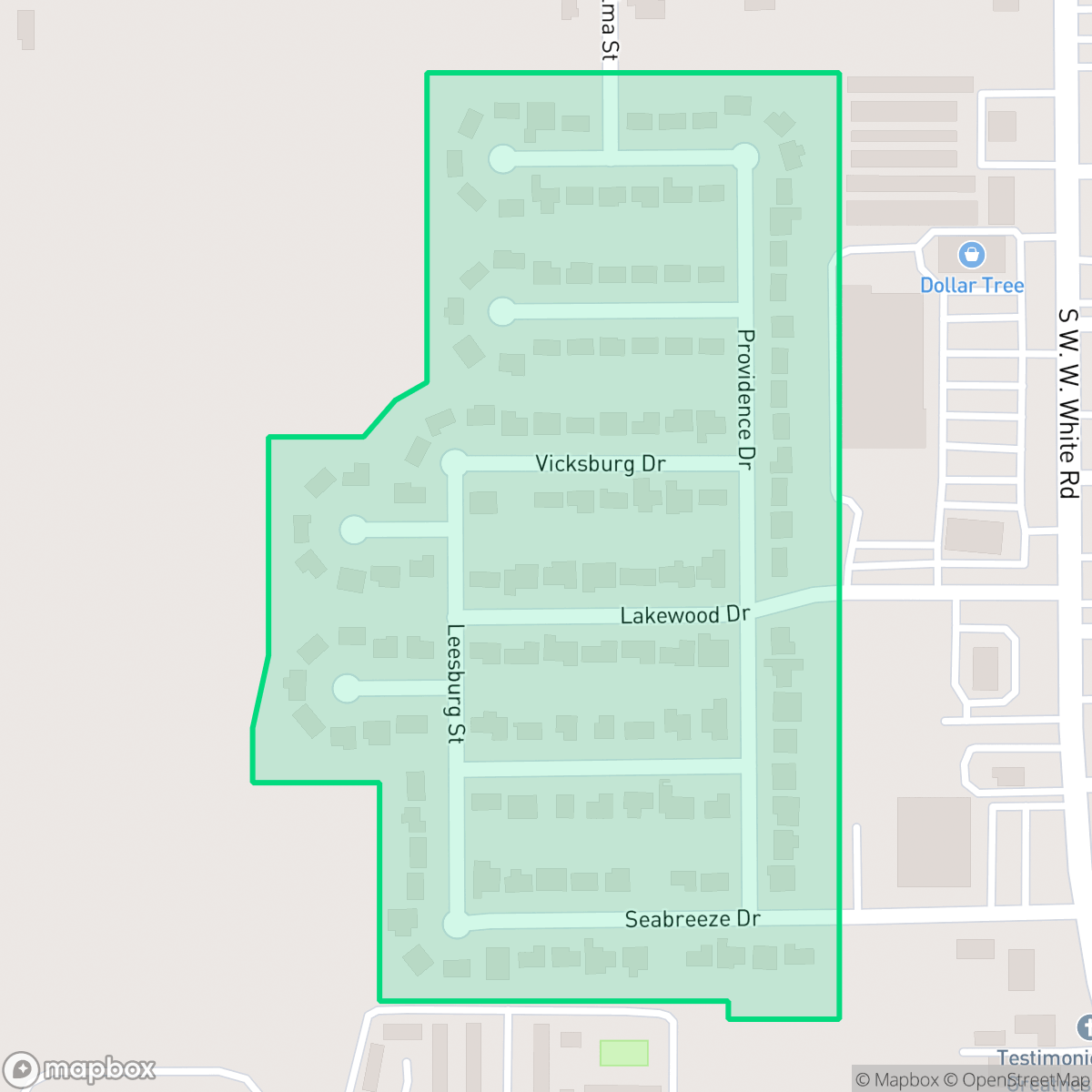
About Dellcrest Forrest
Located on San Antonio’s East Side, Dellcrest Forrest is a residential neighborhood established in the 1950s and 1960s on former farmland. This agricultural origin left a unique layout of sprawling lots blended with a city-block design, creating a distinct "country in the city" atmosphere. The neighborhood is characterized by a strong sense of community, with many original and generational homeowners. S. WW White Road serves as the neighborhood's primary commercial corridor and signature street, hosting local culinary staples like Chatman’s Chicken and 2M BBQ, as well as the annual local Juneteenth Parade. Residents enjoy proximity to Dellcrest Park and Copernicus Park. In 2011, the Dellcrest Forrest community officially merged into the Dellcrest Area Neighborhood Association (DANA) to preserve its local character and advocate for the community.
The neighborhood functions as a blend of residential life and active commercial corridors, with S. WW White Road serving as the primary hub for local dining and community events. The landscape is characterized by a mix of established homes, light industrial units, and accessible green spaces, creating a unique, albeit busy, urban environment. Residents benefit from a tight-knit social fabric, with active local associations working to preserve the area's character amidst ongoing city development.
Prospective residents should consider the trade-offs associated with the area, including higher noise levels from road traffic and air quality challenges. The neighborhood is served by the San Antonio Independent School District, which is currently undergoing significant structural changes. Additionally, the area faces specific environmental concerns regarding flood safety, making it most suitable for those who prioritize community engagement and local culture over quiet surroundings or proximity to top-tier school facilities.
Neighborhood Scores Across 15 Qualities
Residential spacing offers a balanced level of separation between neighbors, which is slightly higher than the San Antonio average according to iHuus data.
A lack of sidewalks makes pedestrian travel difficult, though the quiet streets provide a safer environment for walking than the San Antonio average. According to iHuus data, the area is less pedestrian friendly than many other parts of the city.
Typical tract housing characterizes the area with uniform rooflines and modest yards. This landscape is less visually varied than the San Antonio average, according to iHuus data.
Access to dedicated dog parks and wide grassy verges is relatively sparse in this area. According to iHuus data, pet-friendly infrastructure is below the San Antonio average.
Frequent open land and scattered homes amid woodland provide a more spacious feel than the San Antonio average. According to iHuus data, the area retains a significant amount of undeveloped landscape.
Local dining and social hubs provide more activity than the San Antonio average. While a variety of restaurants and amenities exist, the car-dependent layout limits spontaneous pedestrian activity.
Frequent noise from nearby heavy traffic and transit routes makes this area significantly louder than the San Antonio average, according to iHuus data.
Frequent unhealthy air quality levels pose a significant risk to sensitive groups. According to iHuus data, the air quality in this area is slightly worse than the San Antonio average.
Light industrial and commercial units are integrated with residential areas, resulting in lower industrial density than the San Antonio average. Daytime traffic from nearby commercial activity is present alongside housing, according to iHuus data.
Health insurance accessibility is notably lower here than the San Antonio average, according to iHuus data. Residents may face limited access to employer-sponsored or private medical coverage within the community.
Voting patterns and census indicators reflect a significantly more liberal leaning than the San Antonio average, according to iHuus data.
Residents live alongside a diverse range of age groups, including young professionals, families, and seniors. This demographic spread is very similar to the broader San Antonio area according to iHuus data.
Flood risk is significantly higher than the San Antonio average because the area sits within a designated 100-year floodplain. According to iHuus data, residents should expect that flood insurance will likely be a requirement for properties in this neighborhood.
Address-Level Insights for Dellcrest Forrest


iHuus Neighborhood Intelligence Insights
Get address-level neighborhood insights for Dellcrest Forrest
- Street-level scores — see how individual blocks compare, not just neighborhood averages
- Micro-zone boundaries — identify quiet pockets, flood boundaries, and walkable clusters before you visit
- 15 dimensions in full — walkability, noise, air quality, school quality, insurance coverage, population age profile, urban/rural index, and more
- Boundary risk alerts — know if your address sits near a block boundary where scores drop, the kind of detail no listing will ever mention
- School insights — individual school ratings and insights, not just district-level data
- Compare before you commit — side-by-side data across neighborhoods, down to block precision
No credit card required
Compare with Any Neighborhood
| Dimension | Dellcrest Forrest | 145 Association |
|---|---|---|
| 🚶 Walkabilityavg 6.44 | ||
| 🔊 Acoustic Comfortavg 4.07 | ||
| 🤫 Privacy Indexavg 5.75 | ||
| 🎨 Visual Appealavg 6.11 | ||
| 🐕 Dog Friendlinessavg 5.91 | ||
| 🗺️ Urban-Rural Indexavg 6.87 | ||
| ✨ Neighborhood Vibeavg 4.35 | ||
| 🏥 Health Insurance Coverageavg 5.94 | ||
| 🌿 Air Qualityavg 2.27 | ||
| 🏭 Industrial Proximityavg 8.31 | ||
| 🌊 Flood Safetyavg 4.2 | ||
| 🗳️ Ideological Leanavg 7.37 | ||
| 👥 Population Age Profileavg 4.68 | ||
| 🔥 Fire Safety | ||
| 🏫 School Quality |
Dellcrest Forrest Rankings
School Districts Serving Dellcrest Forrest
School Insights for Dellcrest Forrest
Below average outcomes; significant attendance and academic challenges.
School Insights
See what's really behind every school rating near Dellcrest Forrest
- Individual school ratings — each school's own score with outcome context, not just a district average
- Enrollment & class size data — student-to-teacher ratio and how it compares to the state average
- Full demographics breakdown — ethnicity and gender composition for every school in the enrollment zone
- Every school in the district — all schools within the enrollment boundary ranked by rating, not just the closest one
- Grade levels & benchmarks — elementary through high school, with below/above state-average flags
No credit card required