Collins Garden, San Antonio
Updated · 3,998 residents
Collins Garden is a quiet, dense residential neighborhood southwest of downtown San Antonio characterized by its grid of early 20th-century bungalows and modest tract housing. While the area offers a predictable suburban environment, residents experience moderate noise levels from nearby rail lines and limited access to public green space.
Key Highlights
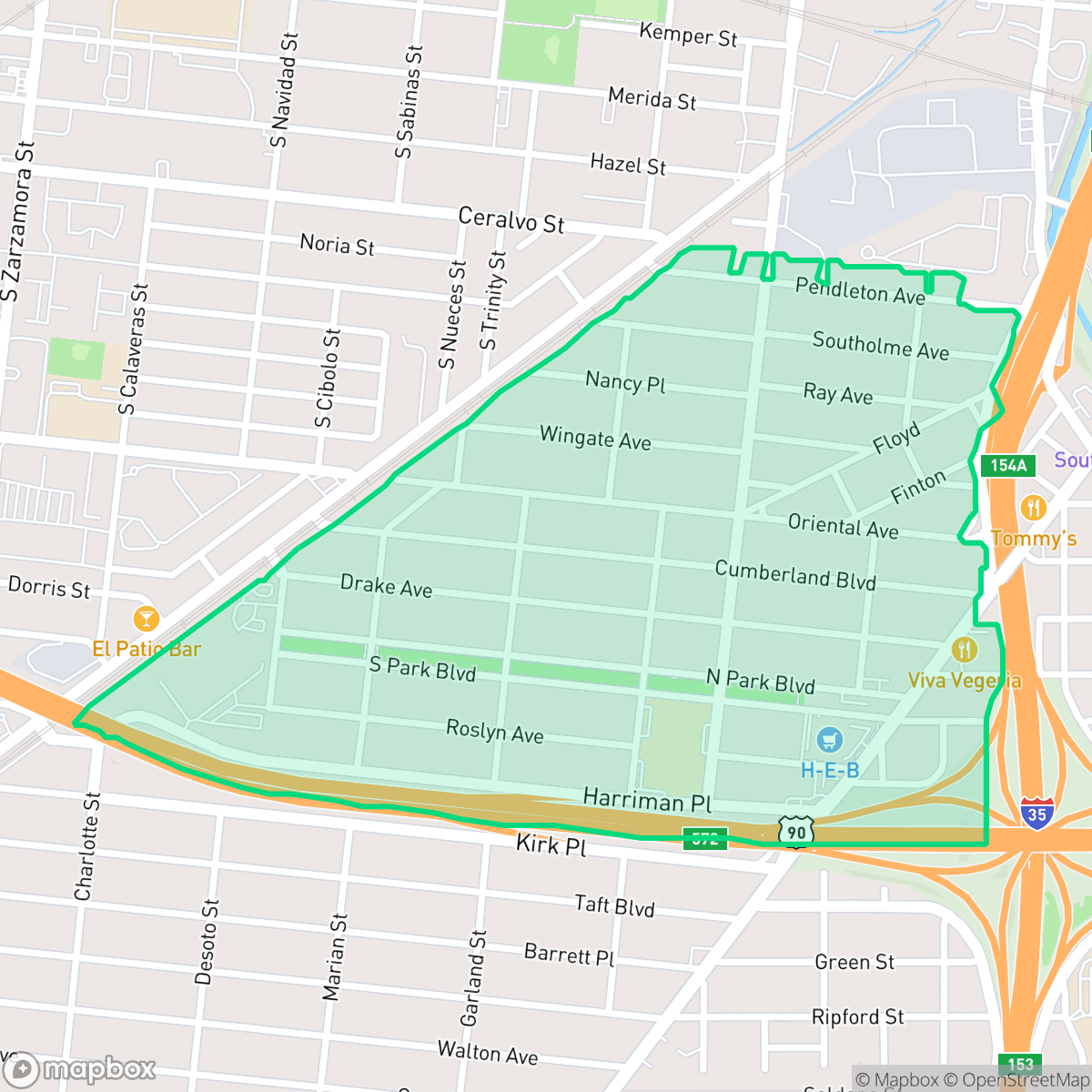
About Collins Garden
Collins Garden, located southwest of downtown San Antonio, originated from a 140-acre farm purchased in 1902 by windmill manufacturer Finis Foster Collins and his wife, Hilda. The couple established irrigated truck farms that became a popular local attraction. In 1917, Collins donated a narrow, mile-long tract of land to the city to establish Collins Garden Park. The city's agreement to install sewer lines in exchange for this land spurred rapid residential development, resulting in a housing stock characterized by Folk Victorians and early 20th-century bungalows. Historically a working-class community with deep Mexican-American roots, the neighborhood is anchored by landmarks like the Collins Garden Branch Library and the historic Nogalitos H-E-B, which opened in 1945 as a pioneering "store of tomorrow".
The area maintains a consistent, low-rise suburban aesthetic defined by its dense street grid and modest single-family homes. According to iHuus data, the neighborhood provides a stable residential environment that benefits from a high level of flood safety compared to the city average. Residents are well-positioned near local amenities like the historic library and established retail, though the overall atmosphere remains quiet and focused on local community life rather than high-traffic commercial activity.
Prospective residents should note that the neighborhood functions as a traditional, working-class enclave with limited private outdoor space and restricted access to dog-friendly facilities. While the local elementary school serves the immediate population, the broader San Antonio Independent School District faces ongoing challenges with academic performance and facility consolidation. The area is best suited for those prioritizing proximity to downtown and established community roots over expansive privacy or high-end modern amenities.
Neighborhood Scores Across 15 Qualities
Residential structures in this area are notably closer together than the San Antonio average, which may result in less separation between neighbors. Some portions of the neighborhood feature high-density layouts with minimal buffers between homes and adjacent roads.
Low traffic on residential streets makes walking pleasant, but a fragmented sidewalk network and nearby highway interchanges make the area less walkable than the San Antonio average. According to iHuus data, certain sections are severed from the surrounding area by industrial zones and major infrastructure.
Standard tract housing and older apartment complexes characterize this area, providing a modest landscape with limited private amenities. According to iHuus data, the visual variety in this neighborhood is below the San Antonio average.
Private fenced yards are the primary area for pets, as narrow street verges and a major highway restrict easy walking routes. Public park access and green spaces are significantly less available here than the San Antonio average, according to iHuus data.
Residential grids and single-family homes are interspersed with apartment complexes and industrial warehouses. This area feels slightly more developed than the typical semi-rural landscape found across San Antonio.
Suburban streets offer a steady but low-density pace of life, characterized by a mix of residential spaces and essential local dining. This level of activity is slightly below the San Antonio average, providing a calmer environment than more dense urban sectors.
Frequent noise from nearby highways and railway lines is a prominent feature of this area. According to iHuus data, acoustic comfort is notably lower than the San Antonio average.
Frequent unhealthy air quality levels pose a significant risk to sensitive groups, according to iHuus data. This environmental condition is slightly worse than the San Antonio average.
Primarily residential streets define the area, though proximity to a major highway and peripheral warehouses introduces some noise and traffic. According to iHuus data, the presence of industrial activity is slightly higher than the San Antonio average.
Health insurance accessibility is notably lower than the San Antonio average. According to iHuus data, a smaller proportion of residents in this area possess health coverage compared to the rest of the city.
Voting patterns and census indicators show a notably more liberal leaning than the San Antonio average, according to iHuus data.
A balanced mix of young adults, families, and older residents defines the local demographic. This age distribution is largely consistent with the average seen across San Antonio, according to iHuus data.
Property within the 100-year floodplain faces significant flood vulnerability. According to iHuus data, the risk level in Collins Garden is considerably higher than the San Antonio average, which may necessitate specialized flood insurance.
Address-Level Insights for Collins Garden


iHuus Neighborhood Intelligence Insights
Get address-level neighborhood insights for Collins Garden
- Street-level scores — see how individual blocks compare, not just neighborhood averages
- Micro-zone boundaries — identify quiet pockets, flood boundaries, and walkable clusters before you visit
- 15 dimensions in full — walkability, noise, air quality, school quality, insurance coverage, population age profile, urban/rural index, and more
- Boundary risk alerts — know if your address sits near a block boundary where scores drop, the kind of detail no listing will ever mention
- School insights — individual school ratings and insights, not just district-level data
- Compare before you commit — side-by-side data across neighborhoods, down to block precision
No credit card required
Compare with Any Neighborhood
| Dimension | Collins Garden | 145 Association |
|---|---|---|
| 🚶 Walkabilityavg 6.44 | ||
| 🔊 Acoustic Comfortavg 4.07 | ||
| 🤫 Privacy Indexavg 5.75 | ||
| 🎨 Visual Appealavg 6.11 | ||
| 🐕 Dog Friendlinessavg 5.91 | ||
| 🗺️ Urban-Rural Indexavg 6.87 | ||
| ✨ Neighborhood Vibeavg 4.35 | ||
| 🏥 Health Insurance Coverageavg 5.94 | ||
| 🌿 Air Qualityavg 2.27 | ||
| 🏭 Industrial Proximityavg 8.31 | ||
| 🌊 Flood Safetyavg 4.2 | ||
| 🗳️ Ideological Leanavg 7.37 | ||
| 👥 Population Age Profileavg 4.68 | ||
| 🔥 Fire Safety | ||
| 🏫 School Quality |
Collins Garden Rankings
School Districts Serving Collins Garden
School Insights for Collins Garden
Below average outcomes; significant attendance and academic challenges.
School Insights
See what's really behind every school rating near Collins Garden
- Individual school ratings — each school's own score with outcome context, not just a district average
- Enrollment & class size data — student-to-teacher ratio and how it compares to the state average
- Full demographics breakdown — ethnicity and gender composition for every school in the enrollment zone
- Every school in the district — all schools within the enrollment boundary ranked by rating, not just the closest one
- Grade levels & benchmarks — elementary through high school, with below/above state-average flags
No credit card required