Bridgewood, San Antonio
Updated · 453 residents
Bridgewood is a highly walkable suburban community in San Antonio characterized by its consistent pedestrian infrastructure and accessible local eateries. While the area offers a diverse demographic and strong health insurance coverage, residents should be aware of frequent traffic noise and periods of poor air quality.
Key Highlights
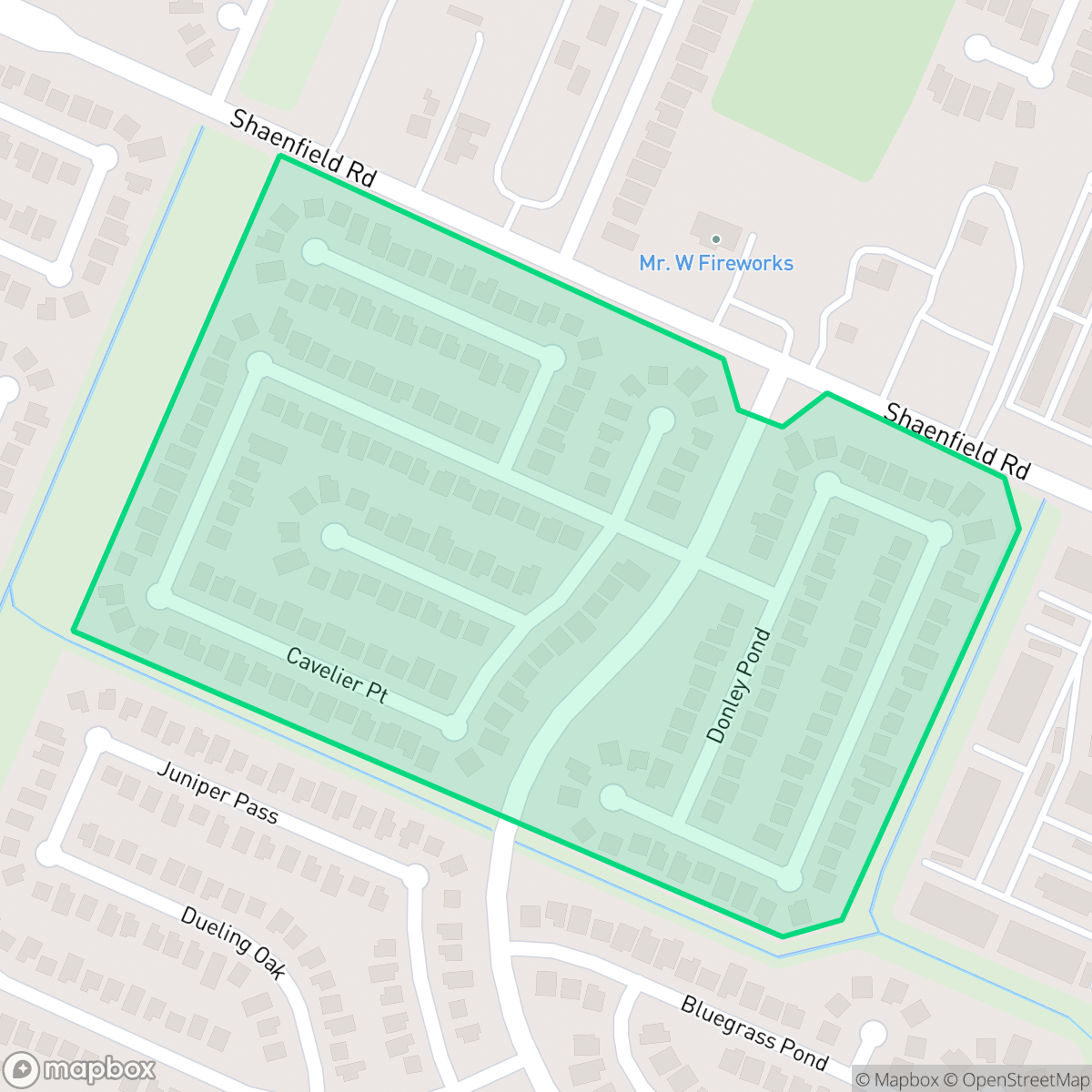
About Bridgewood
Bridgewood is a residential enclave defined by its standard tract housing and a steady, functional suburban rhythm. The area stands out for its superior pedestrian infrastructure, which includes consistent sidewalks and safe crossings that make it significantly more walkable than many other parts of the city. Residents have access to local dining options like Yoshiya Umami Beef Bowl, and the neighborhood maintains a purely residential character, free from heavy industrial facilities. The community layout provides a moderate level of privacy, with consistent spacing between homes that avoids the density of some urban centers while maintaining an open feel.
Living in the area involves specific trade-offs. While it offers a welcoming environment for pet owners due to its grassy utility easements and detention basins, the proximity to major highways results in noticeable traffic noise. According to iHuus data, air quality can be a concern for sensitive groups, and the lack of finalized FEMA flood studies adds a layer of uncertainty regarding local risk. Families in the neighborhood are served by the Northside Independent School District, which is recognized for its strong collegiate preparation programs despite recent budget and campus capacity challenges.
Neighborhood Scores Across 15 Qualities
Residential spacing provides a moderate amount of buffer between neighbors, sitting slightly above the San Antonio average. Houses are positioned with consistent gaps that offer some separation without the seclusion of low-density suburbs.
Pedestrian infrastructure is much stronger here than the San Antonio average, featuring consistent sidewalks on both sides of major streets and residential loops. Extensive crossings and pedestrian-priority areas make navigating the neighborhood on foot highly accessible according to iHuus data.
Residential views consist of conventional tract housing and apartment complexes with modest yard spaces. This level of visual variety is roughly in line with the San Antonio average.
Wide grassy utility easements and detention basins offer ample space for pet walking. According to iHuus data, the availability of these green areas is slightly above the San Antonio average.
Dense suburban landscapes characterized by single-family housing and multi-family complexes define this area, though it retains a slightly more open feel than the San Antonio average according to iHuus data.
A mix of quiet residential streets and accessible eateries like Yoshiya Umami Beef Bowl creates a balanced atmosphere slightly more active than the San Antonio average. According to iHuus data, the area transitions from serene green spaces to more functional pockets near major highways.
Frequent noise from nearby major highways and transit routes characterizes this area. According to iHuus data, acoustic comfort levels in Bridgewood are lower than the San Antonio average.
Frequent unhealthy air quality levels pose a significant risk to sensitive groups. According to iHuus data, the air quality in Bridgewood is worse than the San Antonio average.
Industrial facilities and warehouses are absent from this area, which is composed entirely of residential and light commercial uses. According to iHuus data, this lack of heavy industry provides a cleaner environment than the typical San Antonio neighborhood.
Health insurance accessibility is notably higher than the San Antonio average, according to iHuus data. Residents in this area benefit from greater access to coverage compared to the rest of the city.
Political leanings in Bridgewood are largely liberal, though the area shows a slightly less progressive tilt than the San Antonio average according to iHuus data.
A balanced mix of young adults, families, and seniors resides here, though the demographic profile is slightly more skewed toward certain age groups than the San Antonio average according to iHuus data.
Flood risk levels in this area are difficult to determine because FEMA has not yet completed a detailed study for this specific location. This level of uncertainty is slightly higher than the average found across San Antonio, according to iHuus data.
Address-Level Insights for Bridgewood


iHuus Neighborhood Intelligence Insights
Get address-level neighborhood insights for Bridgewood
- Street-level scores — see how individual blocks compare, not just neighborhood averages
- Micro-zone boundaries — identify quiet pockets, flood boundaries, and walkable clusters before you visit
- 15 dimensions in full — walkability, noise, air quality, school quality, insurance coverage, population age profile, urban/rural index, and more
- Boundary risk alerts — know if your address sits near a block boundary where scores drop, the kind of detail no listing will ever mention
- School insights — individual school ratings and insights, not just district-level data
- Compare before you commit — side-by-side data across neighborhoods, down to block precision
No credit card required
Compare with Any Neighborhood
| Dimension | Bridgewood | 145 Association |
|---|---|---|
| 🚶 Walkabilityavg 6.44 | ||
| 🔊 Acoustic Comfortavg 4.07 | ||
| 🤫 Privacy Indexavg 5.75 | ||
| 🎨 Visual Appealavg 6.11 | ||
| 🐕 Dog Friendlinessavg 5.91 | ||
| 🗺️ Urban-Rural Indexavg 6.87 | ||
| ✨ Neighborhood Vibeavg 4.35 | ||
| 🏥 Health Insurance Coverageavg 5.94 | ||
| 🌿 Air Qualityavg 2.27 | ||
| 🏭 Industrial Proximityavg 8.31 | ||
| 🌊 Flood Safetyavg 4.2 | ||
| 🗳️ Ideological Leanavg 7.37 | ||
| 👥 Population Age Profileavg 4.68 | ||
| 🔥 Fire Safety | ||
| 🏫 School Quality |
Bridgewood Rankings
School Districts Serving Bridgewood
School Insights for Bridgewood
Below average outcomes; significant attendance and academic challenges.
School Insights
See what's really behind every school rating near Bridgewood
- Individual school ratings — each school's own score with outcome context, not just a district average
- Enrollment & class size data — student-to-teacher ratio and how it compares to the state average
- Full demographics breakdown — ethnicity and gender composition for every school in the enrollment zone
- Every school in the district — all schools within the enrollment boundary ranked by rating, not just the closest one
- Grade levels & benchmarks — elementary through high school, with below/above state-average flags
No credit card required