Bel Meade Homes Association, San Antonio
Updated · 561 residents
Bel Meade is a tranquil, low-density enclave defined by its mid-century modern architecture and lush, park-like landscapes. With an exceptionally high visual appeal and a strong sense of privacy, this residential area offers a serene retreat from the city center.
Key Highlights
About Bel Meade Homes Association
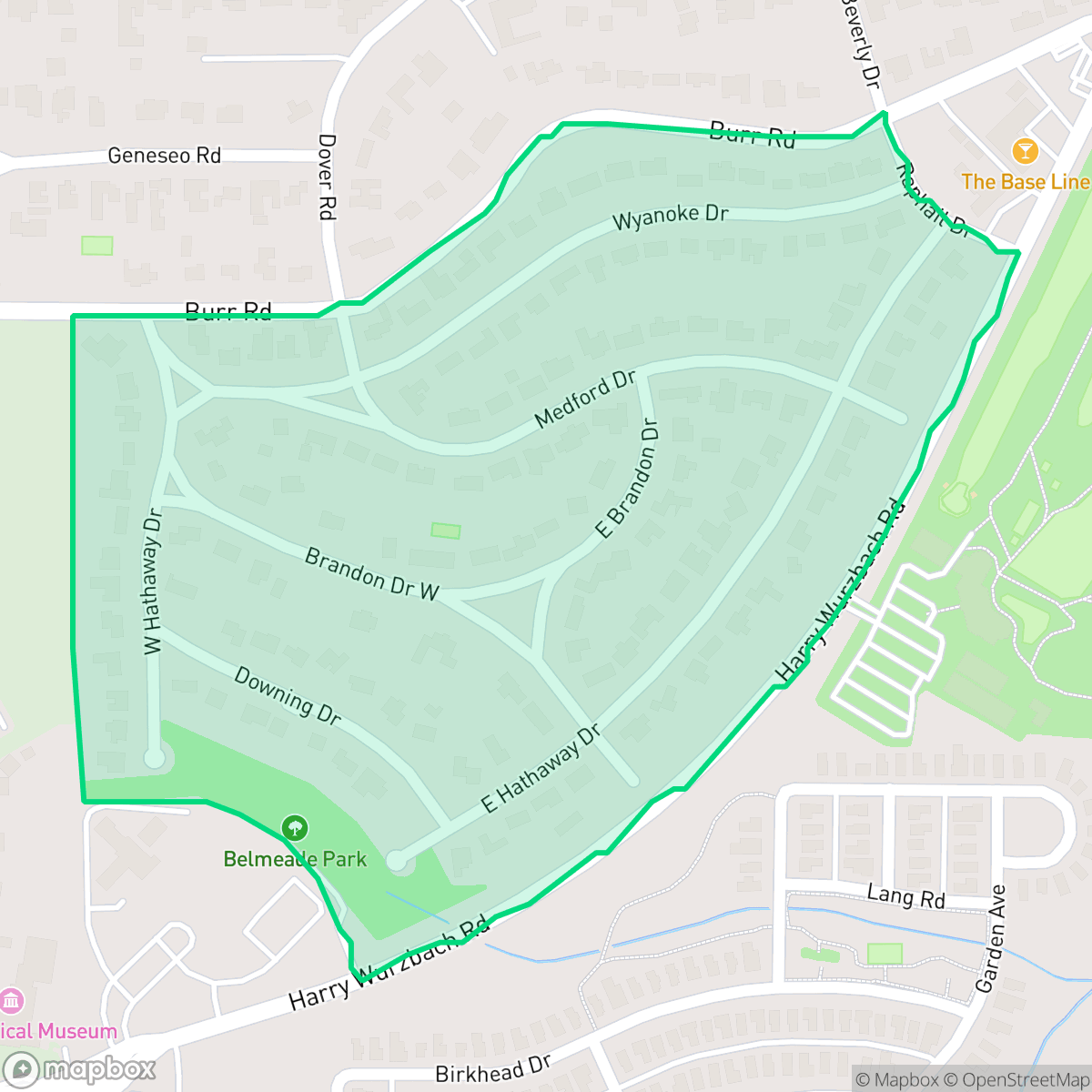
Nestled between Fort Sam Houston and Terrell Hills, the Bel Meade neighborhood was originally the site of Fernridge, the early 20th-century estate of prominent San Antonio banker George W. Brackenridge and his suffragist sister Eleanor. Following World War II, the Steves family purchased the land and partnered with Kansas City landscape architects Hare and Hare to design a 60-acre "garden city" suburb. Developed starting in 1945, the neighborhood was planned with shared backyard green spaces, winding streets named after English locales, and an absence of sidewalks to maintain a rustic, country-like atmosphere. Architecturally, Bel Meade is noted for its mid-century modern and ranch-style homes, including several designed by pioneering Texas architect O’Neil Ford. Established in 1952, the Bel Meade Homes Association and its active Garden Club have long preserved the neighborhood's unique, park-like character.
The area maintains a distinct, rural-like atmosphere within the urban footprint of San Antonio, characterized by open green spaces and winding, sidewalk-free streets. Residents benefit from high levels of privacy and a quiet environment that feels removed from the typical bustle of city life. According to iHuus data, the neighborhood excels in visual charm, making it a preferred choice for those who value aesthetic consistency and a slower pace of living.
While the neighborhood offers a peaceful residential experience, it is less suited for those who prioritize high walkability or immediate proximity to commercial hubs. The area experiences moderate road traffic noise, and residents should expect to rely on a vehicle for daily errands. However, the proximity to top-rated school districts like Alamo Heights and Fort Sam Houston makes it a stable, long-term option for families seeking a secure and well-established community.
Neighborhood Scores Across 15 Qualities
Large lots with significant separation between homes provide a greater sense of seclusion than is typical for San Antonio. According to iHuus data, this spacing offers more personal privacy than the city average.
Sidewalks are available on one side of the street along with safe crossings for pedestrians. This level of walkability is slightly higher than the San Antonio average, according to iHuus data.
Large homes, spacious driveways, and frequent upscale amenities create an environment that is significantly more visually polished than the San Antonio average. According to iHuus data, the area features a high level of manicured landscape and architectural scale.
Accessible green spaces and wide, low-traffic paths provide an ideal setting for pet owners. According to iHuus data, this level of accessibility for dogs is significantly higher than the San Antonio average.
Frequent open land and scattered homes amid woodlands characterize this area. This landscape is more semi-rural than the typical San Antonio environment, according to iHuus data.
Low-density housing and significant open space create a subdued atmosphere that is notably quieter than the San Antonio average. Local access to essential services and dining is limited to a few nearby locations reachable via short walks.
Frequent noise from nearby major transit routes and rail lines makes this area significantly louder than the San Antonio average. Residents can expect consistent acoustic disturbances from heavy traffic and transit infrastructure.
Frequent unhealthy air quality levels pose a significant risk to sensitive groups. This area's air quality is slightly worse than the San Antonio average, according to iHuus data.
Industrial presence is nonexistent in this area, which contains no warehouses or manufacturing facilities. According to iHuus data, this neighborhood offers a more purely residential environment than the San Antonio average.
Health insurance access is exceptionally high among residents, significantly surpassing the San Antonio average according to iHuus data.
Political leanings within this area are divided between conservative and liberal perspectives. This represents a more balanced ideological landscape compared to the more heavily liberal trend seen across San Antonio.
A balanced mix of young adults, families, and seniors defines the local demographic. This age distribution is slightly more varied than the typical San Antonio profile, according to iHuus data.
Flood risk levels are difficult to determine because FEMA has not yet completed a detailed study for this specific area. According to iHuus data, this uncertainty represents a slightly higher risk profile than the San Antonio average.
Address-Level Insights for Bel Meade Homes Association


iHuus Neighborhood Intelligence Insights
Get address-level neighborhood insights for Bel Meade Homes Association
- Street-level scores — see how individual blocks compare, not just neighborhood averages
- Micro-zone boundaries — identify quiet pockets, flood boundaries, and walkable clusters before you visit
- 15 dimensions in full — walkability, noise, air quality, school quality, insurance coverage, population age profile, urban/rural index, and more
- Boundary risk alerts — know if your address sits near a block boundary where scores drop, the kind of detail no listing will ever mention
- School insights — individual school ratings and insights, not just district-level data
- Compare before you commit — side-by-side data across neighborhoods, down to block precision
No credit card required
Compare with Any Neighborhood
| Dimension | Bel Meade Homes Association | 145 Association |
|---|---|---|
| 🚶 Walkabilityavg 6.44 | ||
| 🔊 Acoustic Comfortavg 4.07 | ||
| 🤫 Privacy Indexavg 5.75 | ||
| 🎨 Visual Appealavg 6.11 | ||
| 🐕 Dog Friendlinessavg 5.91 | ||
| 🗺️ Urban-Rural Indexavg 6.87 | ||
| ✨ Neighborhood Vibeavg 4.35 | ||
| 🏥 Health Insurance Coverageavg 5.94 | ||
| 🌿 Air Qualityavg 2.27 | ||
| 🏭 Industrial Proximityavg 8.31 | ||
| 🌊 Flood Safetyavg 4.2 | ||
| 🗳️ Ideological Leanavg 7.37 | ||
| 👥 Population Age Profileavg 4.68 | ||
| 🔥 Fire Safety | ||
| 🏫 School Quality |
Bel Meade Homes Association Rankings
School Districts Serving Bel Meade Homes Association
School Insights for Bel Meade Homes Association
Below average outcomes; significant attendance and academic challenges.
School Insights
See what's really behind every school rating near Bel Meade Homes Association
- Individual school ratings — each school's own score with outcome context, not just a district average
- Enrollment & class size data — student-to-teacher ratio and how it compares to the state average
- Full demographics breakdown — ethnicity and gender composition for every school in the enrollment zone
- Every school in the district — all schools within the enrollment boundary ranked by rating, not just the closest one
- Grade levels & benchmarks — elementary through high school, with below/above state-average flags
No credit card required