Seven Lights, Laredo
Updated · 1,890 residents
Seven Lights is a dense, traditional Laredo neighborhood characterized by a grid street layout and proximity to local industrial sites. Residents benefit from the highly-rated Farias Elementary School, though the area features limited green space and high-density housing that results in minimal privacy.
Key Highlights
About Seven Lights
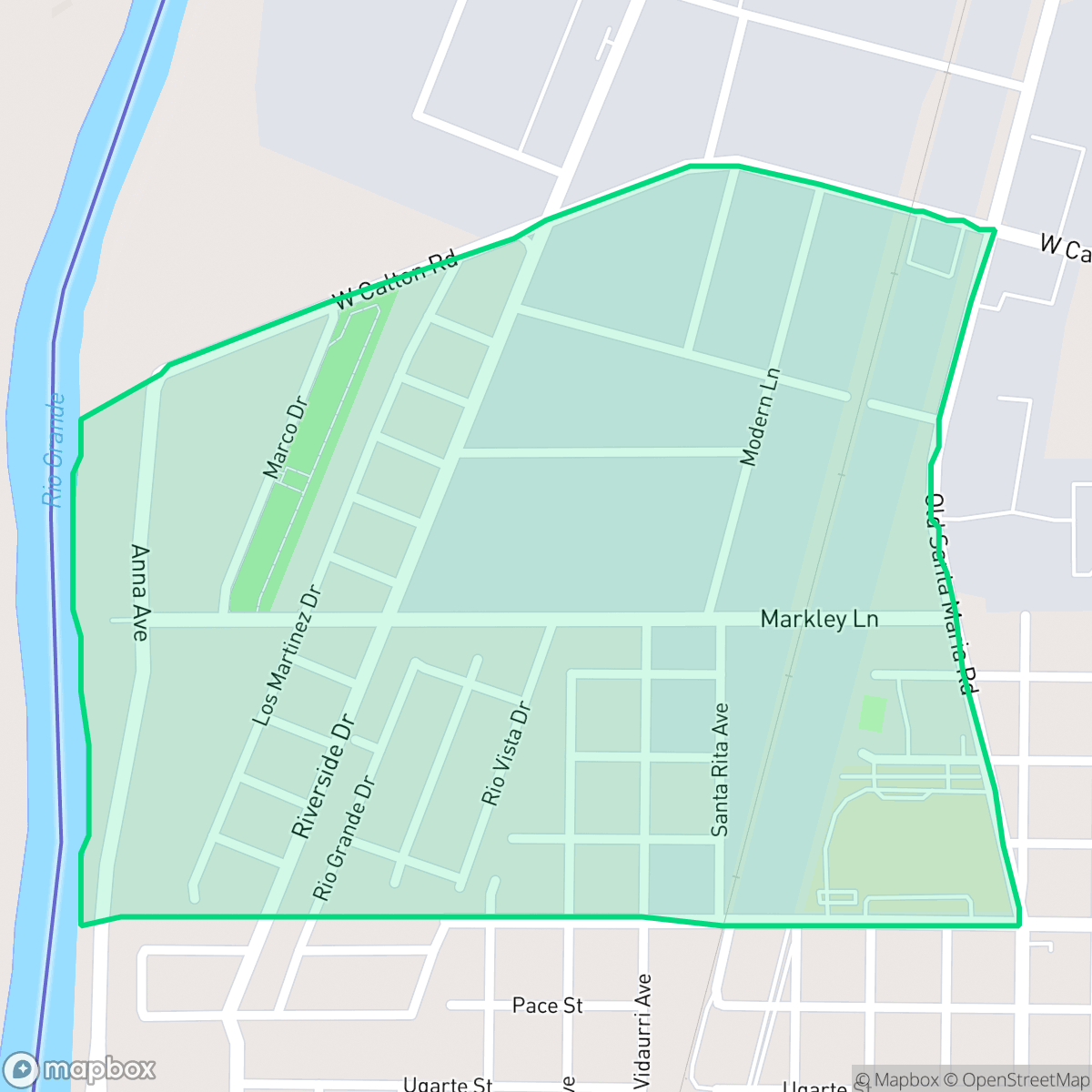
Located along the Rio Grande in central Laredo, Texas, the Seven Lights neighborhood—historically known as Siete Luces—is one of the city's early, traditional barrios. Unlike neighborhoods named after established churches, its unique name originated from a popular local cantina, reflecting the informal landmarks that helped define the area's early social geography. Historically characterized by a tight-knit network of family and neighborhood allegiances rather than formal civic planning, Siete Luces has long maintained a distinct working-class, predominantly Mexican-American cultural identity. Today, the neighborhood's daily life and routines remain anchored by local community landmarks, such as the Farias Recreation Center and nearby neighborhood schools like Farias Elementary.
The area functions as a quiet, low-rise urban grid that maintains a strong sense of community despite its industrial surroundings. According to iHuus data, the neighborhood faces challenges with noise from nearby rail lines and truck yards, which sit in close proximity to residential blocks. While the street network allows for moderate walkability, the environment is dominated by grey infrastructure and tightly packed residential lots, leaving little room for private outdoor amenities or public parks.
Prospective residents should be aware of the trade-offs inherent in this location, including significant flood risks and limited access to health insurance coverage. The neighborhood is best suited for those who prioritize proximity to local schools and established community anchors over suburban-style privacy or expansive green space. While the setting is generally quiet, the industrial character and high-density footprint define the daily experience for those living here.
Neighborhood Scores Across 15 Qualities
Residential spacing is relatively tight, with some houses positioned very close to one another. This density is lower than the average found across Laredo, meaning neighbors are more visible to one another than in less crowded areas.
Low traffic volumes and a grid layout allow for walking on pavement, though the lack of continuous sidewalks makes this area less walkable than the Laredo average. According to iHuus data, the quiet streets provide a relatively safe environment for pedestrians despite the infrastructure gaps.
Standard tract housing with small yards and uniform rooflines defines the area. According to iHuus data, the visual landscape is less varied than the Laredo average, with some lots showing minimal landscaping or debris.
Limited public greenery and narrow street verges make walking dogs difficult outside of private yards. This area offers fewer accessible parks than the Laredo average, according to iHuus data.
Open land and scattered homes are interspersed with industrial warehouses and dense residential blocks, making the area's landscape very similar to the Laredo average. According to iHuus data, the neighborhood features a blend of low-density fields and significant grey infrastructure.
Low density and a concentration of warehouses and railway corridors create a subdued atmosphere that is notably less active than the Laredo average. Most daily needs require a vehicle, as the area is primarily composed of functional, car-oriented spaces and light industrial units.
Steady traffic sounds from a nearby busy street create a consistent hum. According to iHuus data, acoustic comfort levels here are higher than the Laredo average.
Residential blocks sit adjacent to large warehouses and logistics hubs, resulting in lower industrial proximity than the Laredo average. Traffic from semi-trucks and heavy machinery is present in certain sections of the neighborhood.
Health insurance access is significantly lower than the Laredo average, which may present challenges for managing medical expenses. According to iHuus data, a small portion of the local population maintains active coverage.
Political leanings in Seven Lights lean toward a liberal majority, which is more pronounced than the average found throughout Laredo.
Residents will find a balanced distribution of young adults, families, and seniors, which is very similar to the typical age profile found across Laredo. According to iHuus data, this demographic variety creates a stable, multi-generational community environment.
Significant flood vulnerability exists in this area, which presents much higher risks than the Laredo average. According to iHuus data, residents should anticipate elevated or potentially prohibitive insurance costs due to the coastal high-hazard zone designation.
Address-Level Insights for Seven Lights


iHuus Neighborhood Intelligence Insights
Get address-level neighborhood insights for Seven Lights
- Street-level scores — see how individual blocks compare, not just neighborhood averages
- Micro-zone boundaries — identify quiet pockets, flood boundaries, and walkable clusters before you visit
- 15 dimensions in full — walkability, noise, air quality, school quality, insurance coverage, population age profile, urban/rural index, and more
- Boundary risk alerts — know if your address sits near a block boundary where scores drop, the kind of detail no listing will ever mention
- School insights — individual school ratings and insights, not just district-level data
- Compare before you commit — side-by-side data across neighborhoods, down to block precision
No credit card required
Compare with Any Neighborhood
| Dimension | Seven Lights | Century City |
|---|---|---|
| 🚶 Walkabilityavg 6.1 | ||
| 🔊 Acoustic Comfortavg 3.67 | ||
| 🤫 Privacy Indexavg 5.28 | ||
| 🎨 Visual Appealavg 5.44 | ||
| 🐕 Dog Friendlinessavg 5.14 | ||
| 🗺️ Urban-Rural Indexavg 6.82 | ||
| ✨ Neighborhood Vibeavg 4.56 | ||
| 🏥 Health Insurance Coverageavg 3.33 | ||
| 🌿 Air Quality | ||
| 🏭 Industrial Proximityavg 7.34 | ||
| 🌊 Flood Safetyavg 2.19 | ||
| 🗳️ Ideological Leanavg 7.18 | ||
| 👥 Population Age Profileavg 4.36 | ||
| 🔥 Fire Safety | ||
| 🏫 School Quality |
Seven Lights Rankings
School Districts Serving Seven Lights
School Insights for Seven Lights
Below average outcomes; significant attendance and academic challenges.
School Insights
See what's really behind every school rating near Seven Lights
- Individual school ratings — each school's own score with outcome context, not just a district average
- Enrollment & class size data — student-to-teacher ratio and how it compares to the state average
- Full demographics breakdown — ethnicity and gender composition for every school in the enrollment zone
- Every school in the district — all schools within the enrollment boundary ranked by rating, not just the closest one
- Grade levels & benchmarks — elementary through high school, with below/above state-average flags
No credit card required