Woodlake - Briarmeadow, Houston
Updated · 53,220 residents
Woodlake - Briarmeadow is a dense West Houston community defined by a mix of mid-century residential architecture and high-density apartment complexes. While the area offers convenient access to major thoroughfares and diverse dining, residents often experience significant traffic noise and limited privacy due to the close proximity of buildings.
Key Highlights
About Woodlake - Briarmeadow
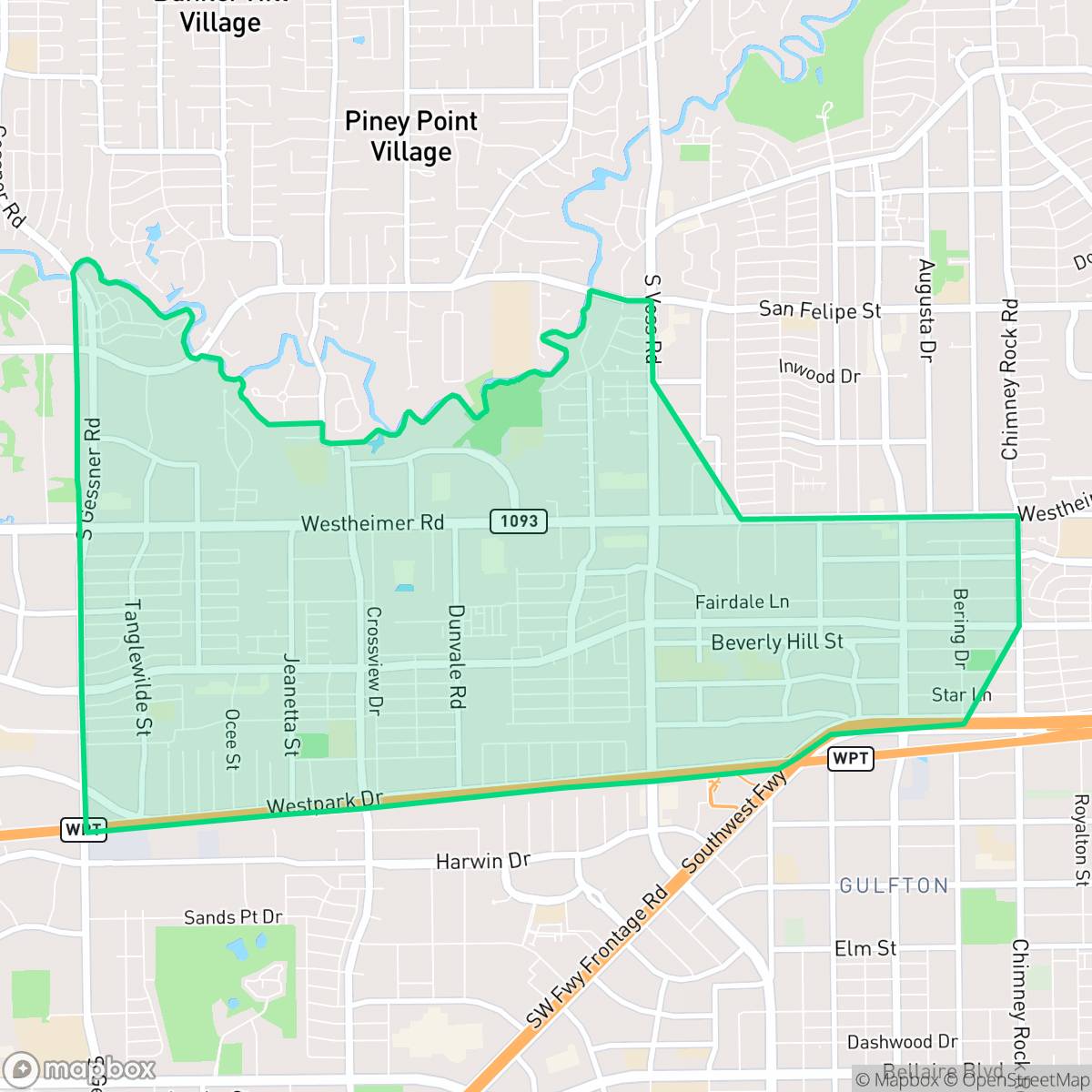
The Woodlake-Briarmeadow area in West Houston developed from land owned in the 1950s by Robert E. Smith, a prominent oilman, philanthropist, and founder of the Houston Colt .45s baseball team. In 1955, developer James E. Lyon established the Briarmeadow subdivision across 258 acres straddling Westheimer Road. Briarmeadow quickly gained recognition when it was featured in the 1957 Parade of Homes, showcasing classic mid-century ranch houses on large, tree-lined lots. In 1969, the Friendswood Development Company purchased another portion of Smith’s land to establish the adjacent Woodlake residential subdivision at the intersection of Westheimer and Gessner Roads. Today, the combined neighborhood maintains its mid-century suburban character, anchored by local institutions like the Briarmeadow Charter School.
The neighborhood serves as a dense suburban-urban transition zone characterized by a mix of established single-family homes with mature landscaping and high-density apartment complexes. Its visual appeal is bolstered by numerous private pools and well-maintained courtyards, creating a distinct aesthetic that balances older residential tracts with modern multi-family developments. The area maintains a functional, if busy, atmosphere, with proximity to major retail corridors and a variety of local dining options that reflect the diverse culture of West Houston.
Living here involves balancing convenience with the realities of a high-density environment. Residents often encounter significant road traffic noise, and the close proximity of residential structures results in limited privacy in many sectors. While the sidewalk network is generally functional, the presence of large arterial roads and commercial warehouses can create a car-centric experience. Families have access to several highly-rated educational institutions, though the surrounding school districts face varying levels of operational and fiscal challenges.
Neighborhood Scores Across 15 Qualities
Shared walls and tight building spacing in many apartment and townhome clusters result in lower privacy levels than the Houston average. While some wooded estates offer more seclusion, much of the area features dense residential structures with minimal setbacks between neighbors.
Sidewalk networks are inconsistent and often interrupted by large parking lots or major highway barriers, making the area less walkable than the Houston average. While internal residential streets and apartment complexes offer quiet walking paths, crossing high-traffic arterial roads remains difficult for pedestrians.
Large estates with private pools and manicured landscaping define the northern sections, though some areas feature more standard apartment complexes and industrial warehouses. This mix of high-end residential scenery and denser multi-family housing results in an aesthetic quality slightly above the Houston average.
Public spaces for pets are somewhat scarce, as most greenery is confined to private yards or gated apartment courtyards. This area falls below the Houston average for accessible, open dog walking spaces.
A diverse mix of apartment complexes, single-family homes, and commercial corridors defines this area. The landscape is largely comparable to the Houston average, balancing urban density with suburban elements.
A varied blend of quiet residential blocks and active dining hubs creates a social atmosphere that is more lively than the Houston average. While many local eateries and social spots provide diverse options, much of the area remains car-dependent.
Persistent noise from nearby freeways and transit corridors makes this area louder than the Houston average, according to iHuus data.
Air quality in this area fluctuates between acceptable and unhealthy levels, though it remains slightly better than the Houston average according to iHuus data. Sensitive groups may experience occasional concern during certain periods.
Predominantly residential and light commercial, this area lacks heavy manufacturing or significant industrial hazards. While some large warehouses and logistics hubs exist on the eastern edge, the overall level of industrial proximity is higher than the Houston average.
Health insurance access among residents is slightly below the Houston average, according to iHuus data.
Political leanings in this area align closely with the broader Houston area, featuring a liberal majority alongside a notable presence of opposing viewpoints.
Residents will find a balanced demographic spread of young adults, families, and older individuals, aligning with the typical age distribution found across Houston.
Some residual flood risk exists as parts of the area are located within the 500-year floodplain, matching the city average for flood safety.
Address-Level Insights for Woodlake - Briarmeadow


iHuus Neighborhood Intelligence Insights
Get address-level neighborhood insights for Woodlake - Briarmeadow
- Street-level scores — see how individual blocks compare, not just neighborhood averages
- Micro-zone boundaries — identify quiet pockets, flood boundaries, and walkable clusters before you visit
- 15 dimensions in full — walkability, noise, air quality, school quality, insurance coverage, population age profile, urban/rural index, and more
- Boundary risk alerts — know if your address sits near a block boundary where scores drop, the kind of detail no listing will ever mention
- School insights — individual school ratings and insights, not just district-level data
- Compare before you commit — side-by-side data across neighborhoods, down to block precision
No credit card required
Compare with Any Neighborhood
| Dimension | Woodlake - Briarmeadow | Acres Home |
|---|---|---|
| 🚶 Walkabilityavg 7.08 | ||
| 🔊 Acoustic Comfortavg 4.14 | ||
| 🤫 Privacy Indexavg 5.34 | ||
| 🎨 Visual Appealavg 6.42 | ||
| 🐕 Dog Friendlinessavg 6.33 | ||
| 🗺️ Urban-Rural Indexavg 6.64 | ||
| ✨ Neighborhood Vibeavg 4.4 | ||
| 🏥 Health Insurance Coverageavg 5.46 | ||
| 🌿 Air Qualityavg 3.58 | ||
| 🏭 Industrial Proximityavg 6.9 | ||
| 🌊 Flood Safetyavg 6.27 | ||
| 🗳️ Ideological Leanavg 6.39 | ||
| 👥 Population Age Profileavg 4.6 | ||
| 🔥 Fire Safety | ||
| 🏫 School Quality |
Woodlake - Briarmeadow Rankings
School Districts Serving Woodlake - Briarmeadow
School Insights for Woodlake - Briarmeadow
Below average outcomes; significant attendance and academic challenges.
School Insights
See what's really behind every school rating near Woodlake - Briarmeadow
- Individual school ratings — each school's own score with outcome context, not just a district average
- Enrollment & class size data — student-to-teacher ratio and how it compares to the state average
- Full demographics breakdown — ethnicity and gender composition for every school in the enrollment zone
- Every school in the district — all schools within the enrollment boundary ranked by rating, not just the closest one
- Grade levels & benchmarks — elementary through high school, with below/above state-average flags
No credit card required