Williamsburg Colony, Houston
Updated · 1,735 residents
Williamsburg Colony is a quiet, established residential community in Katy characterized by its well-maintained 1980s architecture and spacious driveways. Residents benefit from access to top-rated Katy Independent School District schools and a mostly sidewalked street network, though the area remains car-dependent with limited local nightlife.
Key Highlights
About Williamsburg Colony
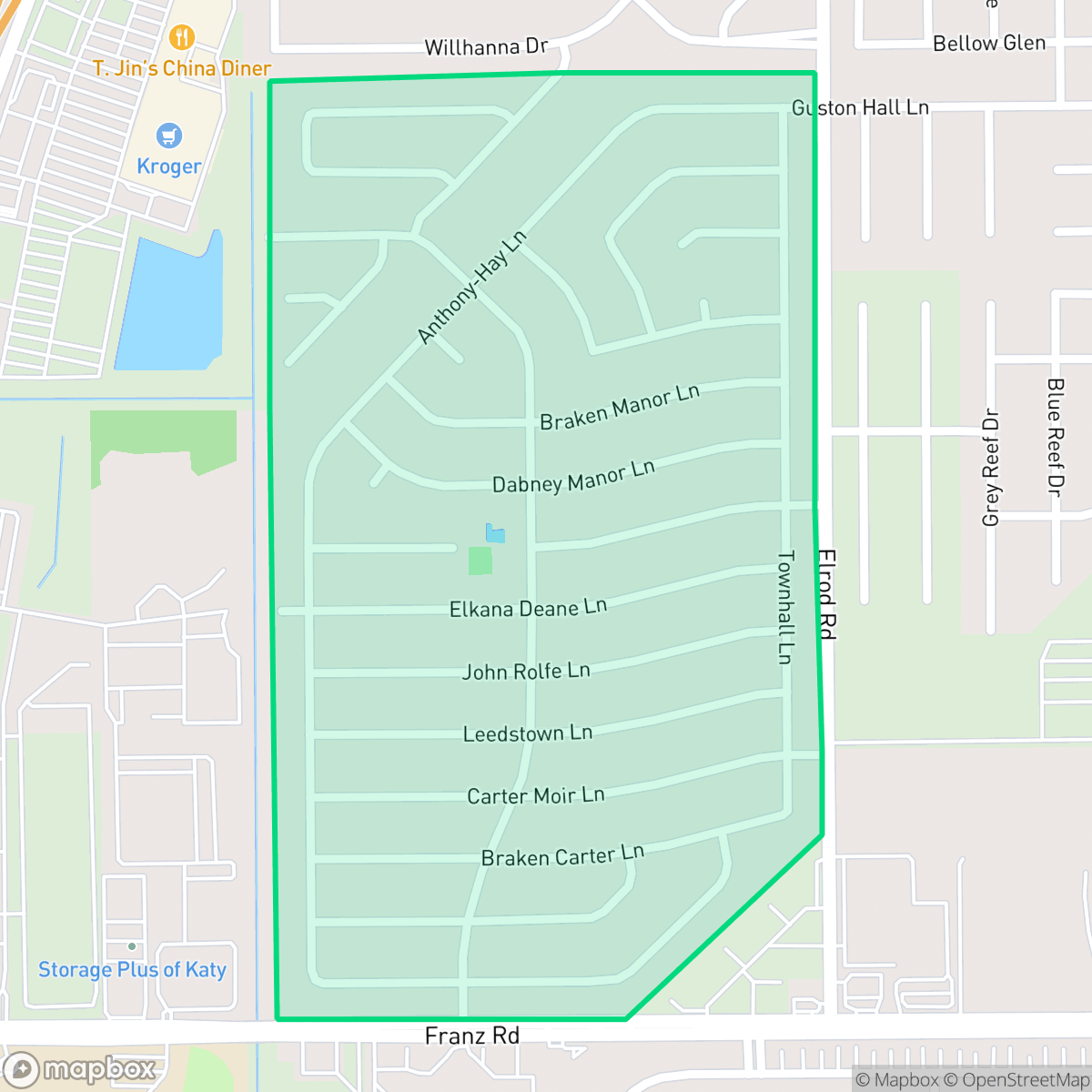
Williamsburg Colony, established around 1978, is a residential community in the Katy area that shares a common legacy with neighboring developments like Williamsburg Settlement and Williamsburg Hamlet. The neighborhood’s land traces back to an 1887 grant to the Houston and Texas Central Railway Company, later held for over fifty years by landowner Maud Hickman. In the early 1970s, Houston developer Marvin Leggett envisioned the Williamsburg area as a modern planned community intended to complement the burgeoning Park Ten development. Characterized by 1980s-era residential architecture, including brick exteriors and traditional floor plans, the neighborhood reflects the rapid suburban expansion of the Katy region during that decade. Today, the community remains defined by its association-managed infrastructure and its historical connection to the agricultural and railroad-driven settlement patterns that shaped the broader Katy landscape.
Williamsburg Colony functions as a tranquil suburban enclave where the streetscapes are defined by traditional brick homes and consistent property maintenance. The area offers a balanced, multi-generational environment that appeals to families seeking high-quality public education through the Katy Independent School District. While the neighborhood maintains a semi-rural feel with scattered woodland areas, it provides a stable residential experience with high levels of health insurance coverage among its residents. Those considering this community should note its car-dependent nature, as essential services and social hubs are not within immediate walking distance. While the area is generally more tranquil than the broader Houston region according to iHuus data, residents may encounter occasional noise from nearby industrial facilities and major thoroughfares. The neighborhood offers a reliable level of flood safety, as it sits outside the primary floodplain, making it a practical choice for those prioritizing long-term stability and educational access over urban density.
Neighborhood Scores Across 15 Qualities
Housing density is slightly higher than the Houston average, with homes positioned at moderate intervals. According to iHuus data, the spacing between neighbors provides a balanced level of seclusion typical of master-planned suburban developments.
Pedestrian movement is supported by sidewalks on many streets and safe crossings, though some cul-de-sacs may require walking on the pavement. This level of walkability is roughly comparable to the Houston average, according to iHuus data.
Larger homes and upscale amenities contribute to a visual environment that is slightly more polished than the Houston average. According to iHuus data, the area features well-maintained properties and spacious driveways throughout the community.
Walking routes feature consistent sidewalks and green verges, though opportunities for pet activity are slightly below the Houston average. Access to open green space is available within the neighborhood according to iHuus data.
Open land and scattered woodland areas provide a semi-rural feel that is very similar to the Houston average. Residential pockets within the area feature a mix of single-family homes and denser apartment complexes according to iHuus data.
Primarily composed of established residential blocks and light industrial units, this area lacks significant social hubs or nightlife. According to iHuus data, the neighborhood is notably less lively than the Houston average, functioning as a quiet, suburban landscape where most essential services require a vehicle to reach.
Steady noise from nearby thoroughfares is present, though acoustic levels are notably more tranquil than the Houston average according to iHuus data.
Air quality levels fluctuate between acceptable and unhealthy, posing occasional concerns for sensitive groups. This pattern is slightly better than the average recorded across Houston, according to iHuus data.
Presence of a wastewater treatment plant and large warehouses introduces more commercial activity and daytime traffic than is typical for Houston. According to iHuus data, the southeast corner contains significant drainage basins and warehouse-style structures that may contribute to localized noise.
Health insurance coverage among residents is notably higher than the Houston average, according to iHuus data.
Political leanings in this area trend significantly more conservative than the Houston average, according to iHuus data.
A diverse range of age groups, including young professionals, families, and seniors, resides here. This demographic distribution is slightly more balanced than the average seen across Houston.
Flood risk in this area is relatively low, as the neighborhood sits outside the primary 500-year floodplain. According to iHuus data, the safety level here is higher than the Houston average, though some residual risk remains.
Address-Level Insights for Williamsburg Colony


iHuus Neighborhood Intelligence Insights
Get address-level neighborhood insights for Williamsburg Colony
- Street-level scores — see how individual blocks compare, not just neighborhood averages
- Micro-zone boundaries — identify quiet pockets, flood boundaries, and walkable clusters before you visit
- 15 dimensions in full — walkability, noise, air quality, school quality, insurance coverage, population age profile, urban/rural index, and more
- Boundary risk alerts — know if your address sits near a block boundary where scores drop, the kind of detail no listing will ever mention
- School insights — individual school ratings and insights, not just district-level data
- Compare before you commit — side-by-side data across neighborhoods, down to block precision
No credit card required
Compare with Any Neighborhood
| Dimension | Williamsburg Colony | Acres Home |
|---|---|---|
| 🚶 Walkabilityavg 7.08 | ||
| 🔊 Acoustic Comfortavg 4.14 | ||
| 🤫 Privacy Indexavg 5.34 | ||
| 🎨 Visual Appealavg 6.42 | ||
| 🐕 Dog Friendlinessavg 6.33 | ||
| 🗺️ Urban-Rural Indexavg 6.64 | ||
| ✨ Neighborhood Vibeavg 4.4 | ||
| 🏥 Health Insurance Coverageavg 5.46 | ||
| 🌿 Air Qualityavg 3.58 | ||
| 🏭 Industrial Proximityavg 6.9 | ||
| 🌊 Flood Safetyavg 6.27 | ||
| 🗳️ Ideological Leanavg 6.39 | ||
| 👥 Population Age Profileavg 4.6 | ||
| 🔥 Fire Safety | ||
| 🏫 School Quality |
Williamsburg Colony Rankings
School Districts Serving Williamsburg Colony
School Insights for Williamsburg Colony
Below average outcomes; significant attendance and academic challenges.
School Insights
See what's really behind every school rating near Williamsburg Colony
- Individual school ratings — each school's own score with outcome context, not just a district average
- Enrollment & class size data — student-to-teacher ratio and how it compares to the state average
- Full demographics breakdown — ethnicity and gender composition for every school in the enrollment zone
- Every school in the district — all schools within the enrollment boundary ranked by rating, not just the closest one
- Grade levels & benchmarks — elementary through high school, with below/above state-average flags
No credit card required