Northshore, Houston
Updated · 33,537 residents
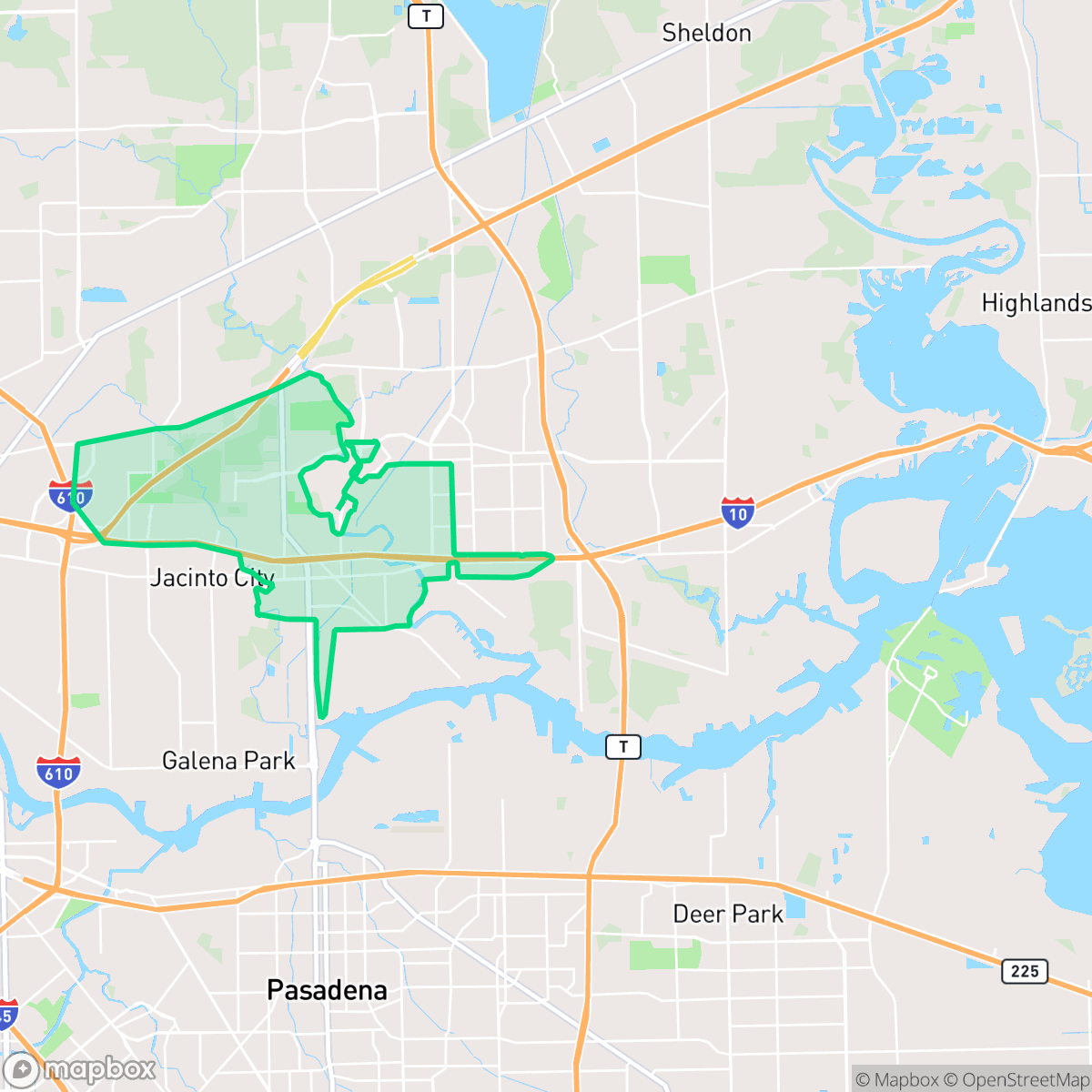
Northshore is an industrial-adjacent residential community east of Loop 610, defined by its mid-century ranch-style roots and proximity to the Houston Ship Channel. While the area offers a quiet, car-dependent suburban lifestyle, residents must navigate challenges related to industrial noise, limited pedestrian infrastructure, and flood risk.
Key Highlights
About Northshore
Located immediately north of the Houston Ship Channel and east of Loop 610, the Northshore neighborhood was originally developed as a residential haven for Ship Channel and industrial workers. Following its annexation by Houston in the 1950s, the heavily wooded area transformed during the 1960s and 1970s with the construction of mid-century ranch-style homes, notably within the Woodforest subdivision developed by Taylor Homes. Northshore comprises several distinct communities, including Songwood, Holiday Forest, and Woodland Acres. A major local landmark is the sprawling Herman Brown Park, established after the Brown Foundation donated a massive tract of land in the 1980s.
The area serves as a functional residential hub for those working in the nearby industrial and logistics sectors. It features a dense mix of single-family homes, apartment complexes, and light industrial warehouses. The landscape is characterized by a grid street layout that balances residential blocks with significant grey infrastructure, including truck depots and rail corridors. While the neighborhood lacks a dense commercial core, it provides essential services and diverse local dining options that reflect the cultural character of the region.
Living here requires a reliance on personal vehicles, as the fragmented sidewalk network and heavy traffic from nearby highways make pedestrian transit difficult. Prospective residents should consider the trade-offs of the location, including moderate noise levels from road traffic and proximity to industrial operations. The area appeals to those seeking affordability and proximity to major employment centers, though it is important to note the environmental and flood-related considerations inherent to this part of the Houston urban fringe.
Neighborhood Scores Across 15 Qualities
Residential spacing varies throughout the area, with apartment blocks providing less seclusion compared to the more spaced single-family homes. Overall privacy levels are slightly higher than the Houston average due to the presence of detached structures and fenced yards.
Fragmented sidewalks and nearby highway barriers make pedestrian transit difficult; however, the low-traffic residential streets remain relatively safe for walking. According to iHuus data, the walkability in this area is below the Houston city average.
Standard tract housing and high-density apartments characterize the area, which presents a less manicured appearance than the Houston average. According to iHuus data, visible debris and unpaved lots are present alongside small yards and limited luxury amenities.
Access to public pet space is below the city average, as most greenery is contained within private fenced yards or wooded riverbanks. While large green buffers and drainage canals offer some walking space, sidewalk verges are often narrow or absent.
Vast forested areas and open land characterize much of the landscape, providing a more open feel than the typical Houston urban density. This setting features a mix of low-density residential pockets and significant undeveloped woodland, making the area slightly more rural than the city average.
A balanced mix of residential pockets and light industrial zones provides a steady rhythm of activity that is slightly more lively than the Houston average. While diverse dining and local services are available, many areas remain car-dependent due to the presence of warehouses and freight corridors.
Steady traffic sounds from nearby thoroughfares are common here; this level of acoustic activity is slightly higher than the Houston average, according to iHuus data.
Frequent unhealthy air quality levels pose significant risks to sensitive groups. This condition is slightly worse than the Houston city average, according to iHuus data.
Logistics hubs, rail yards, and heavy truck traffic are present alongside residential areas, resulting in an industrial footprint that is slightly lower than the Houston average. Residents may encounter intermittent noise from nearby warehouses, wastewater treatment facilities, and large-scale distribution centers.
Health insurance coverage among residents is notably lower than the Houston average. According to iHuus data, a small portion of the population has access to employer-sponsored or private health plans.
Political leanings in Northshore trend more liberal than the Houston average. According to iHuus data, the area maintains a liberal majority with a modest presence of opposing viewpoints.
Residents live alongside a balanced mix of young adults, families, and older individuals. This demographic spread is slightly lower than the Houston average, according to iHuus data.
Flood risk levels in this area are currently difficult to assess because FEMA has not yet finished a detailed study for this specific location. According to iHuus data, the level of certainty regarding flood safety is lower than the Houston average.
Address-Level Insights for Northshore


iHuus Neighborhood Intelligence Insights
Get address-level neighborhood insights for Northshore
- Street-level scores — see how individual blocks compare, not just neighborhood averages
- Micro-zone boundaries — identify quiet pockets, flood boundaries, and walkable clusters before you visit
- 15 dimensions in full — walkability, noise, air quality, school quality, insurance coverage, population age profile, urban/rural index, and more
- Boundary risk alerts — know if your address sits near a block boundary where scores drop, the kind of detail no listing will ever mention
- School insights — individual school ratings and insights, not just district-level data
- Compare before you commit — side-by-side data across neighborhoods, down to block precision
No credit card required
Compare with Any Neighborhood
| Dimension | Northshore | Acres Home |
|---|---|---|
| 🚶 Walkabilityavg 7.08 | ||
| 🔊 Acoustic Comfortavg 4.14 | ||
| 🤫 Privacy Indexavg 5.34 | ||
| 🎨 Visual Appealavg 6.42 | ||
| 🐕 Dog Friendlinessavg 6.33 | ||
| 🗺️ Urban-Rural Indexavg 6.64 | ||
| ✨ Neighborhood Vibeavg 4.4 | ||
| 🏥 Health Insurance Coverageavg 5.46 | ||
| 🌿 Air Qualityavg 3.58 | ||
| 🏭 Industrial Proximityavg 6.9 | ||
| 🌊 Flood Safetyavg 6.27 | ||
| 🗳️ Ideological Leanavg 6.39 | ||
| 👥 Population Age Profileavg 4.6 | ||
| 🔥 Fire Safety | ||
| 🏫 School Quality |
Northshore Rankings
School Districts Serving Northshore
School Insights for Northshore
Below average outcomes; significant attendance and academic challenges.
School Insights
See what's really behind every school rating near Northshore
- Individual school ratings — each school's own score with outcome context, not just a district average
- Enrollment & class size data — student-to-teacher ratio and how it compares to the state average
- Full demographics breakdown — ethnicity and gender composition for every school in the enrollment zone
- Every school in the district — all schools within the enrollment boundary ranked by rating, not just the closest one
- Grade levels & benchmarks — elementary through high school, with below/above state-average flags
No credit card required