Memorial, Houston
Updated · 51,754 residents
Memorial is a prominent, affluent district defined by its mature tree canopy, spacious residential lots, and proximity to major business hubs like the Energy Corridor. While the area offers high walkability in certain pockets and excellent access to local amenities, residents should expect significant road traffic noise. The community is characterized by its blend of mid-century modern architecture and expansive green spaces, making it a desirable location for those seeking a quiet, established suburban environment.
Key Highlights
About Memorial
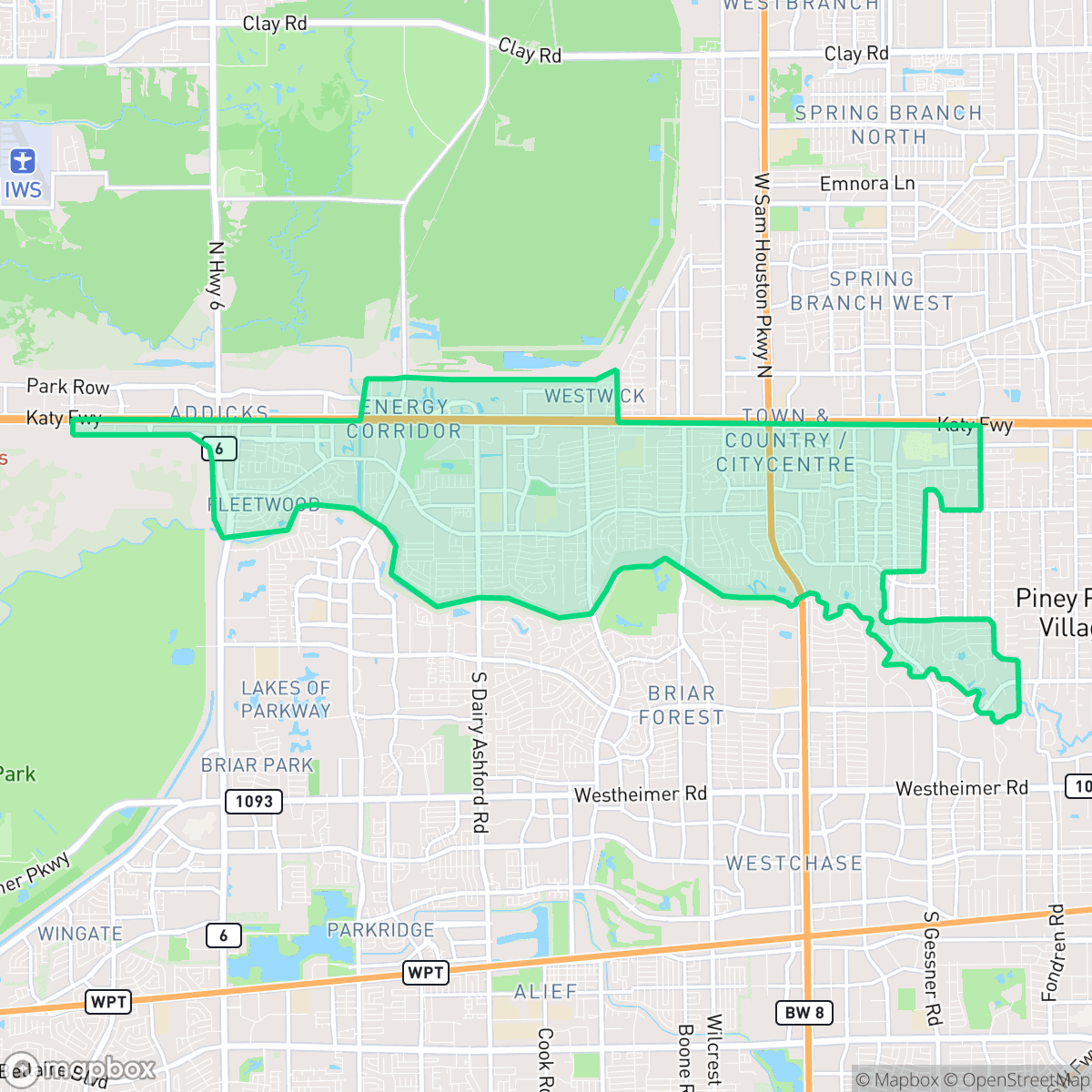
Named after Memorial Drive, Houston's Memorial neighborhood evolved from a collection of 1930s country estates and farmland into an affluent residential area gradually annexed by the city between the 1950s and 1980s. The area is celebrated for its rich variety of mid-century modern residential architecture, particularly within the Memorial Bend subdivision established in 1955. To protect their local autonomy and zoning from Houston's rapid post-war expansion, several adjacent communities incorporated in the early 1950s as the independent "Memorial Villages". Commercial development followed this residential boom, anchored by the opening of the Memorial City Shopping Center in 1966 and Town & Country Village. Today, the neighborhood retains its distinct forested, suburban character alongside major business hubs like the Energy Corridor.
The area is defined by a dense, mature tree canopy that provides a secluded atmosphere despite its central location near major thoroughfares. Residents benefit from high-quality health insurance coverage and access to schools within the Spring Branch Independent School District, which serves as a primary educational anchor for the community. The landscape is marked by a high frequency of private backyard pools and well-manicured properties, reflecting the neighborhood's long-standing affluent character. Commercial activity is concentrated around major retail anchors such as Memorial City Shopping Center and Town and Country Village, which provide convenient access to diverse dining and shopping options.
Living here involves balancing the benefits of a well-established residential grid against the realities of a car-dependent lifestyle and elevated noise levels from nearby highway traffic. While the neighborhood boasts high visual appeal and dog-friendly green spaces, the acoustic environment is impacted by its proximity to major transit arteries. According to iHuus data, the area maintains high levels of health insurance coverage, contributing to its status as a stable, long-term residential choice for families and professionals who value proximity to the Energy Corridor and a quiet, suburban aesthetic.
Neighborhood Scores Across 15 Qualities
Privacy varies significantly across the area, ranging from dense apartment clusters with shared walls to detached homes buffered by mature trees. According to iHuus data, the neighborhood offers a slightly higher degree of residential separation than the Houston average.
Extensive sidewalk networks and integrated nature trails provide more accessible walking options than the Houston average. While a major highway bisects the area, many residential blocks and commercial zones feature continuous paths and safe crossings.
Large estates with complex rooflines and well-maintained landscaping define much of the area, appearing significantly more polished than the Houston average. According to iHuus data, the presence of private pools and golf course amenities is particularly frequent in the northern and western sections of the neighborhood.
Extensive green corridors, wooded creek trails, and large parks provide much more space for walking dogs than the city average. According to iHuus data, the abundance of tree canopy and connected parklands offers numerous off-leash opportunities and wide, shaded paths.
A lush, suburban landscape characterizes this area, featuring a dense tree canopy and a mix of single-family homes and multi-family complexes. This level of open space and greenery is slightly higher than the Houston city average.
Suburban streets and green spaces provide a balanced atmosphere with a consistent rhythm of local dining and essential services. This level of activity is slightly higher than the Houston average, offering a mix of quiet residential pockets and accessible social hubs.
Frequent noise from nearby major freeways and transit corridors characterizes this area. According to iHuus data, acoustic comfort levels are slightly lower than the Houston city average.
Air quality levels fluctuate between acceptable and unhealthy, presenting occasional concerns for sensitive groups. According to iHuus data, the air quality in this area is slightly better than the Houston city average.
Minimal heavy manufacturing and large-scale industrial activity characterize this area, making it significantly cleaner of industrial hazards than the Houston average. While some utility infrastructure and logistics hubs exist near major transit corridors, the neighborhood remains predominantly residential and recreational.
Health insurance access is significantly higher here than the Houston average, according to iHuus data. Residents in this area benefit from more widespread medical coverage compared to most of the city.
Conservative voters hold a clear majority in this area, reflecting a political leaning that is notably more conservative than the Houston average.
Residents live alongside a balanced mix of young professionals, families, and seniors. This demographic spread is slightly more varied than the average found throughout Houston, according to iHuus data.
Residual flood risk exists within this area due to its location in a 500-year floodplain, though safety levels remain slightly above the Houston average according to iHuus data.
Address-Level Insights for Memorial


iHuus Neighborhood Intelligence Insights
Get address-level neighborhood insights for Memorial
- Street-level scores — see how individual blocks compare, not just neighborhood averages
- Micro-zone boundaries — identify quiet pockets, flood boundaries, and walkable clusters before you visit
- 15 dimensions in full — walkability, noise, air quality, school quality, insurance coverage, population age profile, urban/rural index, and more
- Boundary risk alerts — know if your address sits near a block boundary where scores drop, the kind of detail no listing will ever mention
- School insights — individual school ratings and insights, not just district-level data
- Compare before you commit — side-by-side data across neighborhoods, down to block precision
No credit card required
Compare with Any Neighborhood
| Dimension | Memorial | Acres Home |
|---|---|---|
| 🚶 Walkabilityavg 7.08 | ||
| 🔊 Acoustic Comfortavg 4.14 | ||
| 🤫 Privacy Indexavg 5.34 | ||
| 🎨 Visual Appealavg 6.42 | ||
| 🐕 Dog Friendlinessavg 6.33 | ||
| 🗺️ Urban-Rural Indexavg 6.64 | ||
| ✨ Neighborhood Vibeavg 4.4 | ||
| 🏥 Health Insurance Coverageavg 5.46 | ||
| 🌿 Air Qualityavg 3.58 | ||
| 🏭 Industrial Proximityavg 6.9 | ||
| 🌊 Flood Safetyavg 6.27 | ||
| 🗳️ Ideological Leanavg 6.39 | ||
| 👥 Population Age Profileavg 4.6 | ||
| 🔥 Fire Safety | ||
| 🏫 School Quality |
Memorial Rankings
School Districts Serving Memorial
School Insights for Memorial
Below average outcomes; significant attendance and academic challenges.
School Insights
See what's really behind every school rating near Memorial
- Individual school ratings — each school's own score with outcome context, not just a district average
- Enrollment & class size data — student-to-teacher ratio and how it compares to the state average
- Full demographics breakdown — ethnicity and gender composition for every school in the enrollment zone
- Every school in the district — all schools within the enrollment boundary ranked by rating, not just the closest one
- Grade levels & benchmarks — elementary through high school, with below/above state-average flags
No credit card required