Lake Houston, Houston
Updated · 13,320 residents
Lake Houston is a semi-rural, upscale residential area defined by its proximity to expansive woodlands and water infrastructure. While the neighborhood offers a tranquil atmosphere with reliable pedestrian access, residents should anticipate noise from nearby transit corridors and air quality levels that are slightly worse than the city average.
Key Highlights
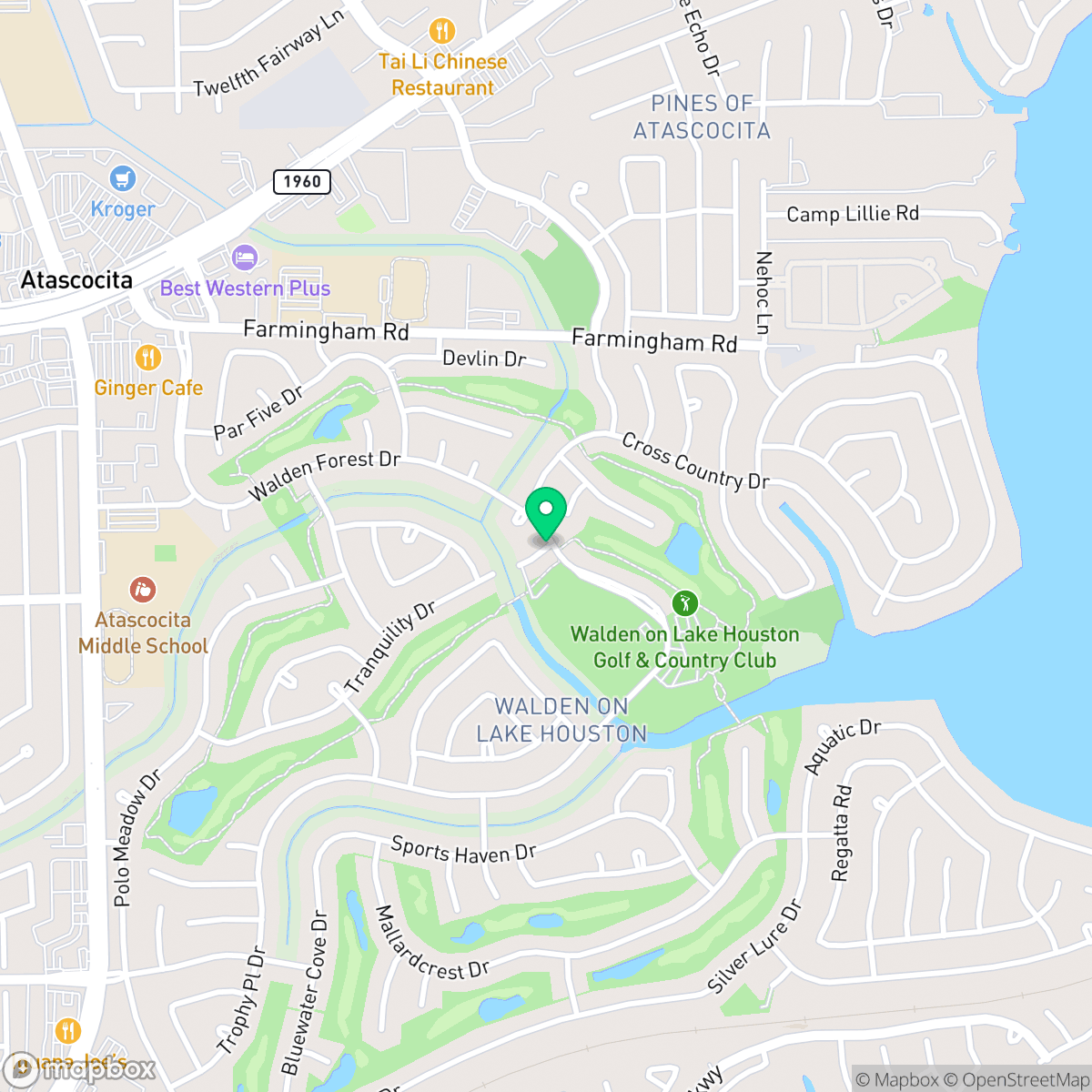
About Lake Houston
Lake Houston was created in 1953 when the City of Houston dammed the San Jacinto River to establish a vital municipal water supply. This infrastructure project fundamentally transformed the surrounding landscape, shifting the region from rural agricultural use toward suburban development and recreational activity. The reservoir serves as the defining landmark for the area, fostering the growth of master-planned communities like Kingwood, which began development in the 1970s with a focus on preserving the native pine forest. Today, the lake remains a central cultural and ecological feature, anchored by the Lake Houston Wilderness Park, which protects thousands of acres of bottomland hardwood forest and provides a glimpse into the area’s original natural environment.
The area is characterized by spacious, well-maintained properties and a lack of industrial activity, creating a visually appealing environment that contrasts with the denser parts of Houston. Residents enjoy a semi-rural lifestyle where open landscapes and green spaces are abundant, making it a suitable choice for pet owners seeking safe walking routes. The demographic profile is diverse, spanning young families to older populations, supported by a mix of school districts that range from stable, high-performing institutions to those currently undergoing administrative transitions. According to iHuus data, the neighborhood provides higher levels of privacy than the typical Houston suburb and maintains better-than-average flood safety for the region. Living here requires a car-dependent lifestyle, as the neighborhood is remote with limited social hubs or commercial amenities within walking distance. While the area provides a peaceful setting, potential residents should be aware of the acoustic environment, which is impacted by nearby railroad tracks and major freeways. The combination of high health insurance coverage and a quiet, nature-focused atmosphere makes this an attractive option for those prioritizing residential space over urban convenience.
Neighborhood Scores Across 15 Qualities
Residential spacing is mixed with some buffers between neighbors, providing more privacy than the Houston average. According to iHuus data, the area features a moderate density of homes.
Sidewalks and safe crossings are available along many streets, offering a level of pedestrian accessibility that is slightly above the Houston average.
Large residential properties and frequent upscale amenities create a landscape that is more visually appealing than the Houston average. According to iHuus data, the area features spacious driveways and well-maintained surroundings.
Expansive green spaces and wide, low-traffic paths provide an environment that is more conducive to pet walking than the Houston average. According to iHuus data, the area offers safe routes for exercise away from heavy vehicle congestion.
Expansive woodlands and open landscapes define this area, which feels significantly more rural than the Houston average. Residents can expect a mix of dense forest, water infrastructure, and scattered homes set amidst large undeveloped patches.
Low business density and significant open space create a serene, low-key atmosphere that is notably more tranquil than the Houston average. Residents will find a peaceful, car-dependent landscape with very few local amenities or social hubs within walking distance.
Frequent noise from nearby railroad tracks and major freeways characterizes this area. According to iHuus data, acoustic comfort in Lake Houston is notably lower than the Houston city average.
Frequent unhealthy air quality levels pose significant risks to sensitive groups. According to iHuus data, the air quality in this area is slightly worse than the Houston average.
Industrial activity is notably absent, as the area consists almost entirely of residential zones and clean water infrastructure. This lack of heavy industry and warehouses distinguishes the neighborhood from the higher levels of industrial presence found across the rest of Houston.
Health insurance enrollment levels in Lake Houston are notably higher than the Houston average, according to iHuus data.
Political leanings in this area lean more conservative than the Houston average, featuring a clear conservative majority with a modest presence of opposing viewpoints.
Residents live alongside a balanced mix of young adults, families, and older populations. This demographic spread is consistent with the broader Houston area, according to iHuus data.
Residual flood risk exists within this area due to its location in a 500-year floodplain; however, safety levels remain higher than the Houston city average, according to iHuus data.
Address-Level Insights for Lake Houston


iHuus Neighborhood Intelligence Insights
Get address-level neighborhood insights for Lake Houston
- Street-level scores — see how individual blocks compare, not just neighborhood averages
- Micro-zone boundaries — identify quiet pockets, flood boundaries, and walkable clusters before you visit
- 15 dimensions in full — walkability, noise, air quality, school quality, insurance coverage, population age profile, urban/rural index, and more
- Boundary risk alerts — know if your address sits near a block boundary where scores drop, the kind of detail no listing will ever mention
- School insights — individual school ratings and insights, not just district-level data
- Compare before you commit — side-by-side data across neighborhoods, down to block precision
No credit card required
Compare with Any Neighborhood
| Dimension | Lake Houston | Acres Home |
|---|---|---|
| 🚶 Walkabilityavg 7.08 | ||
| 🔊 Acoustic Comfortavg 4.14 | ||
| 🤫 Privacy Indexavg 5.34 | ||
| 🎨 Visual Appealavg 6.42 | ||
| 🐕 Dog Friendlinessavg 6.33 | ||
| 🗺️ Urban-Rural Indexavg 6.64 | ||
| ✨ Neighborhood Vibeavg 4.4 | ||
| 🏥 Health Insurance Coverageavg 5.46 | ||
| 🌿 Air Qualityavg 3.58 | ||
| 🏭 Industrial Proximityavg 6.9 | ||
| 🌊 Flood Safetyavg 6.27 | ||
| 🗳️ Ideological Leanavg 6.39 | ||
| 👥 Population Age Profileavg 4.6 | ||
| 🔥 Fire Safety | ||
| 🏫 School Quality |
Lake Houston Rankings
School Districts Serving Lake Houston
School Insights for Lake Houston
Below average outcomes; significant attendance and academic challenges.
School Insights
See what's really behind every school rating near Lake Houston
- Individual school ratings — each school's own score with outcome context, not just a district average
- Enrollment & class size data — student-to-teacher ratio and how it compares to the state average
- Full demographics breakdown — ethnicity and gender composition for every school in the enrollment zone
- Every school in the district — all schools within the enrollment boundary ranked by rating, not just the closest one
- Grade levels & benchmarks — elementary through high school, with below/above state-average flags
No credit card required