Hyde Park, Houston
Updated · 227 residents
Hyde Park is a quiet, highly walkable enclave featuring a blend of historic bungalows and modern architecture. While the area offers a manicured, pet-friendly environment, residents should expect persistent noise from nearby transit corridors and a subdued, low-key atmosphere.
Key Highlights
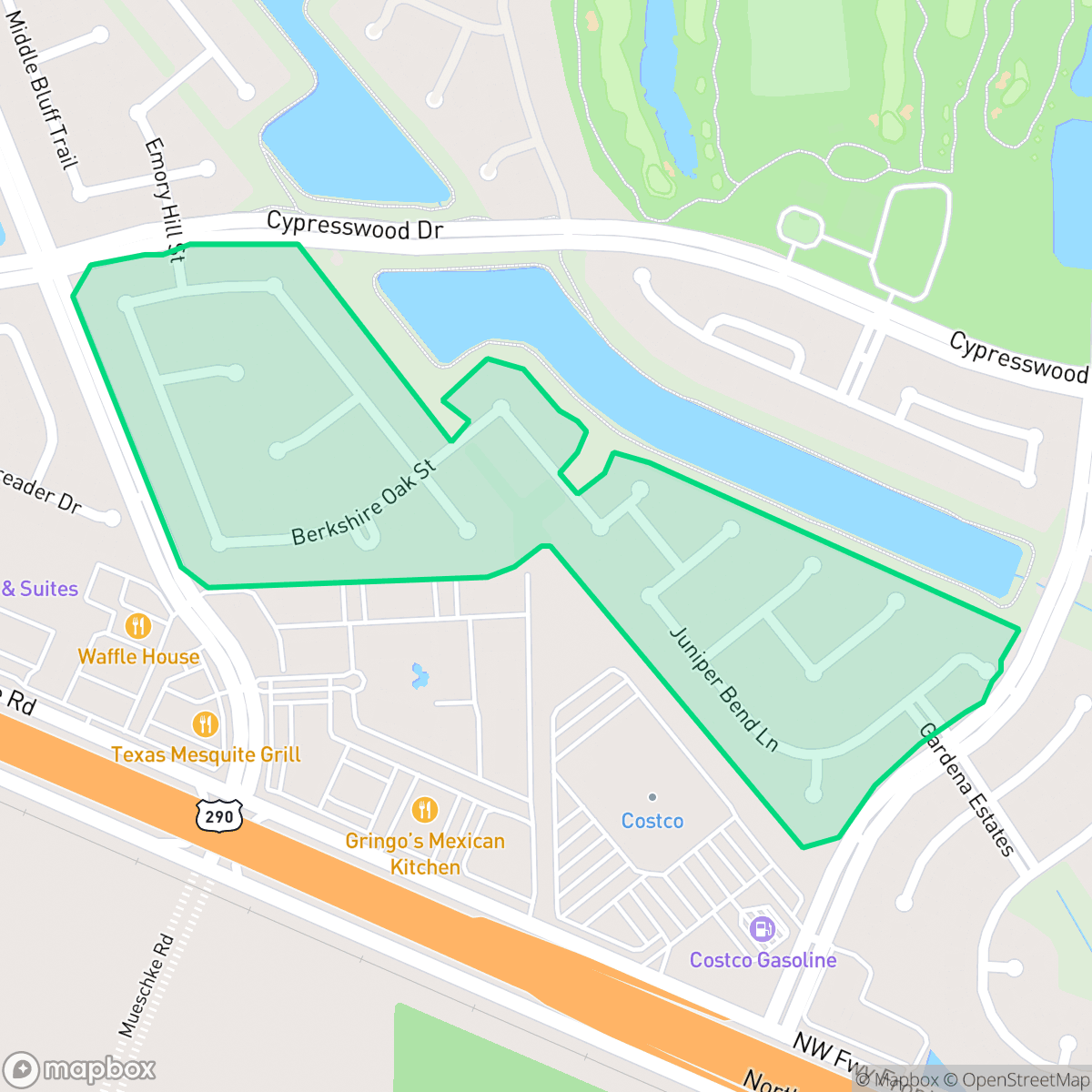
About Hyde Park
Established in 1893, the Hyde Park neighborhood in Houston was developed on land formerly owned by Mirabeau B. Lamar, the second President of the Republic of Texas. Situated within the Neartown/Montrose area, the neighborhood was originally marketed as a desirable residential enclave due to its elevation—12 feet above downtown—and excellent drainage towards Buffalo Bayou. Annexed by the City of Houston in the early 1900s, Hyde Park evolved from a distant suburb into a central urban neighborhood. It is characterized by a mix of historic bungalows and contemporary architecture, and it gained cultural significance in the 1970s as a focal point for Houston's Gay Rights Movement. Today, the area is managed by the Hyde Park United Civic Association, which actively utilizes deed restrictions to preserve the neighborhood's historic character and tree-lined streets.
The neighborhood presents a visually polished environment where tree-lined streets and established residential lots create a suburban feel within the city. The area maintains a strong sense of order through active civic management, ensuring that its architectural diversity remains well-preserved. Residents benefit from high levels of health insurance coverage and generally clean air quality, contributing to a stable and well-maintained living environment that stands out for its upscale appearance. According to iHuus data, the neighborhood provides a balanced mix of residents, ranging from young adults to seniors, who appreciate the quiet, low-key nature of the community.
This area is best suited for those who prioritize walkability and a peaceful lifestyle over high-density social scenes. While the neighborhood is highly accessible for pedestrians, those sensitive to sound may find the proximity to heavy freeway traffic and rail lines challenging. Families should note that the area falls under the Cypress-Fairbanks Independent School District, which provides strong academic programs despite facing current fiscal and operational pressures. Prospective residents should weigh the convenience of local errands on foot against the persistent acoustic impact of the surrounding transit infrastructure.
Neighborhood Scores Across 15 Qualities
Residential spacing provides a moderate degree of separation between neighbors, sitting slightly above the Houston average according to iHuus data. Some buffers exist between homes, though the area maintains a moderate density.
Pedestrian movement is supported by safe crossings and sidewalks on many streets, offering a level of walkability that is above the Houston average. Most local errands can be managed on foot according to iHuus data.
Large-scale residences and frequent upscale amenities create a highly manicured environment. According to iHuus data, the visual landscape is notably more polished than the Houston average.
Interconnected green spaces and wide paths offer many safe, low-traffic areas for walking pets. According to iHuus data, the level of dog friendliness in Hyde Park is notably higher than the Houston city average.
Planned residential developments provide a balance of single-family homes and integrated recreational green space. This landscape is very similar to the broader Houston area in terms of its mix of built environment and open land.
Local activity levels are below the Houston average, as the area functions primarily as a quiet, car-oriented suburb. Most residents will find a subdued atmosphere characterized by residential streets and sparse, localized dining options rather than high-density social hubs.
Persistent noise from nearby major freeways and transit corridors is common here. According to iHuus data, acoustic comfort is significantly lower than the Houston average due to proximity to heavy traffic and rail lines.
Air quality remains mostly clean with rare instances of elevated readings, significantly better than the Houston city average according to iHuus data.
Residential streets and open green spaces dominate the area, though a wastewater treatment plant is located in the northwest. According to iHuus data, the presence of light commercial activity is slightly lower than the city average.
Health insurance accessibility is significantly higher than the Houston average, according to iHuus data. Most residents in this area maintain active medical coverage.
Political leanings in this area are notably more conservative than the Houston average, according to iHuus data.
Residents live alongside a balanced mix of young adults, families, and seniors. This demographic variety is slightly below the Houston average, according to iHuus data.
Residual flood risk exists within parts of the area, though safety levels remain higher than the Houston average according to iHuus data.
Address-Level Insights for Hyde Park


iHuus Neighborhood Intelligence Insights
Get address-level neighborhood insights for Hyde Park
- Street-level scores — see how individual blocks compare, not just neighborhood averages
- Micro-zone boundaries — identify quiet pockets, flood boundaries, and walkable clusters before you visit
- 15 dimensions in full — walkability, noise, air quality, school quality, insurance coverage, population age profile, urban/rural index, and more
- Boundary risk alerts — know if your address sits near a block boundary where scores drop, the kind of detail no listing will ever mention
- School insights — individual school ratings and insights, not just district-level data
- Compare before you commit — side-by-side data across neighborhoods, down to block precision
No credit card required
Compare with Any Neighborhood
| Dimension | Hyde Park | Acres Home |
|---|---|---|
| 🚶 Walkabilityavg 7.08 | ||
| 🔊 Acoustic Comfortavg 4.14 | ||
| 🤫 Privacy Indexavg 5.34 | ||
| 🎨 Visual Appealavg 6.42 | ||
| 🐕 Dog Friendlinessavg 6.33 | ||
| 🗺️ Urban-Rural Indexavg 6.64 | ||
| ✨ Neighborhood Vibeavg 4.4 | ||
| 🏥 Health Insurance Coverageavg 5.46 | ||
| 🌿 Air Qualityavg 3.58 | ||
| 🏭 Industrial Proximityavg 6.9 | ||
| 🌊 Flood Safetyavg 6.27 | ||
| 🗳️ Ideological Leanavg 6.39 | ||
| 👥 Population Age Profileavg 4.6 | ||
| 🔥 Fire Safety | ||
| 🏫 School Quality |
Hyde Park Rankings
School Districts Serving Hyde Park
School Insights for Hyde Park
Below average outcomes; significant attendance and academic challenges.
School Insights
See what's really behind every school rating near Hyde Park
- Individual school ratings — each school's own score with outcome context, not just a district average
- Enrollment & class size data — student-to-teacher ratio and how it compares to the state average
- Full demographics breakdown — ethnicity and gender composition for every school in the enrollment zone
- Every school in the district — all schools within the enrollment boundary ranked by rating, not just the closest one
- Grade levels & benchmarks — elementary through high school, with below/above state-average flags
No credit card required