Grand Oaks, Houston
Updated · 987 residents
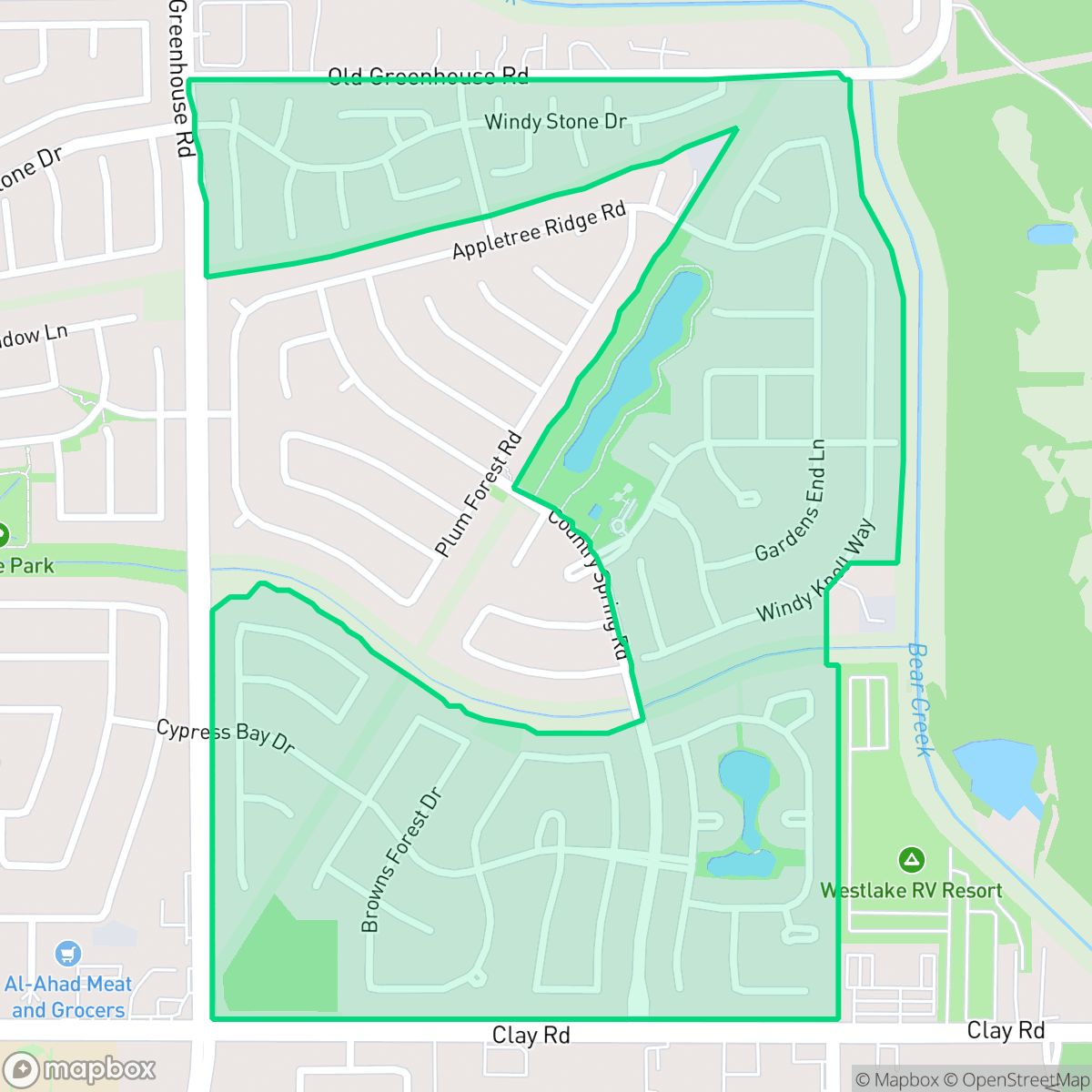
Grand Oaks is a quiet, upscale neighborhood in Houston characterized by well-maintained properties and exceptional pedestrian infrastructure. While the area offers a peaceful, suburban environment with significant green space, it remains relatively remote with limited local commercial activity.
Key Highlights
About Grand Oaks
Grand Oaks features a distinct suburban-wooded aesthetic, defined by large, affluent homes and manicured landscapes that stand out for their visual appeal. The neighborhood provides a highly walkable environment, with wide sidewalks lining residential streets that encourage outdoor activity. Residents benefit from high rates of health insurance coverage and a demographic mix that spans young adults to seniors. While the area maintains a largely liberal political leaning, it is also situated near light industrial zones and utility facilities, which contributes to a consistent background hum of traffic and occasional commercial activity.
Prospective residents should be aware of the trade-offs associated with this location. The neighborhood is notably quiet, lacking a robust selection of local businesses or services within walking distance, which necessitates travel for daily needs. Additionally, the area sits within a 500-year floodplain, requiring residents to consider potential flood risks. Families are served by the Cypress-Fairbanks Independent School District, which is recognized for strong academic performance despite experiencing recent budgetary and operational shifts. Overall, the area is best suited for those who prioritize a quiet, upscale residential setting with high walkability over proximity to urban entertainment or commercial hubs.
Neighborhood Scores Across 15 Qualities
Residential plots feature a moderate level of density with visible buffers between homes, offering slightly more privacy than the Houston average. According to iHuus data, houses are generally spaced at intervals characteristic of established suburban developments.
Pedestrian infrastructure is exceptional here, featuring wide sidewalks on both sides of most residential streets and main roads. According to iHuus data, the neighborhood offers significantly better accessibility for walkers than the Houston average.
Large, affluent homes featuring manicured lawns and private pools contribute to an aesthetic that is notably higher than the Houston average. According to iHuus data, the area is characterized by well-maintained properties and premium amenities.
Wide grassy utility corridors and expansive residential lawns offer decent space for pets, though overall accessibility is slightly below the Houston average according to iHuus data.
Residential areas consist of dense suburban tracts interspersed with significant woodland parcels and undeveloped land. This balance of housing density and green space is roughly in line with the Houston city average, according to iHuus data.
Primarily composed of quiet residential blocks and light industrial units, this area lacks significant commercial character. According to iHuus data, the neighborhood is considerably less lively than the Houston average, offering a remote atmosphere with very few local businesses or services available within walking distance.
Steady traffic sounds from nearby thoroughfares are present, though levels remain higher than the Houston average. According to iHuus data, the acoustic environment is characterized by a consistent hum from local road activity.
Air quality levels fluctuate between acceptable and unhealthy ranges, though conditions remain slightly better than the Houston average according to iHuus data. Sensitive groups should monitor local reports for days with higher pollutant concentrations.
Residential areas coexist with light industrial yards and utility facilities, resulting in a higher level of commercial traffic than the Houston average. According to iHuus data, the presence of logistics yards and a wastewater treatment plant is concentrated primarily in the northern and northeastern sectors.
Health insurance accessibility is notably higher in this area than the Houston average, according to iHuus data. Most residents have access to medical coverage through employer-sponsored or private plans.
Political leaning in this area is slightly more liberal than the Houston average, characterized by a liberal majority with a modest opposing presence according to iHuus data.
Residents live alongside a varied mix of young adults, families, and seniors. This demographic spread is slightly lower than the Houston average, according to iHuus data.
Flood risk in this area is higher than the Houston average due to its location within the 500-year floodplain. Residents should account for some residual flood risk according to iHuus data.
Address-Level Insights for Grand Oaks


iHuus Neighborhood Intelligence Insights
Get address-level neighborhood insights for Grand Oaks
- Street-level scores — see how individual blocks compare, not just neighborhood averages
- Micro-zone boundaries — identify quiet pockets, flood boundaries, and walkable clusters before you visit
- 15 dimensions in full — walkability, noise, air quality, school quality, insurance coverage, population age profile, urban/rural index, and more
- Boundary risk alerts — know if your address sits near a block boundary where scores drop, the kind of detail no listing will ever mention
- School insights — individual school ratings and insights, not just district-level data
- Compare before you commit — side-by-side data across neighborhoods, down to block precision
No credit card required
Compare with Any Neighborhood
| Dimension | Grand Oaks | Acres Home |
|---|---|---|
| 🚶 Walkabilityavg 7.08 | ||
| 🔊 Acoustic Comfortavg 4.14 | ||
| 🤫 Privacy Indexavg 5.34 | ||
| 🎨 Visual Appealavg 6.42 | ||
| 🐕 Dog Friendlinessavg 6.33 | ||
| 🗺️ Urban-Rural Indexavg 6.64 | ||
| ✨ Neighborhood Vibeavg 4.4 | ||
| 🏥 Health Insurance Coverageavg 5.46 | ||
| 🌿 Air Qualityavg 3.58 | ||
| 🏭 Industrial Proximityavg 6.9 | ||
| 🌊 Flood Safetyavg 6.27 | ||
| 🗳️ Ideological Leanavg 6.39 | ||
| 👥 Population Age Profileavg 4.6 | ||
| 🔥 Fire Safety | ||
| 🏫 School Quality |
Grand Oaks Rankings
School Districts Serving Grand Oaks
School Insights for Grand Oaks
Below average outcomes; significant attendance and academic challenges.
School Insights
See what's really behind every school rating near Grand Oaks
- Individual school ratings — each school's own score with outcome context, not just a district average
- Enrollment & class size data — student-to-teacher ratio and how it compares to the state average
- Full demographics breakdown — ethnicity and gender composition for every school in the enrollment zone
- Every school in the district — all schools within the enrollment boundary ranked by rating, not just the closest one
- Grade levels & benchmarks — elementary through high school, with below/above state-average flags
No credit card required