Gleannloch Estates, Houston
Updated · 350 residents
Gleannloch Estates offers a semi-rural aesthetic characterized by upscale, large-lot properties and extensive pedestrian infrastructure. While the neighborhood provides a quiet, suburban environment with high walkability, residents should anticipate frequent noise from nearby transit corridors and occasional periods of poor air quality.
Key Highlights
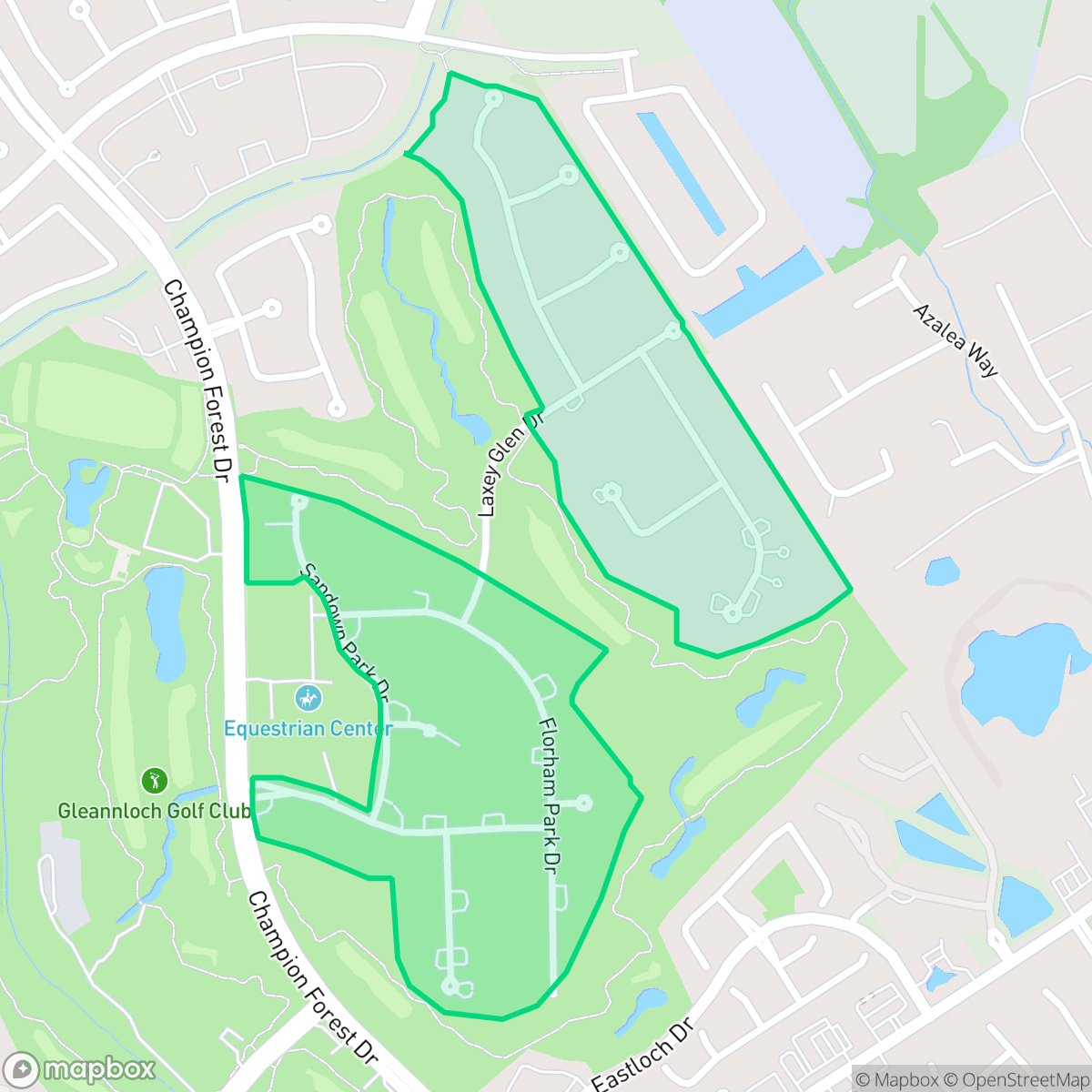
About Gleannloch Estates
Gleannloch Estates, part of the broader Gleannloch Farms community in Spring, Texas, has a distinct heritage rooted in its mid-20th-century origins as a world-renowned Arabian horse breeding farm. Established in the 1950s by oilman and banker Douglas B. Marshall, the property gained international acclaim for its high-quality stallions, which were imported from the Middle East and featured in film and the Houston Livestock Show and Rodeo. The neighborhood preserves this legacy through its equestrian center, the adaptive reuse of original white wood-clad stables and barns, and a prominent statue of the famous stallion *Morafic at the community entrance. Transitioning into a master-planned residential development in the late 1990s, the area maintains a unique character that blends its pastoral history with modern suburban amenities, including lakes, trails, and a golf course.
The neighborhood functions as a low-density, upscale residential community that maintains a spacious, semi-rural feel. It is highly walkable, with sidewalks and safe crossings that connect residents to local green spaces and recreational trails. These features make the area particularly well-suited for pet owners and those who value outdoor activity. The community is served by the Klein Independent School District, which is recognized for its academic performance and recent institutional security upgrades. According to iHuus data, the area benefits from high levels of health insurance coverage and a diverse demographic mix of families and older individuals.
Prospective residents should note that the area experiences significant noise from nearby freeways and railroad tracks, which defines the acoustic environment. While the neighborhood remains largely residential with minimal industrial presence, a wastewater facility is located near the perimeter. The area maintains moderate flood safety, as it sits within a 500-year floodplain. It is best suited for those seeking a quiet, established environment who are comfortable with the acoustic realities of living near major regional transit routes and occasional air quality fluctuations.
Neighborhood Scores Across 15 Qualities
Housing density provides a balanced level of separation between properties, offering more buffer between neighbors than the Houston average according to iHuus data.
Pedestrian activity is supported by sidewalks on one side of the street and safe crossings. This level of walkability is notably higher than the Houston average, according to iHuus data.
Large residential properties and frequent upscale amenities create a landscape that is notably more aesthetically pleasing than the Houston average, according to iHuus data.
Extensive parks, trails, and open spaces are readily available for pets. According to iHuus data, this area offers significantly more space for outdoor activity than the Houston average.
Large residential lots and vast green spaces provide a more open, semi-rural feel compared to the denser Houston average. According to iHuus data, the area features low-density estate living characterized by scattered homes and significant woodland or field buffers.
Residential life here remains calm and steady, as the area features fewer local amenities and less commercial activity than the Houston average. While some pockets offer accessible local businesses, much of the neighborhood maintains a subdued, low-density character.
Frequent noise from nearby major freeways and railroad tracks defines the acoustic environment. This level of disturbance is higher than the average for Houston.
Frequent unhealthy air quality levels pose a significant risk to sensitive groups. According to iHuus data, the air quality in this area is notably worse than the Houston average.
Quiet residential streets and open green spaces characterize the area, with very little industrial presence compared to the Houston average. A wastewater treatment facility is visible near the edge of the neighborhood, but the landscape remains largely devoid of heavy industrial activity.
Health insurance accessibility is notably higher than the Houston average, according to iHuus data. This suggests a well-covered population with greater access to medical services.
Voting patterns and census indicators show a notably more conservative political leaning than the Houston average, according to iHuus data.
Residents live alongside a balanced mix of young adults, families, and older individuals. This demographic variety is slightly more diverse than the average found throughout Houston, according to iHuus data.
Residual flood risk exists within this area, though safety levels remain higher than the Houston average. According to iHuus data, the location sits within a 500-year floodplain.
Address-Level Insights for Gleannloch Estates


iHuus Neighborhood Intelligence Insights
Get address-level neighborhood insights for Gleannloch Estates
- Street-level scores — see how individual blocks compare, not just neighborhood averages
- Micro-zone boundaries — identify quiet pockets, flood boundaries, and walkable clusters before you visit
- 15 dimensions in full — walkability, noise, air quality, school quality, insurance coverage, population age profile, urban/rural index, and more
- Boundary risk alerts — know if your address sits near a block boundary where scores drop, the kind of detail no listing will ever mention
- School insights — individual school ratings and insights, not just district-level data
- Compare before you commit — side-by-side data across neighborhoods, down to block precision
No credit card required
Compare with Any Neighborhood
| Dimension | Gleannloch Estates | Acres Home |
|---|---|---|
| 🚶 Walkabilityavg 7.08 | ||
| 🔊 Acoustic Comfortavg 4.14 | ||
| 🤫 Privacy Indexavg 5.34 | ||
| 🎨 Visual Appealavg 6.42 | ||
| 🐕 Dog Friendlinessavg 6.33 | ||
| 🗺️ Urban-Rural Indexavg 6.64 | ||
| ✨ Neighborhood Vibeavg 4.4 | ||
| 🏥 Health Insurance Coverageavg 5.46 | ||
| 🌿 Air Qualityavg 3.58 | ||
| 🏭 Industrial Proximityavg 6.9 | ||
| 🌊 Flood Safetyavg 6.27 | ||
| 🗳️ Ideological Leanavg 6.39 | ||
| 👥 Population Age Profileavg 4.6 | ||
| 🔥 Fire Safety | ||
| 🏫 School Quality |
Gleannloch Estates Rankings
School Districts Serving Gleannloch Estates
School Insights for Gleannloch Estates
Below average outcomes; significant attendance and academic challenges.
School Insights
See what's really behind every school rating near Gleannloch Estates
- Individual school ratings — each school's own score with outcome context, not just a district average
- Enrollment & class size data — student-to-teacher ratio and how it compares to the state average
- Full demographics breakdown — ethnicity and gender composition for every school in the enrollment zone
- Every school in the district — all schools within the enrollment boundary ranked by rating, not just the closest one
- Grade levels & benchmarks — elementary through high school, with below/above state-average flags
No credit card required