Eldridge - West Oaks, Houston
Updated · 72,288 residents
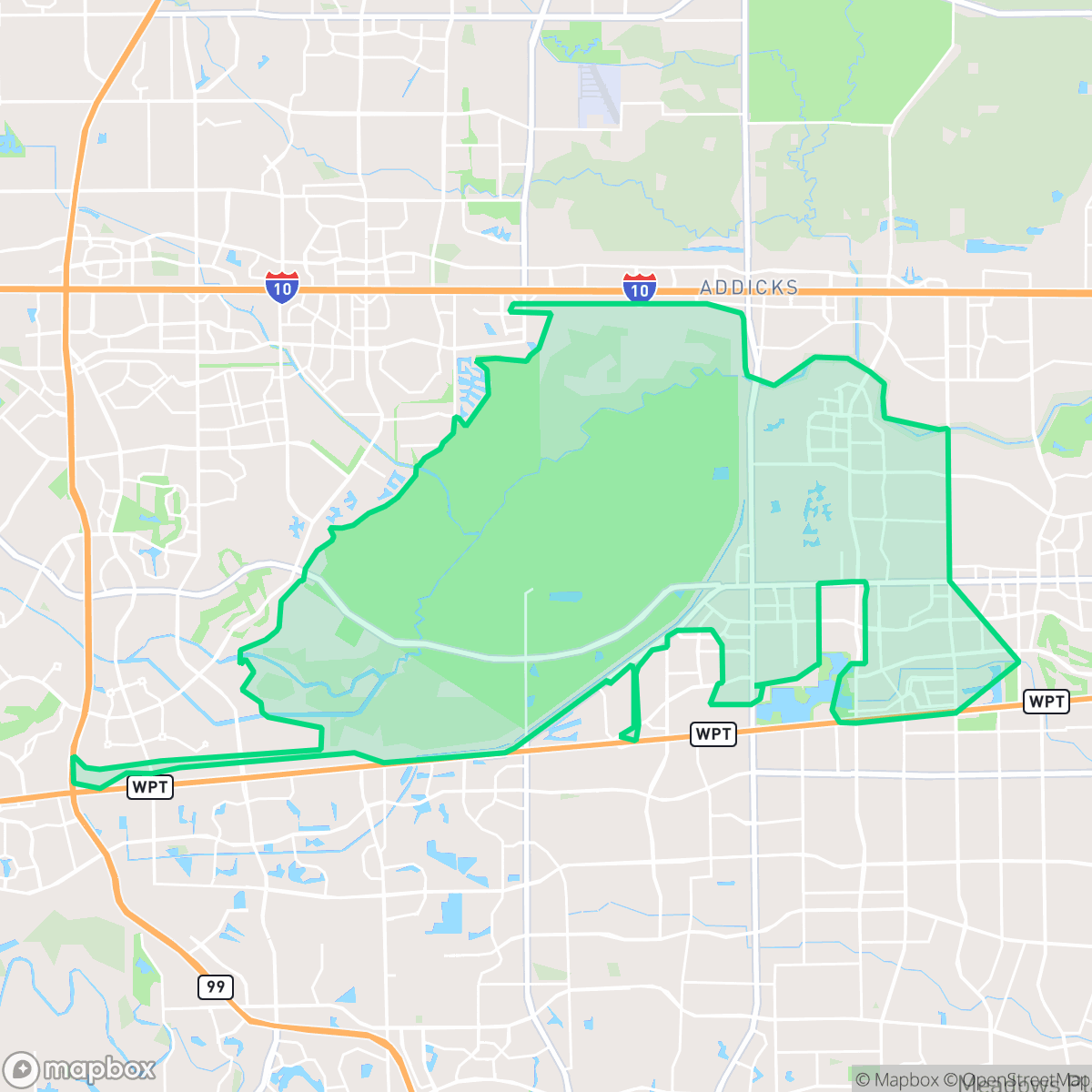
Eldridge - West Oaks is a dense suburban hub in West Houston defined by its proximity to the Energy Corridor and expansive green corridors like the Barker Reservoir. Residents benefit from a highly walkable environment with consistent sidewalk networks, though the area features a mix of tightly packed housing and significant commercial infrastructure.
Key Highlights
About Eldridge - West Oaks
Located in far West Houston, the Eldridge - West Oaks neighborhood transitioned rapidly from rural ranchland in the late 20th century into a major residential and commercial hub. Positioned partially within Houston's Energy Corridor, the area's development has been heavily shaped by the energy industry. The Barker Reservoir covers more than half of the neighborhood's territory, while the remaining landscape features a mix of multi-family complexes and single-family gated communities, many built around man-made lakes. Eldridge - West Oaks is characterized by its extensive green spaces, including Ray Miller Park and access to the Terry Hershey Park trail system and George Bush Park. It is also home to the West Oaks Mall, which opened in 1984 and served as a central commercial landmark for the rapidly growing area.
The area functions as a central residential and commercial node, balancing dense apartment clusters and suburban housing tracts with access to extensive outdoor recreation. The neighborhood maintains a strong connection to the local energy industry, providing a steady rhythm of professional life. Residents enjoy well-maintained pedestrian infrastructure, including continuous sidewalks and paved trails that link residential blocks to local parks and commercial centers.
While the neighborhood offers high accessibility for pedestrians and dog owners, potential residents should weigh the trade-offs of living in a high-density environment. The area experiences moderate noise levels from road traffic and faces specific challenges related to flood safety and air quality. It is best suited for professionals working in the nearby Energy Corridor or families seeking proximity to highly-rated schools and established suburban amenities.
Neighborhood Scores Across 15 Qualities
Residential spacing varies between closely packed apartment clusters and detached single-family homes with modest buffers. According to iHuus data, this level of density is slightly higher than the Houston average.
Extensive sidewalk networks and dedicated trail systems make walking throughout the area easy and safe. According to iHuus data, the connectivity of these paths and low-traffic residential loops is notably higher than the Houston average.
Large homes with complex rooflines and a high frequency of private backyard pools characterize this area. According to iHuus data, the visual landscape is notably more polished than the Houston average.
Extensive green corridors, drainage canals, and wide grassy verges provide ample space for pets away from traffic. According to iHuus data, these connected walking paths and park-like amenities make the area more dog-friendly than the Houston average.
Open land and scattered homes are common throughout this area, providing a slightly more rural character than the typical Houston urban landscape. Residents can expect frequent sightings of fields, woodlands, and large green spaces interspersed with suburban development.
A balanced mix of residential life and essential services provides a steady rhythm that is slightly more active than the city average. While some pockets offer diverse dining and social hubs, much of the area is car-dependent with many businesses located near major highways or industrial zones.
Local traffic from nearby busy streets creates a consistent hum throughout the area. This level of acoustic activity is roughly consistent with the typical noise levels found across Houston.
Air quality levels fluctuate between acceptable and unhealthy, presenting occasional concerns for sensitive groups. According to iHuus data, the air quality in this area is slightly better than the Houston average.
Primarily residential and light commercial, this area lacks heavy industrial hazards and is significantly cleaner than the Houston average. While some utility infrastructure and wastewater treatment facilities exist, there is an absence of large-scale warehouses or heavy manufacturing.
Health insurance accessibility is higher in this area than the Houston average, according to iHuus data. Most residents have access to medical coverage through employer-sponsored or private plans.
Political leanings in this area are split relatively evenly between conservative and liberal views, closely mirroring the broader political landscape of Houston.
Residents live alongside a balanced mix of young adults, families, and older generations. This age distribution is roughly in line with the typical profile found across Houston.
Flood risk in this area is slightly higher than the Houston average; according to iHuus data, FEMA has not yet finalized a detailed flood study for this specific location.
Address-Level Insights for Eldridge - West Oaks


iHuus Neighborhood Intelligence Insights
Get address-level neighborhood insights for Eldridge - West Oaks
- Street-level scores — see how individual blocks compare, not just neighborhood averages
- Micro-zone boundaries — identify quiet pockets, flood boundaries, and walkable clusters before you visit
- 15 dimensions in full — walkability, noise, air quality, school quality, insurance coverage, population age profile, urban/rural index, and more
- Boundary risk alerts — know if your address sits near a block boundary where scores drop, the kind of detail no listing will ever mention
- School insights — individual school ratings and insights, not just district-level data
- Compare before you commit — side-by-side data across neighborhoods, down to block precision
No credit card required
Compare with Any Neighborhood
| Dimension | Eldridge - West Oaks | Acres Home |
|---|---|---|
| 🚶 Walkabilityavg 7.08 | ||
| 🔊 Acoustic Comfortavg 4.14 | ||
| 🤫 Privacy Indexavg 5.34 | ||
| 🎨 Visual Appealavg 6.42 | ||
| 🐕 Dog Friendlinessavg 6.33 | ||
| 🗺️ Urban-Rural Indexavg 6.64 | ||
| ✨ Neighborhood Vibeavg 4.4 | ||
| 🏥 Health Insurance Coverageavg 5.46 | ||
| 🌿 Air Qualityavg 3.58 | ||
| 🏭 Industrial Proximityavg 6.9 | ||
| 🌊 Flood Safetyavg 6.27 | ||
| 🗳️ Ideological Leanavg 6.39 | ||
| 👥 Population Age Profileavg 4.6 | ||
| 🔥 Fire Safety | ||
| 🏫 School Quality |
Eldridge - West Oaks Rankings
School Districts Serving Eldridge - West Oaks
School Insights for Eldridge - West Oaks
Below average outcomes; significant attendance and academic challenges.
School Insights
See what's really behind every school rating near Eldridge - West Oaks
- Individual school ratings — each school's own score with outcome context, not just a district average
- Enrollment & class size data — student-to-teacher ratio and how it compares to the state average
- Full demographics breakdown — ethnicity and gender composition for every school in the enrollment zone
- Every school in the district — all schools within the enrollment boundary ranked by rating, not just the closest one
- Grade levels & benchmarks — elementary through high school, with below/above state-average flags
No credit card required