Village Estates III, Highland Village
Updated · 487 residents
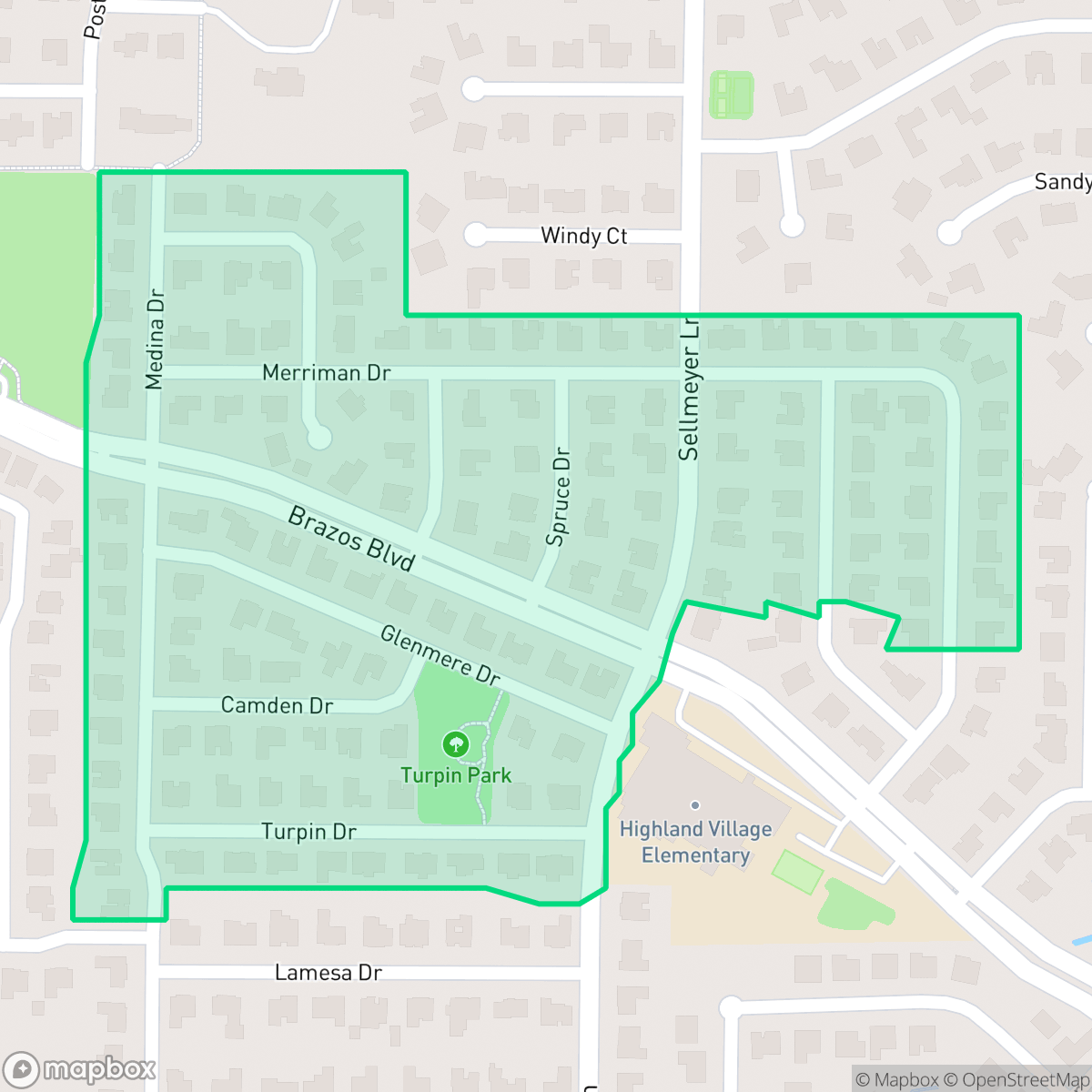
Village Estates III is a quiet, residential subdivision defined by its mid-1970s brick ranch architecture and mature tree canopy. The area offers a low-density, rural-leaning environment with high owner occupancy and convenient access to local schools within the Lewisville Independent School District.
Key Highlights
About Village Estates III
Village Estates III is an established residential subdivision in Highland Village, Texas, that developed during a local construction boom in the mid-to-late 1970s. Established alongside neighboring Willow Creek Estates, the subdivision features traditional single-family brick ranch homes mostly constructed between 1974 and 1979. The neighborhood's early integration into the city's infrastructure is highlighted by local municipal codes; on September 8, 1978, the City of Highland Village established a specific water main tapping fee structure explicitly naming Village Estates III alongside the Highland Hills subdivision. Today, the neighborhood remains a stable, highly owner-occupied pocket of the city, defined by its quiet suburban character, mature tree canopy, and close proximity to local schools like Highland Village Elementary and public recreation spaces.
The neighborhood maintains a stable, low-key atmosphere characterized by its significant distance from industrial activity and a focus on residential privacy. With a high urban-rural index, the area provides a spacious, quiet setting that appeals to those seeking a retreat from denser city centers. Residents benefit from strong health insurance coverage and a peaceful acoustic environment, with average noise levels recorded at 54 decibels, primarily attributed to local road traffic.
While the area offers high visual appeal and dog friendliness, it is less suited for those prioritizing high walkability or vibrant nightlife. It is best suited for families and professionals who value a settled, suburban lifestyle and proximity to established community infrastructure. Residents typically rely on personal vehicles for daily errands due to the suburban layout, though the neighborhood remains well-connected to the broader amenities of Highland Village.
Neighborhood Scores Across 15 Qualities
Residential spacing offers a moderate level of separation between neighbors. This balance of density and buffering is consistent with the typical layout found throughout Highland Village.
Sidewalks are available on one side of the street with safe crossings provided. This level of accessibility is slightly lower than the average for Highland Village.
Large residences and frequent upscale amenities define the local landscape. This visual quality is roughly consistent with the Highland Village average, according to iHuus data.
Expansive parks, trails, and open spaces are easily accessible for pet owners. This area offers significantly more outdoor space for dogs than the Highland Village average, according to iHuus data.
Extensive natural greenery and farmland dominate the landscape, providing a much more rural character than the typical Highland Village setting. According to iHuus data, the area features very low building density and minimal urban development.
Activity levels are subdued, offering a tranquil environment near local water features with limited commercial density. This area is less active than the Highland Village average, as most nearby amenities focus on daily convenience rather than nightlife.
Acoustic levels remain low with only occasional sounds from distant traffic or passing trains. This environment is significantly quieter than the Highland Village average, according to iHuus data.
Air quality levels in this area fluctuate between acceptable and unhealthy, posing occasional concerns for sensitive groups. This consistency aligns with the average levels found throughout Highland Village, according to iHuus data.
No warehouses or industrial facilities exist within the neighborhood, providing a setting that is even more residential than the Highland Village average. According to iHuus data, the area consists of quiet streets and open green spaces without proximity to hazard sites.
Health insurance access remains high among residents, though it sits slightly below the Highland Village average according to iHuus data.
Voting and census patterns indicate a strongly conservative leaning that is very similar to the broader Highland Village area, according to iHuus data.
Residents of all life stages are represented here, offering a demographic spread that is slightly more diverse than the Highland Village average according to iHuus data.
Flood risk in this area is slightly higher than the Highland Village average, though current FEMA records indicate an undetermined level of risk due to incomplete detailed studies.
Address-Level Insights for Village Estates III


iHuus Neighborhood Intelligence Insights
Get address-level neighborhood insights for Village Estates III
- Street-level scores — see how individual blocks compare, not just neighborhood averages
- Micro-zone boundaries — identify quiet pockets, flood boundaries, and walkable clusters before you visit
- 15 dimensions in full — walkability, noise, air quality, school quality, insurance coverage, population age profile, urban/rural index, and more
- Boundary risk alerts — know if your address sits near a block boundary where scores drop, the kind of detail no listing will ever mention
- School insights — individual school ratings and insights, not just district-level data
- Compare before you commit — side-by-side data across neighborhoods, down to block precision
No credit card required
Compare with Any Neighborhood
| Dimension | Village Estates III | Barnett |
|---|---|---|
| 🚶 Walkabilityavg 8.52 | ||
| 🔊 Acoustic Comfortavg 4.15 | ||
| 🤫 Privacy Indexavg 6.05 | ||
| 🎨 Visual Appealavg 8.23 | ||
| 🐕 Dog Friendlinessavg 7.72 | ||
| 🗺️ Urban-Rural Indexavg 7.31 | ||
| ✨ Neighborhood Vibeavg 4.47 | ||
| 🏥 Health Insurance Coverageavg 8.89 | ||
| 🌿 Air Qualityavg 4 | ||
| 🏭 Industrial Proximityavg 9.49 | ||
| 🌊 Flood Safetyavg 5.31 | ||
| 🗳️ Ideological Leanavg 1.32 | ||
| 👥 Population Age Profileavg 4.98 | ||
| 🔥 Fire Safety | ||
| 🏫 School Quality |
Village Estates III Rankings
School Districts Serving Village Estates III
School Insights for Village Estates III
Below average outcomes; significant attendance and academic challenges.
School Insights
See what's really behind every school rating near Village Estates III
- Individual school ratings — each school's own score with outcome context, not just a district average
- Enrollment & class size data — student-to-teacher ratio and how it compares to the state average
- Full demographics breakdown — ethnicity and gender composition for every school in the enrollment zone
- Every school in the district — all schools within the enrollment boundary ranked by rating, not just the closest one
- Grade levels & benchmarks — elementary through high school, with below/above state-average flags
No credit card required