Castlewood Section III-II-A, Highland Village
Updated · 174 residents
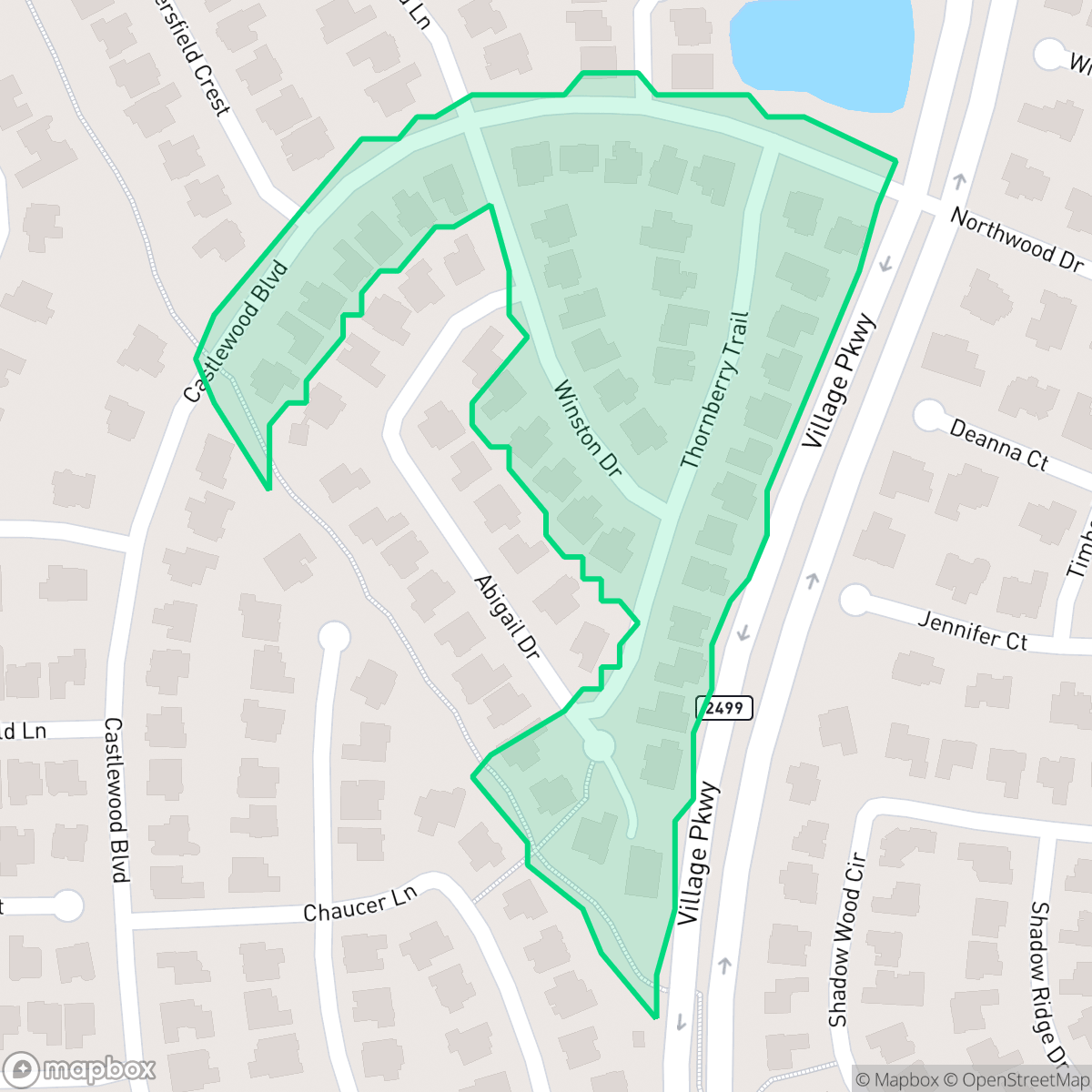
Castlewood Section III-II-A is a quiet, residential enclave in Highland Village, Texas, characterized by large single-family homes and established tree canopies. While the neighborhood offers a highly walkable street network, it is notably impacted by consistent road traffic noise.
Key Highlights
About Castlewood Section III-II-A
Castlewood Section III-II-A is a tranquil, purely residential community defined by its spacious lots and architectural consistency. The area features a mature landscape with significant tree cover, providing a suburban aesthetic that prioritizes privacy and green space. Residents benefit from a well-connected sidewalk system that encourages pedestrian activity, though the neighborhood remains largely detached from commercial centers, requiring travel for most daily errands. According to recent data, the area maintains a high standard of health insurance coverage and is entirely free from industrial activity, contributing to a stable living environment.
Prospective residents should consider the trade-offs regarding acoustic comfort, as the neighborhood experiences elevated noise levels primarily due to proximity to road traffic. The area is served by the Lewisville Independent School District, which offers strong academic programming despite ongoing district-wide fiscal adjustments. This neighborhood is best suited for those seeking a settled, suburban lifestyle who value a quiet, pedestrian-friendly environment and are comfortable with the ambient noise common to this part of the region.
Neighborhood Scores Across 15 Qualities
Typical suburban layouts provide a moderate amount of buffer between neighboring homes. This level of privacy and density is consistent with the average found throughout Highland Village, according to iHuus data.
Low traffic cul-de-sacs and an extensive sidewalk network provide safe pedestrian conditions, though the area is slightly less walkable than the Highland Village average according to iHuus data.
Large homes featuring complex rooflines and private pools characterize the local scenery. This area offers a visual quality that is nearly consistent with the Highland Village average.
Sidewalk verges and nearby wooded edges offer adequate space for pets, though overall amenities are below the Highland Village average according to iHuus data.
Residential plots feature a significant tree canopy and scattered homes amid open land, offering a more open landscape than the typical Highland Village suburban density. According to iHuus data, this area maintains a slightly more rustic character compared to the city average.
Lively pockets of amenities and restaurants are interspersed with quiet, suburban blocks near local water features. This area offers more activity and variety than the typical Highland Village neighborhood, according to iHuus data.
Significant acoustic disruption is present due to the immediate proximity of an airport runway. According to iHuus data, noise levels here are substantially higher than the average for Highland Village.
Air quality fluctuates between acceptable and unhealthy levels, matching the typical conditions found throughout Highland Village. Sensitive individuals should monitor local air quality reports during periods of concern.
No warehouses, industrial facilities, or hazard sites are present within this area. This residential environment is even more secluded from industrial activity than the Highland Village average, according to iHuus data.
Health insurance access is exceptionally high among residents here, sitting well above the Highland Village average according to iHuus data.
Political indicators in this area reflect a predominantly conservative leaning, which is notably more pronounced than the Highland Village average according to iHuus data.
Residents live alongside a balanced mix of young adults, families, and seniors. This age distribution is slightly more varied than the typical profile seen across Highland Village, according to iHuus data.
Flood risk levels in this area are higher than the Highland Village average, though a definitive assessment is unavailable because FEMA has not completed a detailed study for this specific zone. According to iHuus data, residents should remain aware of potential uncertainty regarding precise flood boundaries.
Address-Level Insights for Castlewood Section III-II-A


iHuus Neighborhood Intelligence Insights
Get address-level neighborhood insights for Castlewood Section III-II-A
- Street-level scores — see how individual blocks compare, not just neighborhood averages
- Micro-zone boundaries — identify quiet pockets, flood boundaries, and walkable clusters before you visit
- 15 dimensions in full — walkability, noise, air quality, school quality, insurance coverage, population age profile, urban/rural index, and more
- Boundary risk alerts — know if your address sits near a block boundary where scores drop, the kind of detail no listing will ever mention
- School insights — individual school ratings and insights, not just district-level data
- Compare before you commit — side-by-side data across neighborhoods, down to block precision
No credit card required
Compare with Any Neighborhood
| Dimension | Castlewood Section III-II-A | Barnett |
|---|---|---|
| 🚶 Walkabilityavg 8.52 | ||
| 🔊 Acoustic Comfortavg 4.15 | ||
| 🤫 Privacy Indexavg 6.05 | ||
| 🎨 Visual Appealavg 8.23 | ||
| 🐕 Dog Friendlinessavg 7.72 | ||
| 🗺️ Urban-Rural Indexavg 7.31 | ||
| ✨ Neighborhood Vibeavg 4.47 | ||
| 🏥 Health Insurance Coverageavg 8.89 | ||
| 🌿 Air Qualityavg 4 | ||
| 🏭 Industrial Proximityavg 9.49 | ||
| 🌊 Flood Safetyavg 5.31 | ||
| 🗳️ Ideological Leanavg 1.32 | ||
| 👥 Population Age Profileavg 4.98 | ||
| 🔥 Fire Safety | ||
| 🏫 School Quality |
Castlewood Section III-II-A Rankings
School Districts Serving Castlewood Section III-II-A
School Insights for Castlewood Section III-II-A
Below average outcomes; significant attendance and academic challenges.
School Insights
See what's really behind every school rating near Castlewood Section III-II-A
- Individual school ratings — each school's own score with outcome context, not just a district average
- Enrollment & class size data — student-to-teacher ratio and how it compares to the state average
- Full demographics breakdown — ethnicity and gender composition for every school in the enrollment zone
- Every school in the district — all schools within the enrollment boundary ranked by rating, not just the closest one
- Grade levels & benchmarks — elementary through high school, with below/above state-average flags
No credit card required