White Lake Hills, Fort Worth
Updated · 2,135 residents
White Lake Hills is an East Fort Worth residential neighborhood known for its mid-century brick homes and proximity to green spaces like Oakland Lake Park. While the area offers high dog friendliness and scenic westward views, residents should note the significant noise levels resulting from nearby highway traffic.
Key Highlights
About White Lake Hills
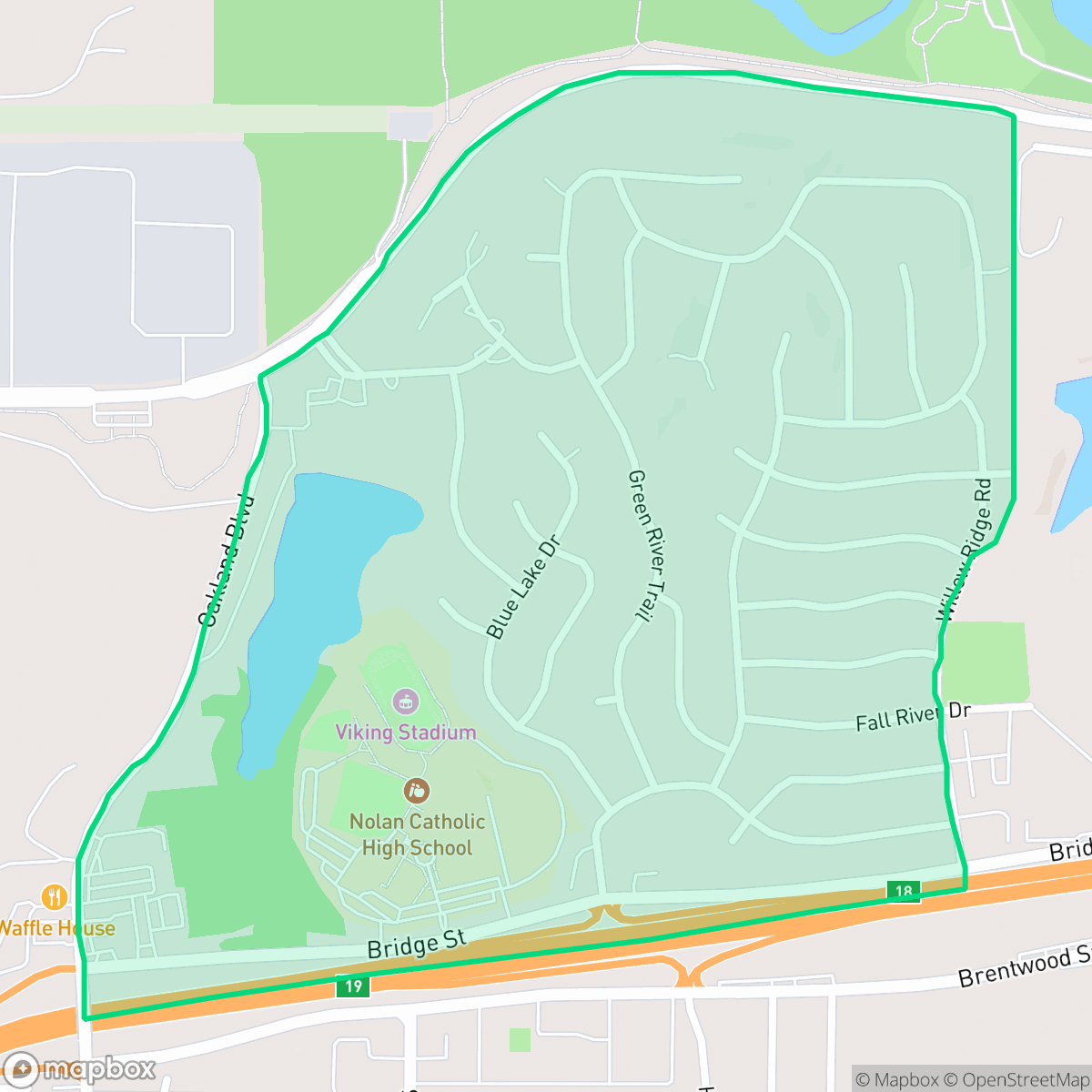
Located five miles east of downtown Fort Worth, the hilly neighborhood of White Lake Hills surrounds its namesake, White Lake. The lake was named for William Franklin White, who was granted the land in 1926 by Texas Governor Miriam “Ma” Ferguson. Much of the area was once owned by publisher Amon G. Carter’s development company and served as the site of the White Lake Dairy, which famously supplied milk for Fort Worth’s Pangburn Candy. Developer Ted C. Peters began residential construction here in 1962, and the neighborhood was featured in the 1963 Parade of Homes. Characterized by scenic westward views, the area features mid-century traditional brick and contemporary homes. It is bordered by Oakland Boulevard and Randol Mill Road, named for a historic local grain mill operated by W.A. Randol.
The neighborhood maintains a quiet, suburban atmosphere characterized by its hilly terrain and a mix of traditional and contemporary residential architecture. Situated just five miles east of downtown Fort Worth, the area provides residents with easy access to regional thoroughfares and local recreational spots. The environment is notably dog-friendly, making it a popular choice for pet owners who appreciate the balance of residential streets and nearby outdoor areas, despite the limited number of businesses within immediate walking distance.
Prospective residents should weigh the neighborhood's aesthetic appeal against certain environmental factors. Acoustic comfort is lower than the city average, with road traffic contributing to a baseline noise level of approximately 64 decibels. Additionally, the local school landscape is varied; while the broader Fort Worth Independent School District faces operational challenges, the East Fort Worth Montessori Academy serves as a highly-rated educational option within the vicinity. The area is best suited for those who prioritize a established suburban feel and pet-inclusive living over proximity to dense commercial centers.
Neighborhood Scores Across 15 Qualities
Residential spacing offers a balanced mix of density with some buffer between properties. According to iHuus data, this level of separation is slightly higher than the Fort Worth average.
Sidewalks are available on one side of the streets and safe crossings are provided. This level of pedestrian accessibility is slightly lower than the Fort Worth city average.
Large residences and upscale amenities characterize the area, providing a more polished aesthetic than the Fort Worth average according to iHuus data.
Abundant connected green spaces and wide, low-traffic paths make this area significantly more dog friendly than the Fort Worth average. According to iHuus data, the neighborhood provides many safe environments for walking pets away from busy streets.
Open land and undeveloped spaces are common here, providing a more spread out atmosphere than most of Fort Worth. According to iHuus data, residents will find scattered homes situated among fields and woodland clusters.
Activity levels are below the Fort Worth average, as most of the area consists of quiet, low-density residential and rural landscapes. While some dining and social spots are available near major roads, the neighborhood lacks a high concentration of walkable businesses.
Frequent noise from nearby freeways and railroad tracks is common in this area. According to iHuus data, acoustic comfort levels are lower than the Fort Worth city average.
Frequent unhealthy air quality levels pose significant risks to sensitive groups. According to iHuus data, conditions in this area are notably worse than the Fort Worth average.
Industrial presence is non-existent here, providing a quiet environment significantly cleaner of warehouses and hazard sites than the Fort Worth average. According to iHuus data, the area consists entirely of residential streets and open green spaces without nearby industrial yards or heavy commercial traffic.
Health insurance access is slightly higher than the Fort Worth average. According to iHuus data, a significant portion of the population remains uninsured.
Political leanings in this area trend more liberal than the Fort Worth average, according to iHuus data.
Residents experience a more varied age distribution than the Fort Worth average, with a balanced presence of young adults, families, and older individuals. According to iHuus data, this demographic spread creates a multigenerational community profile.
Properties in this area are located within a designated floodplain, which carries a significantly higher risk of flooding than the Fort Worth average. According to iHuus data, residents should expect that flood insurance will likely be a requirement for most homes here.
Address-Level Insights for White Lake Hills


iHuus Neighborhood Intelligence Insights
Get address-level neighborhood insights for White Lake Hills
- Street-level scores — see how individual blocks compare, not just neighborhood averages
- Micro-zone boundaries — identify quiet pockets, flood boundaries, and walkable clusters before you visit
- 15 dimensions in full — walkability, noise, air quality, school quality, insurance coverage, population age profile, urban/rural index, and more
- Boundary risk alerts — know if your address sits near a block boundary where scores drop, the kind of detail no listing will ever mention
- School insights — individual school ratings and insights, not just district-level data
- Compare before you commit — side-by-side data across neighborhoods, down to block precision
No credit card required
Compare with Any Neighborhood
| Dimension | White Lake Hills | Alamo Heights |
|---|---|---|
| 🚶 Walkabilityavg 7.5 | ||
| 🔊 Acoustic Comfortavg 4.12 | ||
| 🤫 Privacy Indexavg 5.64 | ||
| 🎨 Visual Appealavg 6.38 | ||
| 🐕 Dog Friendlinessavg 6.57 | ||
| 🗺️ Urban-Rural Indexavg 6.92 | ||
| ✨ Neighborhood Vibeavg 4.56 | ||
| 🏥 Health Insurance Coverageavg 5.8 | ||
| 🌿 Air Qualityavg 3.68 | ||
| 🏭 Industrial Proximityavg 8.13 | ||
| 🌊 Flood Safetyavg 3.61 | ||
| 🗳️ Ideological Leanavg 5.62 | ||
| 👥 Population Age Profileavg 4.51 | ||
| 🔥 Fire Safety | ||
| 🏫 School Quality |
White Lake Hills Rankings
School Districts Serving White Lake Hills
School Insights for White Lake Hills
Below average outcomes; significant attendance and academic challenges.
School Insights
See what's really behind every school rating near White Lake Hills
- Individual school ratings — each school's own score with outcome context, not just a district average
- Enrollment & class size data — student-to-teacher ratio and how it compares to the state average
- Full demographics breakdown — ethnicity and gender composition for every school in the enrollment zone
- Every school in the district — all schools within the enrollment boundary ranked by rating, not just the closest one
- Grade levels & benchmarks — elementary through high school, with below/above state-average flags
No credit card required