Westcliff, Fort Worth
Updated · 2,320 residents
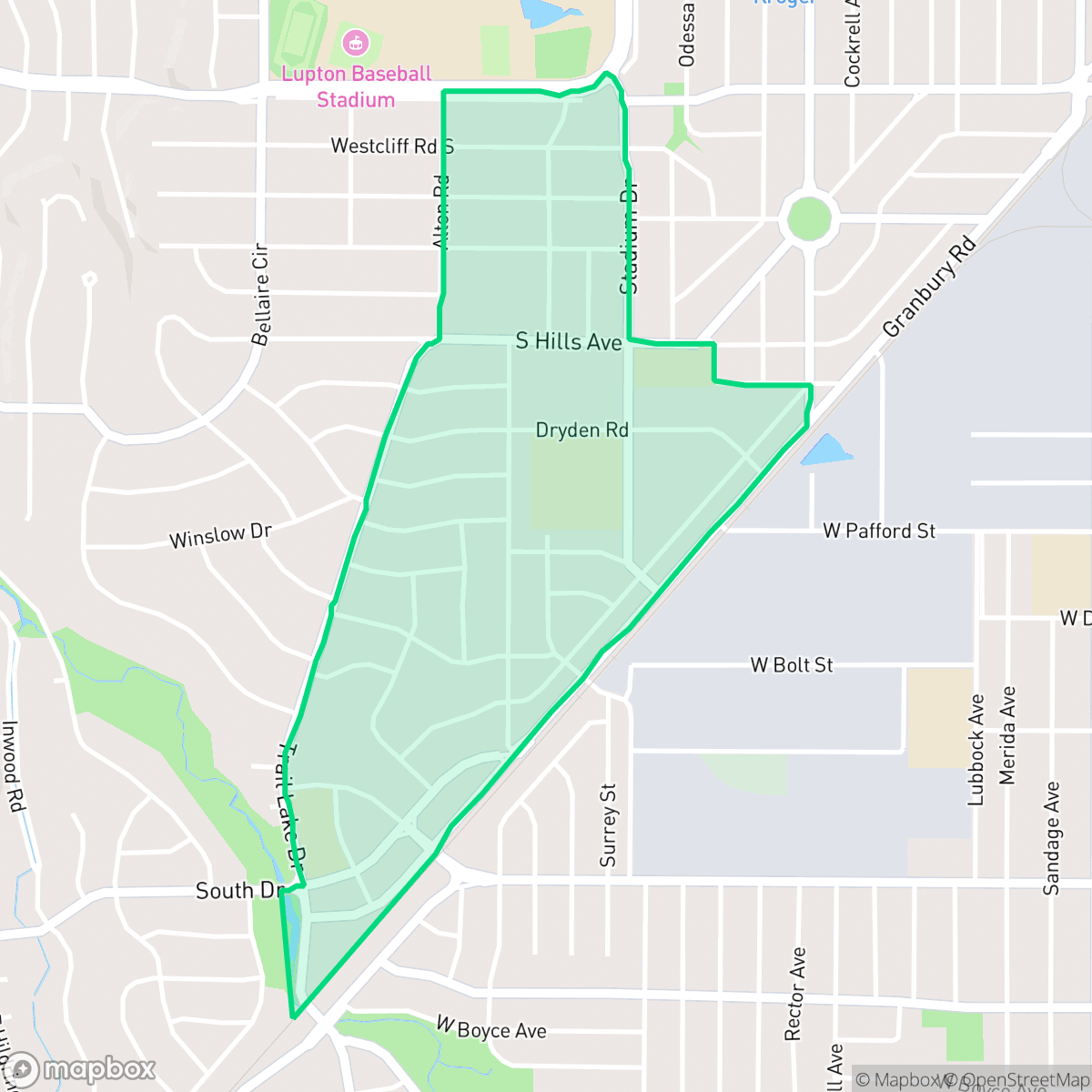
Westcliff is a quiet, mid-century residential enclave in Fort Worth known for its high walkability and proximity to local green spaces like Foster Park. The area offers a serene suburban atmosphere with convenient access to neighborhood staples, making it a stable choice for those seeking a tranquil, established community.
Key Highlights
About Westcliff
Located southwest of downtown Fort Worth near Texas Christian University, the Westcliff neighborhood originated from the 1867 Thomas B. Taylor Survey. Following early ownership by the Reynolds Cattle Company, developer J.E. Foster purchased the land in 1945. Foster established the Westcliff Company, which built the Westcliff Shopping Center and developed the neighborhood’s residential sections between 1945 and 1965. Architectural styles here predominantly feature mid-century ranch homes. A unique local deed restriction dictated that four homes bordering the historic Edwards Ranch had to face west, preventing the Edwards family from viewing the properties' back doors. Today, the neighborhood maintains its mid-century character, anchored by local green spaces like Foster Park.
Characterized by its mid-century ranch homes and quiet, tree-lined streets, this neighborhood offers a distinct suburban feel within Fort Worth. Residents enjoy a high level of walkability, allowing for easy access to local services such as Cafe Bella and various community churches. According to iHuus data, the area maintains a balanced urban-rural profile that prioritizes residential comfort over high-density commercial activity, resulting in a peaceful environment anchored by the expansive Foster Park. The neighborhood is particularly well-suited for those who value architectural consistency and a slow-paced, established atmosphere. While the broader Fort Worth Independent School District faces systemic challenges, families in this area benefit from access to high-performing local schools like Westcliff Elementary and Mclean 6th Grade. Prospective residents should note that while the area is generally quiet, the proximity to road traffic and rail lines results in an average noise level of 56 decibels. The community is highly regarded for its flood safety and strong health insurance coverage, providing a stable foundation for long-term residents.
Neighborhood Scores Across 15 Qualities
Residential lots feature moderate density with consistent yard spacing between neighboring houses. This level of separation is slightly higher than the Fort Worth average, according to iHuus data.
Sidewalks are consistently available on both sides of many streets and pedestrian-friendly roundabouts are visible. This level of walkability is above the Fort Worth average according to iHuus data.
Large, well-maintained homes with private pools and expansive driveways contribute to a visual landscape that is more aesthetically pleasing than the Fort Worth average. According to iHuus data, the presence of upscale amenities enhances the overall scenery within the area.
Access to a large public park and wide, buffered pathways makes this area more suitable for dog owners than much of Fort Worth. These green spaces are well-connected to the sidewalk network, providing safe routes away from traffic.
Open land and woodland pockets are interspersed with a residential grid and an industrial corridor. This landscape is largely consistent with the average density found across Fort Worth, according to iHuus data.
Steady rhythms of residential life and light industrial activity create a calm atmosphere that is consistent with the city average. While some pockets offer accessible dining and local services, much of the area remains a serene, low-density environment.
Steady sounds from nearby busy streets create a level of acoustic activity that is notably higher than the Fort Worth average. According to iHuus data, this creates a consistent background hum throughout the area.
Air quality in this area experiences occasional periods of concern for sensitive groups; however, conditions are slightly better than the Fort Worth average according to iHuus data.
Industrial activity is minimal throughout Westcliff, offering a more residential feel than the Fort Worth average. While some areas contain light commercial services or logistics hubs, the neighborhood remains largely free of heavy manufacturing or large-scale factory zones according to iHuus data.
Health insurance accessibility is notably higher in Westcliff than the Fort Worth average, according to iHuus data. This indicates a greater proportion of the resident population has access to medical coverage.
Political views in this area are split relatively evenly between conservative and liberal leanings. This distribution is notably more moderate than the broader Fort Worth average, according to iHuus data.
A significant majority of the population consists of young adults, reflecting a demographic that is younger than the average for Fort Worth. According to iHuus data, there is a relatively small presence of families or older residents in this area.
Some residual flood risk exists within this area, though safety levels are notably higher than the Fort Worth average according to iHuus data.
Address-Level Insights for Westcliff


iHuus Neighborhood Intelligence Insights
Get address-level neighborhood insights for Westcliff
- Street-level scores — see how individual blocks compare, not just neighborhood averages
- Micro-zone boundaries — identify quiet pockets, flood boundaries, and walkable clusters before you visit
- 15 dimensions in full — walkability, noise, air quality, school quality, insurance coverage, population age profile, urban/rural index, and more
- Boundary risk alerts — know if your address sits near a block boundary where scores drop, the kind of detail no listing will ever mention
- School insights — individual school ratings and insights, not just district-level data
- Compare before you commit — side-by-side data across neighborhoods, down to block precision
No credit card required
Compare with Any Neighborhood
| Dimension | Westcliff | Alamo Heights |
|---|---|---|
| 🚶 Walkabilityavg 7.5 | ||
| 🔊 Acoustic Comfortavg 4.12 | ||
| 🤫 Privacy Indexavg 5.64 | ||
| 🎨 Visual Appealavg 6.38 | ||
| 🐕 Dog Friendlinessavg 6.57 | ||
| 🗺️ Urban-Rural Indexavg 6.92 | ||
| ✨ Neighborhood Vibeavg 4.56 | ||
| 🏥 Health Insurance Coverageavg 5.8 | ||
| 🌿 Air Qualityavg 3.68 | ||
| 🏭 Industrial Proximityavg 8.13 | ||
| 🌊 Flood Safetyavg 3.61 | ||
| 🗳️ Ideological Leanavg 5.62 | ||
| 👥 Population Age Profileavg 4.51 | ||
| 🔥 Fire Safety | ||
| 🏫 School Quality |
Westcliff Rankings
School Districts Serving Westcliff
School Insights for Westcliff
Below average outcomes; significant attendance and academic challenges.
School Insights
See what's really behind every school rating near Westcliff
- Individual school ratings — each school's own score with outcome context, not just a district average
- Enrollment & class size data — student-to-teacher ratio and how it compares to the state average
- Full demographics breakdown — ethnicity and gender composition for every school in the enrollment zone
- Every school in the district — all schools within the enrollment boundary ranked by rating, not just the closest one
- Grade levels & benchmarks — elementary through high school, with below/above state-average flags
No credit card required