South Hemphill Heights, Fort Worth
Updated · 1,439 residents
South Hemphill Heights is a historic district in Fort Worth defined by its early 20th-century architectural variety and high walkability. While the neighborhood offers a convenient, grid-pattern layout near local dining and green space, residents should anticipate elevated noise levels from nearby road traffic and the railway.
Key Highlights
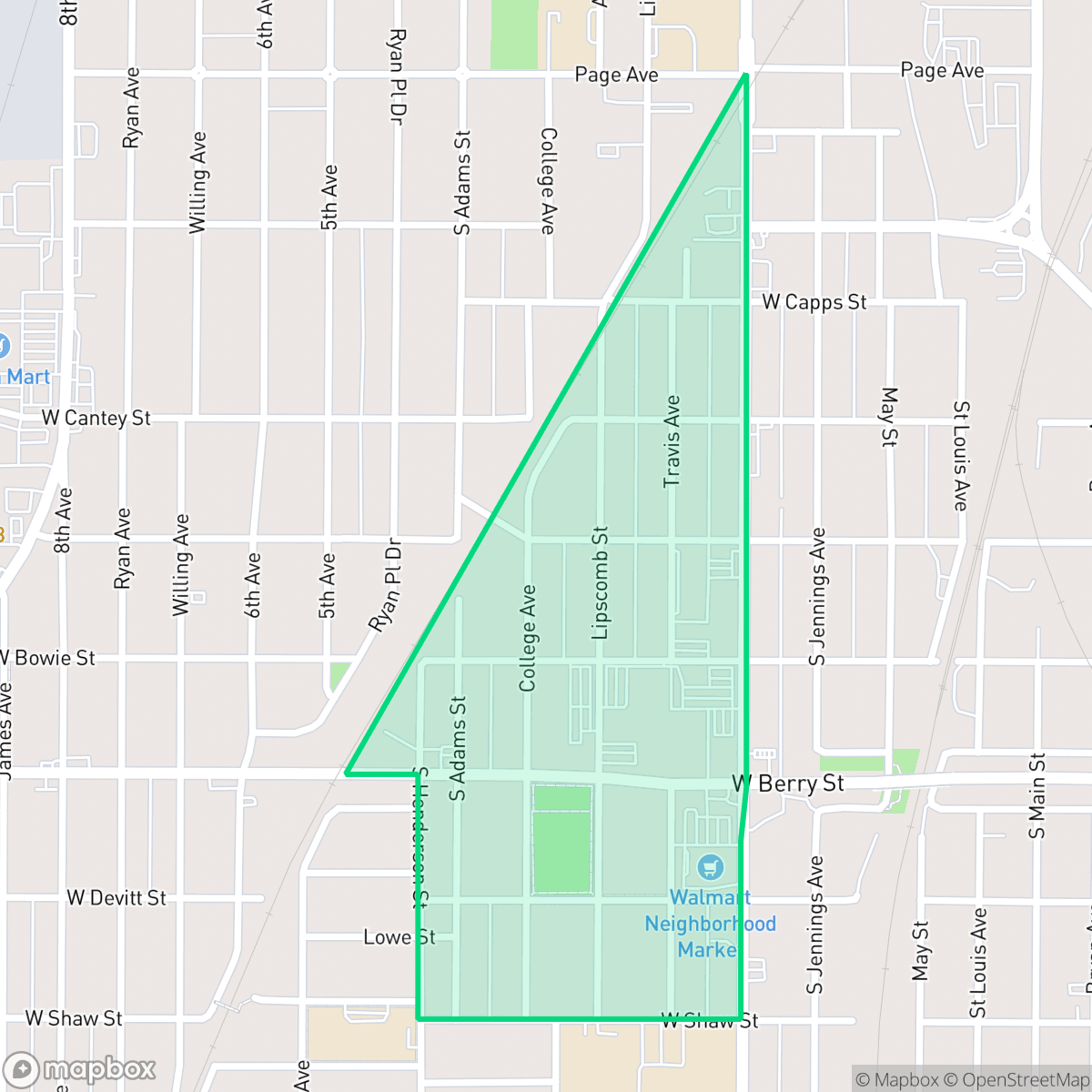
About South Hemphill Heights
Platted in 1904, the South Hemphill Heights neighborhood in Fort Worth, Texas, remained a largely undeveloped "paper subdivision" until after 1910. Growth was catalyzed when developer William Capps donated the land for Capps Park in 1910, alongside the 1908 establishment of what became the historic Travis Avenue Baptist Church. Today, the neighborhood boasts a remarkably high concentration of historic residences built before 1939, particularly within the Hemphill Heights Conservation District. Its architectural landscape is defined by early 20th-century Craftsman bungalows, Prairie-style homes (such as the landmark Connelley House), and Period Revival cottages. These well-preserved structures, along with its traditional grid-pattern streets and mature trees, preserve the distinct middle-class character of Fort Worth's historic Southside.
The area functions as a dense residential pocket where historic preservation meets active daily commerce. Its high walkability makes it a practical choice for those who prefer to navigate the neighborhood on foot, particularly when visiting local staples like the restaurants near Capps Park. The environment is characterized by a blend of residential streets and commercial activity, creating a lively yet occasionally noisy atmosphere that reflects its proximity to major transit corridors and industrial zones.
Prospective residents should weigh the architectural appeal and strong flood safety ratings against the neighborhood's acoustic environment and the challenges currently facing the local school district. With a significant ideological lean toward progressive values, the community maintains a distinct identity within the broader Fort Worth landscape. According to iHuus data, the area is best suited for individuals or small households who prioritize neighborhood connectivity and historic character over absolute quiet or top-tier school district performance.
Neighborhood Scores Across 15 Qualities
Residential spacing in South Hemphill Heights is comparable to the Fort Worth average, featuring a mix of closely situated homes and typical suburban lot buffers. According to iHuus data, some areas maintain a consistent distance between neighbors while others feature higher density layouts.
Sidewalks are available along a grid street layout, though many are narrow and situated close to traffic. Walking ease is below the Fort Worth average, but low traffic on residential streets improves safety for pedestrians.
Uniform tract housing and small yards define the local landscape, which offers less visual variety than the Fort Worth average. According to iHuus data, the area lacks luxury amenities or complex architectural features.
Public green space and wide grassy sidewalks are scarce in this area, making it less suitable for dog owners compared to the Fort Worth average. According to iHuus data, most greenery is contained within private fenced backyards rather than accessible public parks.
Open land and scattered homes provide a semi-rural atmosphere that is slightly less dense than the Fort Worth average. According to iHuus data, the area features a mix of suburban grids and pockets of woodland near the rail lines.
Mix of quiet suburban streets and light industrial areas provides a moderate level of activity that is slightly higher than the Fort Worth average. Residents have access to a variety of local dining options and social hubs, though many businesses are not within easy walking distance.
Frequent disturbances from nearby railroad lines and heavy freeway traffic characterize the area. This level of acoustic activity is notably higher than the Fort Worth average, according to iHuus data.
Air quality levels in this area fluctuate between acceptable and unhealthy, presenting occasional concerns for sensitive groups. This-level of pollution is slightly higher than the average found across Fort Worth.
Active freight rail lines and large warehouses along the eastern edge create more industrial adjacency than is typical for Fort Worth. While much of the area remains residential, the presence of grain elevators and large-scale storage contributes to higher levels of industrial-related activity and noise.
Health insurance enrollment is notably lower than the Fort Worth average, according to iHuus data. Residents may face greater challenges accessing employer-sponsored or private coverage within this area.
Voting patterns and census indicators show a significantly more liberal political leaning than the Fort Worth average, according to iHuus data.
Residents live alongside a balanced mix of young adults, families, and seniors. According to iHuus data, the age distribution in this area is consistent with the average found across Fort Worth.
Flood risk levels in this area are comparable to the Fort Worth average, though detailed FEMA studies for this specific location remain incomplete. Residents should exercise caution as the precise susceptibility to flooding is currently undetermined.
Address-Level Insights for South Hemphill Heights


iHuus Neighborhood Intelligence Insights
Get address-level neighborhood insights for South Hemphill Heights
- Street-level scores — see how individual blocks compare, not just neighborhood averages
- Micro-zone boundaries — identify quiet pockets, flood boundaries, and walkable clusters before you visit
- 15 dimensions in full — walkability, noise, air quality, school quality, insurance coverage, population age profile, urban/rural index, and more
- Boundary risk alerts — know if your address sits near a block boundary where scores drop, the kind of detail no listing will ever mention
- School insights — individual school ratings and insights, not just district-level data
- Compare before you commit — side-by-side data across neighborhoods, down to block precision
No credit card required
Compare with Any Neighborhood
| Dimension | South Hemphill Heights | Alamo Heights |
|---|---|---|
| 🚶 Walkabilityavg 7.5 | ||
| 🔊 Acoustic Comfortavg 4.12 | ||
| 🤫 Privacy Indexavg 5.64 | ||
| 🎨 Visual Appealavg 6.38 | ||
| 🐕 Dog Friendlinessavg 6.57 | ||
| 🗺️ Urban-Rural Indexavg 6.92 | ||
| ✨ Neighborhood Vibeavg 4.56 | ||
| 🏥 Health Insurance Coverageavg 5.8 | ||
| 🌿 Air Qualityavg 3.68 | ||
| 🏭 Industrial Proximityavg 8.13 | ||
| 🌊 Flood Safetyavg 3.61 | ||
| 🗳️ Ideological Leanavg 5.62 | ||
| 👥 Population Age Profileavg 4.51 | ||
| 🔥 Fire Safety | ||
| 🏫 School Quality |
South Hemphill Heights Rankings
School Districts Serving South Hemphill Heights
School Insights for South Hemphill Heights
Below average outcomes; significant attendance and academic challenges.
School Insights
See what's really behind every school rating near South Hemphill Heights
- Individual school ratings — each school's own score with outcome context, not just a district average
- Enrollment & class size data — student-to-teacher ratio and how it compares to the state average
- Full demographics breakdown — ethnicity and gender composition for every school in the enrollment zone
- Every school in the district — all schools within the enrollment boundary ranked by rating, not just the closest one
- Grade levels & benchmarks — elementary through high school, with below/above state-average flags
No credit card required