Ryanwood, Fort Worth
Updated · 4,449 residents
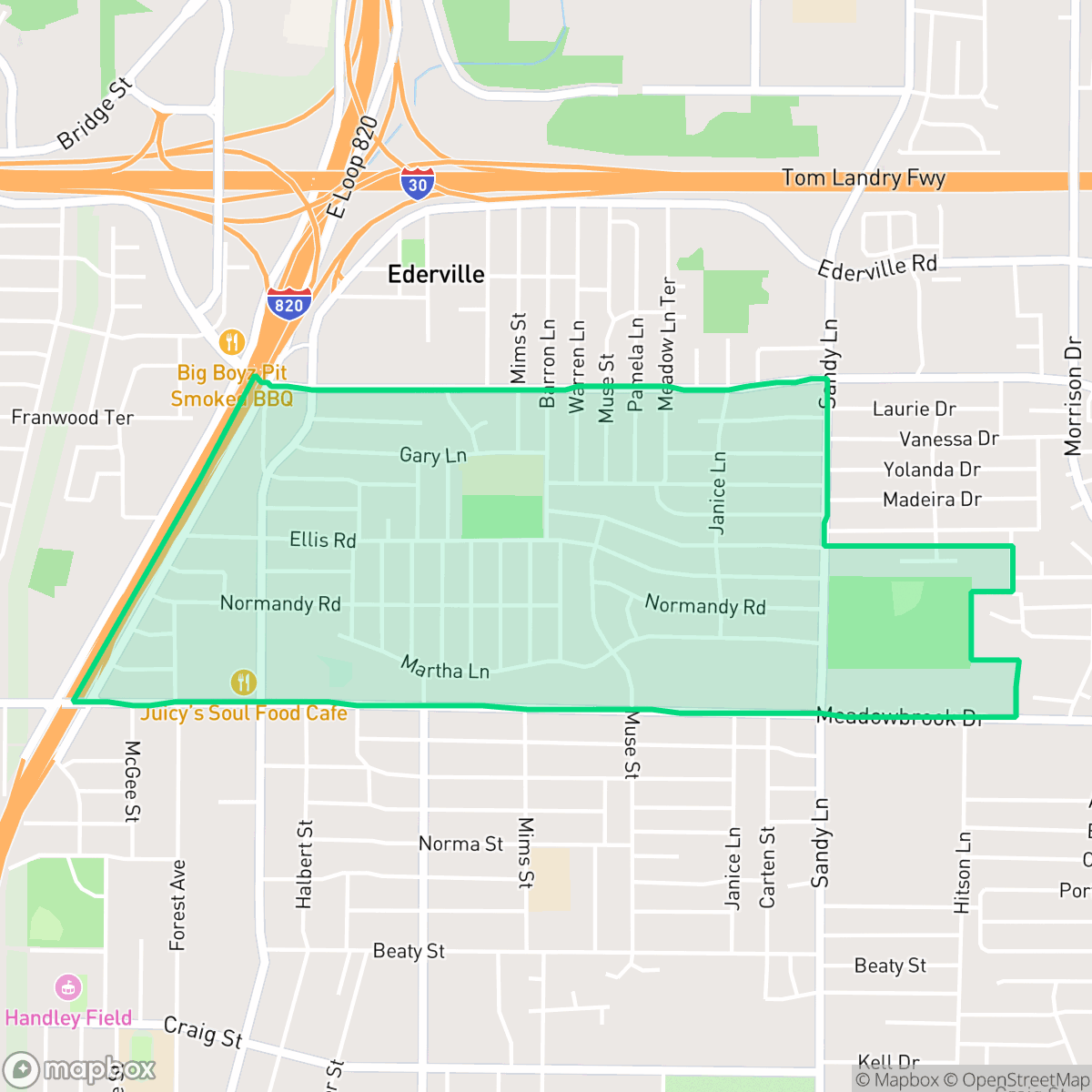
Ryanwood is a quiet, low-density residential neighborhood in Fort Worth characterized by large detached homes on spacious, well-manicured lots. While the area offers a peaceful suburban environment with access to local parks, it remains a car-dependent community lacking in sidewalk infrastructure.
Key Highlights
About Ryanwood
Ryanwood is a predominantly residential area in Fort Worth that emphasizes privacy and open space. The neighborhood features a classic suburban layout with significant tree canopy and generous lot sizes, providing residents with private pools and well-maintained yards. It maintains a calm atmosphere with minimal commercial or industrial activity, making it a secluded retreat from the busier parts of the city. Notable local features include Sunset Hills Park and various community-focused organizations, which contribute to the area's modest, low-density character. According to iHuus data, the neighborhood provides a high level of acoustic comfort, ensuring a quiet living environment for its residents.
Prospective residents should note that the neighborhood is highly car-dependent, as the street grid lacks sidewalks and few amenities are within walking distance. While the area offers a peaceful environment, it faces challenges regarding air quality and local school district performance within the Fort Worth Independent School District. It is best suited for families or individuals who prioritize a quiet, private living space and are comfortable relying on personal vehicles for daily errands and commuting.
Neighborhood Scores Across 15 Qualities
Detached homes feature fenced yards and moderate spacing between neighbors, offering slightly more seclusion than the Fort Worth average. According to iHuus data, most residences maintain a consistent buffer between properties.
Sidewalk availability varies between residential streets, though low-traffic areas and safe crossings remain accessible. Walking accessibility in this area is lower than the Fort Worth average according to iHuus data.
Large homes on generous lots with manicured lawns and private pools contribute to a visual aesthetic that is slightly above the Fort Worth average. According to iHuus data, the presence of multi-car driveways and premium amenities indicates an affluent residential character.
Large adjacent wooded areas and public parks with trails provide ample space for pets. While slightly below the Fort Worth average, the neighborhood features consistent sidewalk verges that support regular exercise routines.
Low-density residential layouts feature scattered single-family homes and significant tree canopy. This area provides a slightly more open, semi-rural atmosphere compared to the typical Fort Worth urban landscape.
Varied pockets of activity range from quiet, rural landscapes to lively suburban blocks with accessible dining and parks. This level of local engagement and amenity availability is notably higher than the Fort Worth average, according to iHuus data.
A steady hum of local traffic from a nearby busy street is present, though acoustic levels remain more favorable than the Fort Worth average according to iHuus data.
Frequent unhealthy air quality levels pose a significant risk to sensitive groups. According to iHuus data, the air quality in Ryanwood is considerably worse than the average for Fort Worth.
Industrial facilities and warehouses are entirely absent from this area, providing a cleaner environment than the Fort Worth average. According to iHuus data, the neighborhood consists strictly of residential, recreational, and light school zones with no detected industrial hazards.
Health insurance enrollment in this area is lower than the Fort Worth average, according to iHuus data.
Voting patterns and census indicators show a strong liberal leaning, which is notably more progressive than the average for Fort Worth. According to iHuus data, the area displays distinct political alignment compared to the rest of the city.
A varied mix of young adults, families, and older residents characterizes the area. This demographic distribution is slightly more varied than the average found across Fort Worth, according to iHuus data.
Flood risk in this area is higher than the Fort Worth average; however, current FEMA studies for this specific location remain incomplete.
Address-Level Insights for Ryanwood


iHuus Neighborhood Intelligence Insights
Get address-level neighborhood insights for Ryanwood
- Street-level scores — see how individual blocks compare, not just neighborhood averages
- Micro-zone boundaries — identify quiet pockets, flood boundaries, and walkable clusters before you visit
- 15 dimensions in full — walkability, noise, air quality, school quality, insurance coverage, population age profile, urban/rural index, and more
- Boundary risk alerts — know if your address sits near a block boundary where scores drop, the kind of detail no listing will ever mention
- School insights — individual school ratings and insights, not just district-level data
- Compare before you commit — side-by-side data across neighborhoods, down to block precision
No credit card required
Compare with Any Neighborhood
| Dimension | Ryanwood | Alamo Heights |
|---|---|---|
| 🚶 Walkabilityavg 7.5 | ||
| 🔊 Acoustic Comfortavg 4.12 | ||
| 🤫 Privacy Indexavg 5.64 | ||
| 🎨 Visual Appealavg 6.38 | ||
| 🐕 Dog Friendlinessavg 6.57 | ||
| 🗺️ Urban-Rural Indexavg 6.92 | ||
| ✨ Neighborhood Vibeavg 4.56 | ||
| 🏥 Health Insurance Coverageavg 5.8 | ||
| 🌿 Air Qualityavg 3.68 | ||
| 🏭 Industrial Proximityavg 8.13 | ||
| 🌊 Flood Safetyavg 3.61 | ||
| 🗳️ Ideological Leanavg 5.62 | ||
| 👥 Population Age Profileavg 4.51 | ||
| 🔥 Fire Safety | ||
| 🏫 School Quality |
Ryanwood Rankings
School Districts Serving Ryanwood
School Insights for Ryanwood
Below average outcomes; significant attendance and academic challenges.
School Insights
See what's really behind every school rating near Ryanwood
- Individual school ratings — each school's own score with outcome context, not just a district average
- Enrollment & class size data — student-to-teacher ratio and how it compares to the state average
- Full demographics breakdown — ethnicity and gender composition for every school in the enrollment zone
- Every school in the district — all schools within the enrollment boundary ranked by rating, not just the closest one
- Grade levels & benchmarks — elementary through high school, with below/above state-average flags
No credit card required