Paschal, Fort Worth
Updated · 2,022 residents
Paschal is a highly walkable residential enclave defined by its proximity to Texas Christian University and a dense grid of early 20th-century homes. Residents enjoy excellent pedestrian access to local amenities and parks, though the area experiences higher noise levels from road traffic and limited privacy due to closely spaced housing.
Key Highlights
About Paschal
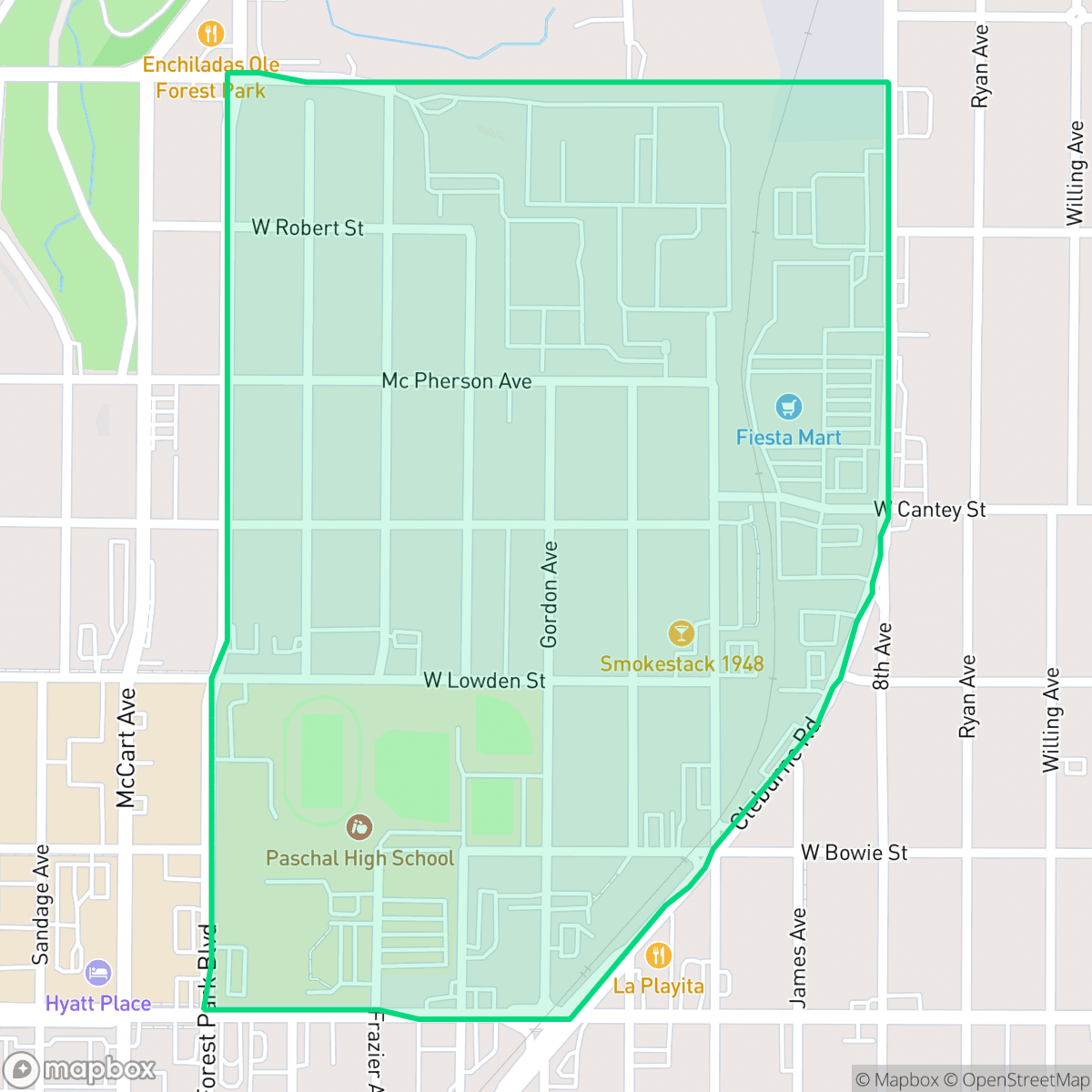
The Paschal neighborhood, also known as the Paschal Area, is a historic residential enclave in Fort Worth, Texas, located near Texas Christian University (TCU). Developed within subdivisions platted between 1890 and 1926, the neighborhood was surveyed in 1983 as part of the Forest Park Conservation District. It is characterized by early 20th-century single-story wood-frame houses, including a notable 1937 Bungalow Court on Wayside Street consisting of four identical gabled cottages. Historically, the neighborhood was connected to the city via the TCU streetcar line in the 1920s. In recent years, its proximity to TCU has brought modern development pressures, particularly the construction of dense student housing known as "stealth dorms," prompting local zoning efforts to protect and preserve its historic single-family character.
The area functions as a vibrant, transit-oriented community where the grid-based street layout supports high walkability. It serves as a hub for students and long-term residents alike, offering access to diverse dining options and significant green spaces like nearby sports fields. According to iHuus data, the neighborhood maintains a strong connection to urban amenities while avoiding heavy industrial encroachment, making it a functional choice for those prioritizing ease of movement. Prospective residents should consider the trade-offs of living in such a densely populated environment. While the area is exceptionally accessible, the close proximity of homes and moderate noise levels from local traffic may impact acoustic comfort. It is well-suited for individuals who value a walkable lifestyle near university resources, provided they are comfortable with the inherent noise and privacy limitations of a high-density, urban-adjacent setting.
Neighborhood Scores Across 15 Qualities
Residential structures feature varying levels of separation, with some areas having narrow side-yard setbacks and closely packed housing. This sense of spacing is slightly lower than the Fort Worth average, as certain sections contain dense clusters of homes and shared walls in multi-family complexes.
Pedestrian infrastructure is well developed with a consistent sidewalk network and clear crosswalks at major intersections. This level of connectivity is higher than the Fort Worth average, making it easy to navigate the area on foot.
Mid-century housing and newer multi-family units define the area's appearance; this level of visual variety is roughly in line with the Fort Worth average.
Large public parks and trail systems in the northwest portion of the area provide significant green space for pets. According to iHuus data, these amenities make the neighborhood slightly more dog friendly than the Fort Worth average.
Residential blocks feature a blend of dense apartment complexes and single-family homes, providing a slightly more urban feel than the city average. According to iHuus data, the area transitions between organized residential grids and pockets of open land.
Frequent visits to local dining and coffee hubs are common here, as the area possesses a significantly higher level of activity than the Fort Worth average. According to iHuus data, the neighborhood features a noticeable concentration of social nodes and diverse eateries spread across suburban blocks.
Steady sounds from nearby busy streets create a consistent ambient hum. This level of acoustic activity is slightly higher than the Fort Worth average, according to iHuus data.
Air quality levels fluctuate between acceptable and unhealthy, presenting occasional concerns for sensitive groups. This pattern is slightly higher than the Fort Worth average according to iHuus data.
Residential life remains largely undisturbed by heavy industry, as the area consists primarily of quiet streets and light commercial zones. While some warehouses exist near the diagonal rail and road corridors, the lack of significant industrial hazards is slightly better than the Fort Worth average.
Health insurance accessibility is notably higher than the Fort Worth average, according to iHuus data. Residents in this area benefit from more widespread coverage options compared to much of the city.
Political leanings in this area are split evenly between conservative and liberal perspectives, matching the overall average for Fort Worth.
Residents live alongside a varied mix of young adults, families, and seniors. This demographic distribution is slightly lower than the Fort Worth average, according to iHuus data.
Flood risk levels in Paschal are higher than the Fort Worth average, though a detailed study from FEMA is currently unavailable for this specific area. According to iHuus data, the level of risk remains at an undetermined moderate state.
Address-Level Insights for Paschal


iHuus Neighborhood Intelligence Insights
Get address-level neighborhood insights for Paschal
- Street-level scores — see how individual blocks compare, not just neighborhood averages
- Micro-zone boundaries — identify quiet pockets, flood boundaries, and walkable clusters before you visit
- 15 dimensions in full — walkability, noise, air quality, school quality, insurance coverage, population age profile, urban/rural index, and more
- Boundary risk alerts — know if your address sits near a block boundary where scores drop, the kind of detail no listing will ever mention
- School insights — individual school ratings and insights, not just district-level data
- Compare before you commit — side-by-side data across neighborhoods, down to block precision
No credit card required
Compare with Any Neighborhood
| Dimension | Paschal | Alamo Heights |
|---|---|---|
| 🚶 Walkabilityavg 7.5 | ||
| 🔊 Acoustic Comfortavg 4.12 | ||
| 🤫 Privacy Indexavg 5.64 | ||
| 🎨 Visual Appealavg 6.38 | ||
| 🐕 Dog Friendlinessavg 6.57 | ||
| 🗺️ Urban-Rural Indexavg 6.92 | ||
| ✨ Neighborhood Vibeavg 4.56 | ||
| 🏥 Health Insurance Coverageavg 5.8 | ||
| 🌿 Air Qualityavg 3.68 | ||
| 🏭 Industrial Proximityavg 8.13 | ||
| 🌊 Flood Safetyavg 3.61 | ||
| 🗳️ Ideological Leanavg 5.62 | ||
| 👥 Population Age Profileavg 4.51 | ||
| 🔥 Fire Safety | ||
| 🏫 School Quality |
Paschal Rankings
School Districts Serving Paschal
School Insights for Paschal
Below average outcomes; significant attendance and academic challenges.
School Insights
See what's really behind every school rating near Paschal
- Individual school ratings — each school's own score with outcome context, not just a district average
- Enrollment & class size data — student-to-teacher ratio and how it compares to the state average
- Full demographics breakdown — ethnicity and gender composition for every school in the enrollment zone
- Every school in the district — all schools within the enrollment boundary ranked by rating, not just the closest one
- Grade levels & benchmarks — elementary through high school, with below/above state-average flags
No credit card required