Morningside, Fort Worth
Updated · 3,288 residents
Morningside is a historic Southeast Fort Worth community defined by early 20th-century architecture and a quiet, semi-rural suburban character. While the area offers functional walkability, residents should be aware of consistent traffic noise and limited local amenities that necessitate driving for most daily errands.
Key Highlights
About Morningside
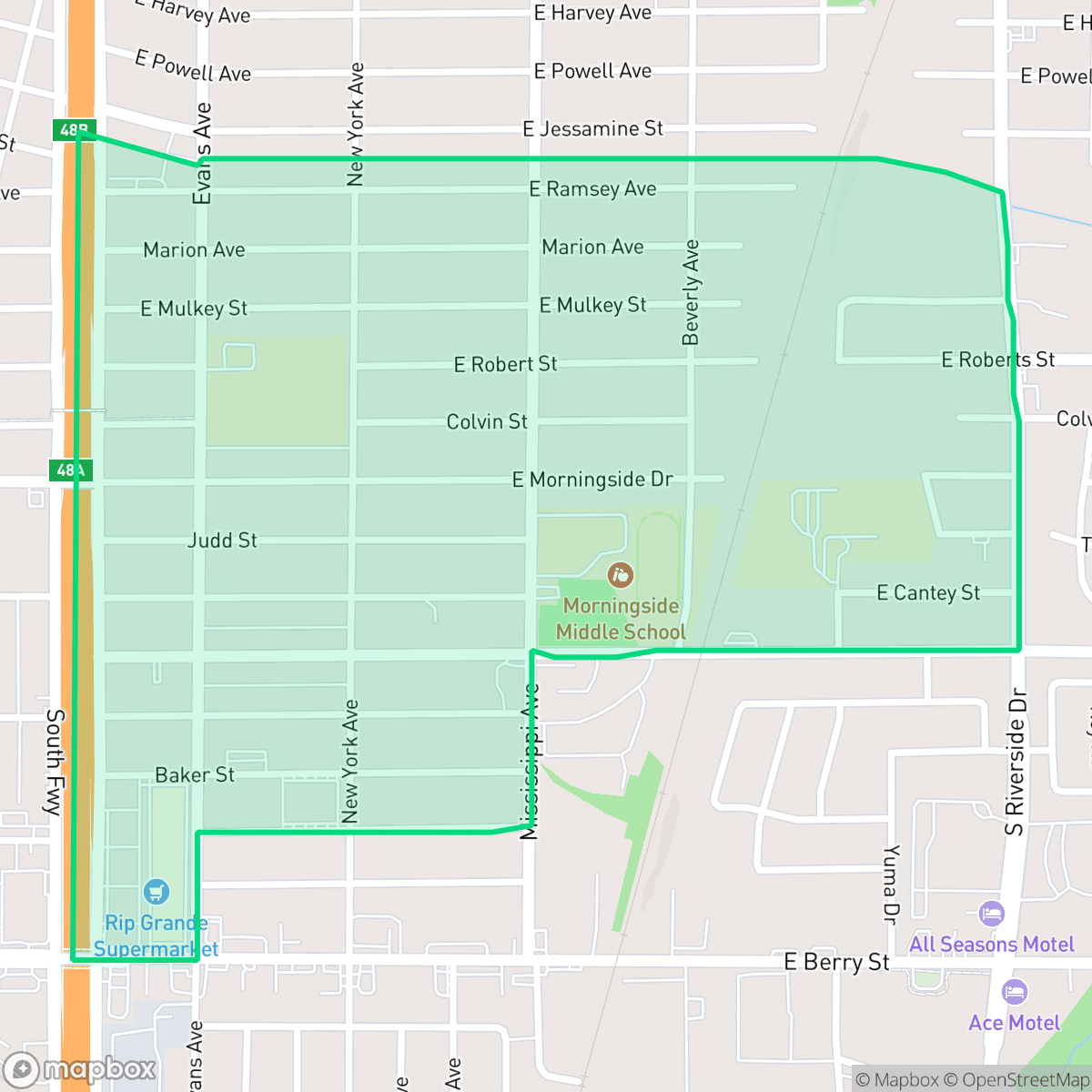
Morningside, located in Southeast Fort Worth, was developed by John C. Ryan in 1921 as a planned single-family community modeled after the nearby Ryan Place. The neighborhood is characterized by a collection of early 20th-century architectural styles, including Tudor Revival, Arts and Crafts, and Minimal Traditional, which are preserved within its designated historic district. Historically, the neighborhood faced significant challenges, including the negative impacts of nearby railroad tracks and the mid-20th-century construction of Interstate 35W, which physically bisected the area. The community also experienced racial tensions during the mid-1950s as it transitioned into a majority-minority neighborhood. Today, Morningside serves as a testament to the city's complex history of urban development, redlining, and community resilience.
The area maintains a distinct, modest aesthetic characterized by uniform tract housing and a blend of residential grids situated near light industrial zones. This layout creates a calm, suburban environment that is generally less active than other parts of the city. The demographic profile is notably diverse, featuring a balanced mix of young adults, families, and seniors who contribute to a strong, liberal-leaning community identity.
Prospective residents should consider several livability factors, including the presence of consistent traffic noise from nearby busy streets and a higher-than-average risk of flooding in certain zones. Access to health insurance is lower than the city average, and the local school district is currently navigating significant financial and operational challenges. While the neighborhood provides a functional environment for daily movement, the reliance on personal vehicles for dining and services is common due to the limited concentration of pedestrian-friendly amenities.
Neighborhood Scores Across 15 Qualities
Residential spacing is mixed throughout the area, with some neighbors situated very close to one another. According to iHuus data, the level of separation between homes is slightly lower than the Fort Worth average.
Low-traffic residential streets and safe crossings facilitate easy movement, though the neighborhood offers fewer pedestrian amenities than the Fort Worth average. Many blocks feature sidewalks on one side of the street, which according to iHuus data, provides a functional but less connected walking environment.
Standard tract housing with small yards and simple architecture defines the area. This landscape is less visually diverse than the Fort Worth average according to iHuus data.
Narrow street verges and fenced private yards limit spontaneous walking options, making this area less dog friendly than the Fort Worth average. Residents primarily rely on specific central parks for open green space, according to iHuus data.
A blend of residential grids and industrial zones provides a semi-rural character that is slightly less developed than the Fort Worth average. Residents will encounter a variety of single-family homes situated near warehouses and large-scale infrastructure according to iHuus data.
This area offers a calm, suburban landscape characterized by light industrial units and freight corridors. According to iHuus data, the neighborhood is less active than the Fort Worth average, featuring a car-oriented layout where most dining and services require driving.
Ongoing traffic sounds from a nearby busy street create a consistent level of ambient noise. This level of acoustic activity is slightly higher than the average for Fort Worth, according to iHuus data.
Air quality levels fluctuate between acceptable and unhealthy, presenting occasional concerns for sensitive groups. This pattern is slightly worse than the average seen across Fort Worth, according to iHuus data.
Industrial activity is minimal throughout most of the area, though the eastern edge sits near a rail line and scrap yard. This level of industrial proximity is notably lower than the Fort Worth average, as the neighborhood remains primarily residential with only occasional light commercial use.
Health insurance access is significantly lower than the Fort Worth average. According to iHuus data, a small majority of residents in this area lack health coverage.
Voting patterns and census indicators show a much more liberal political leaning than the Fort Worth average. According to iHuus data, this neighborhood is characterized by a predominantly liberal ideological orientation.
A balanced mix of young adults, families, and seniors resides here, representing a demographic spread that is slightly more even than the Fort Worth average.
Property within the 100-year floodplain carries a higher risk of flooding, which may necessitate flood insurance. According to iHuus data, the vulnerability in Morningside is greater than the Fort Worth average.
Address-Level Insights for Morningside


iHuus Neighborhood Intelligence Insights
Get address-level neighborhood insights for Morningside
- Street-level scores — see how individual blocks compare, not just neighborhood averages
- Micro-zone boundaries — identify quiet pockets, flood boundaries, and walkable clusters before you visit
- 15 dimensions in full — walkability, noise, air quality, school quality, insurance coverage, population age profile, urban/rural index, and more
- Boundary risk alerts — know if your address sits near a block boundary where scores drop, the kind of detail no listing will ever mention
- School insights — individual school ratings and insights, not just district-level data
- Compare before you commit — side-by-side data across neighborhoods, down to block precision
No credit card required
Compare with Any Neighborhood
| Dimension | Morningside | Alamo Heights |
|---|---|---|
| 🚶 Walkabilityavg 7.5 | ||
| 🔊 Acoustic Comfortavg 4.12 | ||
| 🤫 Privacy Indexavg 5.64 | ||
| 🎨 Visual Appealavg 6.38 | ||
| 🐕 Dog Friendlinessavg 6.57 | ||
| 🗺️ Urban-Rural Indexavg 6.92 | ||
| ✨ Neighborhood Vibeavg 4.56 | ||
| 🏥 Health Insurance Coverageavg 5.8 | ||
| 🌿 Air Qualityavg 3.68 | ||
| 🏭 Industrial Proximityavg 8.13 | ||
| 🌊 Flood Safetyavg 3.61 | ||
| 🗳️ Ideological Leanavg 5.62 | ||
| 👥 Population Age Profileavg 4.51 | ||
| 🔥 Fire Safety | ||
| 🏫 School Quality |
Morningside Rankings
School Districts Serving Morningside
School Insights for Morningside
Below average outcomes; significant attendance and academic challenges.
School Insights
See what's really behind every school rating near Morningside
- Individual school ratings — each school's own score with outcome context, not just a district average
- Enrollment & class size data — student-to-teacher ratio and how it compares to the state average
- Full demographics breakdown — ethnicity and gender composition for every school in the enrollment zone
- Every school in the district — all schools within the enrollment boundary ranked by rating, not just the closest one
- Grade levels & benchmarks — elementary through high school, with below/above state-average flags
No credit card required