Meadows of Candleridge, Fort Worth
Updated · 2,242 residents
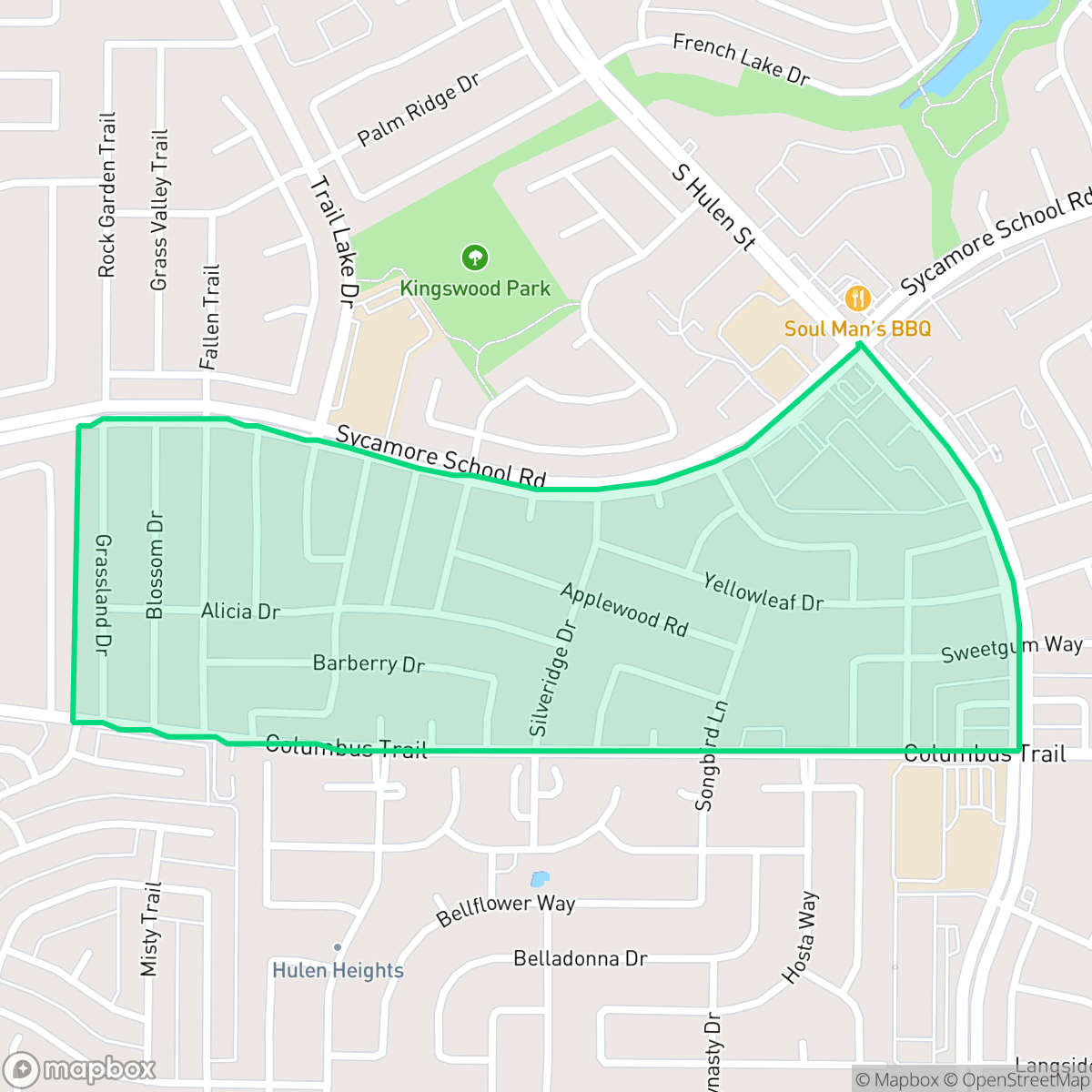
The Meadows of Candleridge is a well-established residential enclave in southwest Fort Worth defined by its expansive greenbelt and cohesive late-20th-century architecture. While the area offers exceptional walkability with continuous sidewalks and proximity to nature, residents should be aware of elevated noise levels from nearby road traffic.
Key Highlights
About Meadows of Candleridge
The Meadows of Candleridge in southwest Fort Worth developed from a 1,100-acre tract annexed by the city in the mid-1970s. Its origins are closely tied to the Candle Ridge Development Corporation, which designed the community around a sprawling greenbelt. The neighborhood's centerpiece, Candleridge Park, was established through a "Catch-22" negotiation between the developer and the city: Fort Worth delayed infrastructure funding until the developer donated a seven-acre tract for the park. Opened in June 1981, this initial plot grew into a 125-acre linear park centered around the 4.5-acre French Lake. Architecturally, the neighborhood is highly cohesive, with over 80 percent of its single-family homes constructed between 1970 and 1999, characterized by classic late-20th-century suburban designs featuring cathedral ceilings and rear-entry garages.
The neighborhood functions as a quiet, suburban retreat characterized by its well-maintained homes and emphasis on outdoor access. The presence of a vast linear park system and French Lake provides a central hub for recreation, fostering a strong sense of community for those who value active, outdoor-focused lifestyles. The area is purely residential, free from industrial activity, and maintains a distinct visual appeal through its manicured lawns and mature landscaping.
Prospective residents should weigh the benefits of its high walkability and proximity to green spaces against the acoustic environment, as road traffic noise is a notable factor. Educational options are split between the Crowley and Fort Worth independent school districts, which present varying levels of academic performance and institutional stability. This area is best suited for families and individuals seeking a traditional suburban environment with reliable access to recreational amenities.
Neighborhood Scores Across 15 Qualities
Homes feature typical suburban separation with private yards, though some apartment zones present closer proximity to neighbors. This level of density is consistent with the average found across Fort Worth.
Continuous sidewalks and a dedicated off-street trail network provide safe pedestrian movement throughout the neighborhood. This level of connectivity is significantly higher than the Fort Worth average, according to iHuus data.
Large homes with complex architecture, manicured lawns, and private pools characterize this area, providing a more polished landscape than the Fort Worth average. According to iHuus data, the presence of well-maintained properties and expansive driveways contributes to an aesthetically pleasing environment.
Extensive greenbelts, a central park corridor, and wide walking paths with minimal traffic interaction make this area more dog friendly than the Fort Worth average. According to iHuus data, the presence of a large pond area and consistent grass verges provides ample space for walking pets.
Residential layouts feature a mix of single-family homes and apartment complexes situated within a suburban landscape. This setting is slightly less rural than the Fort Worth average, offering a more developed suburban feel according to iHuus data.
Suburban streets and green spaces transition into more active blocks containing various dining and coffee options. This level of activity is higher than the Fort Worth average, though local destinations remain somewhat limited in variety.
A consistent hum from nearby busy streets defines the acoustic environment. This level of sound is roughly in line with the average found across Fort Worth.
Air quality levels fluctuate between acceptable and unhealthy, presenting occasional concerns for sensitive groups. This condition is slightly worse than the average seen across Fort Worth, according to iHuus data.
Industrial presence is nearly non-existent in this area, offering a much cleaner environment than the Fort Worth average. Residents can expect a landscape dominated by residential streets and light commercial use, with no heavy warehouses or hazardous industrial sites detected according to iHuus data.
Health insurance accessibility is notably higher here than the Fort Worth average, according to iHuus data.
Political leanings in this area skew more liberal than the Fort Worth average, characterized by a liberal majority with some opposing views present.
Residents live alongside a varied mix of young adults, families, and older individuals. This demographic distribution is largely consistent with the broader Fort Worth area, according to iHuus data.
Residual flood risk exists due to proximity to the 500-year floodplain, though safety levels remain notably higher than the Fort Worth average according to iHuus data.
Address-Level Insights for Meadows of Candleridge


iHuus Neighborhood Intelligence Insights
Get address-level neighborhood insights for Meadows of Candleridge
- Street-level scores — see how individual blocks compare, not just neighborhood averages
- Micro-zone boundaries — identify quiet pockets, flood boundaries, and walkable clusters before you visit
- 15 dimensions in full — walkability, noise, air quality, school quality, insurance coverage, population age profile, urban/rural index, and more
- Boundary risk alerts — know if your address sits near a block boundary where scores drop, the kind of detail no listing will ever mention
- School insights — individual school ratings and insights, not just district-level data
- Compare before you commit — side-by-side data across neighborhoods, down to block precision
No credit card required
Compare with Any Neighborhood
| Dimension | Meadows of Candleridge | Alamo Heights |
|---|---|---|
| 🚶 Walkabilityavg 7.5 | ||
| 🔊 Acoustic Comfortavg 4.12 | ||
| 🤫 Privacy Indexavg 5.64 | ||
| 🎨 Visual Appealavg 6.38 | ||
| 🐕 Dog Friendlinessavg 6.57 | ||
| 🗺️ Urban-Rural Indexavg 6.92 | ||
| ✨ Neighborhood Vibeavg 4.56 | ||
| 🏥 Health Insurance Coverageavg 5.8 | ||
| 🌿 Air Qualityavg 3.68 | ||
| 🏭 Industrial Proximityavg 8.13 | ||
| 🌊 Flood Safetyavg 3.61 | ||
| 🗳️ Ideological Leanavg 5.62 | ||
| 👥 Population Age Profileavg 4.51 | ||
| 🔥 Fire Safety | ||
| 🏫 School Quality |
Meadows of Candleridge Rankings
School Districts Serving Meadows of Candleridge
School Insights for Meadows of Candleridge
Below average outcomes; significant attendance and academic challenges.
School Insights
See what's really behind every school rating near Meadows of Candleridge
- Individual school ratings — each school's own score with outcome context, not just a district average
- Enrollment & class size data — student-to-teacher ratio and how it compares to the state average
- Full demographics breakdown — ethnicity and gender composition for every school in the enrollment zone
- Every school in the district — all schools within the enrollment boundary ranked by rating, not just the closest one
- Grade levels & benchmarks — elementary through high school, with below/above state-average flags
No credit card required