Heritage, Fort Worth
Updated · 11,076 residents
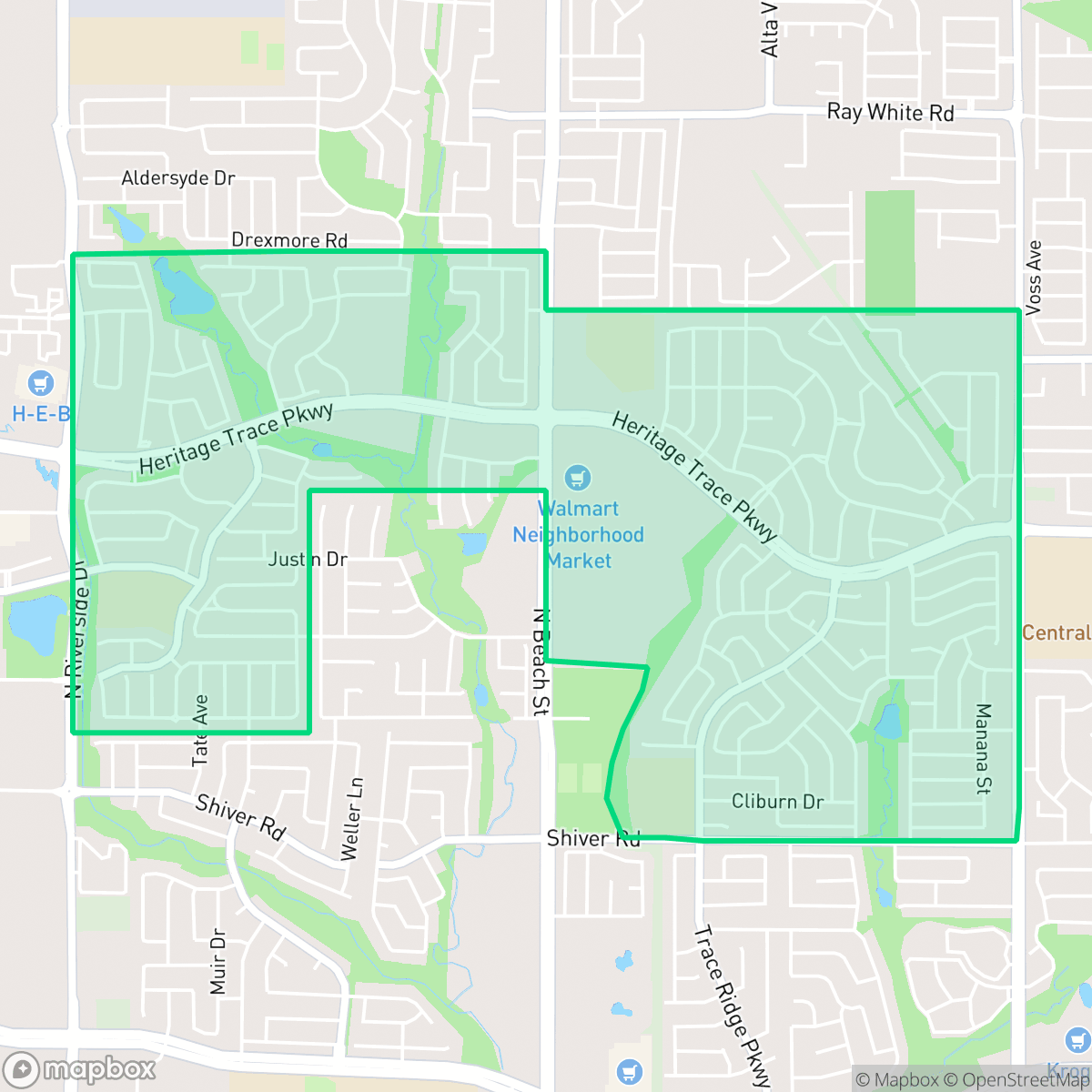
Heritage is a highly walkable, master-planned community in North Fort Worth known for its extensive network of trails, parks, and well-maintained residential streets. The area features large, modern homes and a quiet suburban atmosphere that benefits from excellent access to green space and top-rated local schools.
Key Highlights
About Heritage
The Heritage neighborhood in North Fort Worth is a 2,300-acre master-planned community developed by Hillwood Development. Ground was broken in 2000 as part of the massive AllianceTexas project, establishing Heritage as the region's first fully connected, high-tech neighborhood utilizing fiber-optic infrastructure. To support the community's development and maintenance, Fort Worth established Public Improvement District (PID) 7 in September 2000. Residential construction began in 2001, resulting in several distinct villages—such as The Bluffs and The Vineyards—featuring a mix of traditional brick, stone, and cottage-style homes. The neighborhood is defined by its extensive green spaces, incorporating over 200 acres of parks, trails, and stocked water features, including Barksdale Park and Ninnie Baird Park.
The area is defined by its commitment to pedestrian connectivity, offering a comprehensive sidewalk network that makes it one of the most walkable residential pockets in the city. Residents enjoy a visual landscape characterized by large, modern single-family homes, many of which include private pools and complex architectural rooflines. The neighborhood maintains a strong sense of order and safety, with no industrial hazards and a robust infrastructure that supports a quiet, family-oriented lifestyle.
While the neighborhood excels in recreation and aesthetic appeal, it functions primarily as a tranquil residential enclave with limited commercial density. Prospective residents should note that while social spots and local dining options exist, most daily errands require a short drive. The area is particularly well-suited for families who prioritize access to high-performing schools within the Keller Independent School District and value a secure, suburban environment with ample outdoor amenities.
Neighborhood Scores Across 15 Qualities
Residential spacing provides a moderate level of privacy, featuring typical suburban density with small gaps between homes and fenced backyards. According to iHuus data, this level of separation is slightly higher than the Fort Worth average.
Extensive sidewalk networks and dedicated recreational trails provide exceptional pedestrian connectivity throughout the area. According to iHuus data, the level of walkability here is significantly higher than the Fort Worth average.
Large, modern homes with complex rooflines and private backyard pools characterize this area. High-end landscaping and proximity to country club amenities make the visual landscape significantly more polished than the Fort Worth average, according to iHuus data.
Extensive greenbelts, winding trails, and wide grass verges provide ample space for off-street exercise. According to iHuus data, these connected park spaces and continuous green buffers make this area significantly more dog friendly than the Fort Worth average.
Predominantly dense suburban development characterizes this area, featuring uniform single-family housing tracts and integrated community amenities. According to iHuus data, this landscape is slightly more developed than the Fort Worth average, showing less open land and more concentrated residential infrastructure.
A mix of quiet residential streets and active social hubs creates a vibe that is more lively than the Fort Worth average. Residents can access various dining and wellness options, though much of the area remains peaceful and green.
Local traffic from nearby busy streets creates a consistent level of ambient noise. This moderate acoustic environment is slightly more active than the average for Fort Worth, according to iHuus data.
Frequent unhealthy air quality levels pose a significant risk to sensitive groups; according to iHuus data, these levels are notably worse than the Fort Worth average.
Industrial activity and warehouses are virtually nonexistent here, offering a much cleaner environment than the Fort Worth average. According to iHuus data, the area consists almost entirely of residential, recreational, and light commercial zones with no visible hazardous sites.
Health insurance access is exceptionally high among residents, significantly surpassing the Fort Worth average according to iHuus data.
Conservative residents form a significant majority in this area, representing a notable departure from the more balanced political lean of Fort Worth. According to iHuus data, the political landscape here is markedly more conservative than the city average.
A balanced mix of young adults, families, and older residents characterizes this area. This demographic spread is slightly lower than the Fort Worth average, according to iHuus data.
Flood risk in this area is higher than the Fort Worth average, though detailed studies from FEMA are currently unavailable for this specific location. According to iHuus data, the area carries a moderate level of uncertainty regarding potential flood susceptibility.
Address-Level Insights for Heritage


iHuus Neighborhood Intelligence Insights
Get address-level neighborhood insights for Heritage
- Street-level scores — see how individual blocks compare, not just neighborhood averages
- Micro-zone boundaries — identify quiet pockets, flood boundaries, and walkable clusters before you visit
- 15 dimensions in full — walkability, noise, air quality, school quality, insurance coverage, population age profile, urban/rural index, and more
- Boundary risk alerts — know if your address sits near a block boundary where scores drop, the kind of detail no listing will ever mention
- School insights — individual school ratings and insights, not just district-level data
- Compare before you commit — side-by-side data across neighborhoods, down to block precision
No credit card required
Compare with Any Neighborhood
| Dimension | Heritage | Alamo Heights |
|---|---|---|
| 🚶 Walkabilityavg 7.5 | ||
| 🔊 Acoustic Comfortavg 4.12 | ||
| 🤫 Privacy Indexavg 5.64 | ||
| 🎨 Visual Appealavg 6.38 | ||
| 🐕 Dog Friendlinessavg 6.57 | ||
| 🗺️ Urban-Rural Indexavg 6.92 | ||
| ✨ Neighborhood Vibeavg 4.56 | ||
| 🏥 Health Insurance Coverageavg 5.8 | ||
| 🌿 Air Qualityavg 3.68 | ||
| 🏭 Industrial Proximityavg 8.13 | ||
| 🌊 Flood Safetyavg 3.61 | ||
| 🗳️ Ideological Leanavg 5.62 | ||
| 👥 Population Age Profileavg 4.51 | ||
| 🔥 Fire Safety | ||
| 🏫 School Quality |
Heritage Rankings
School Districts Serving Heritage
School Insights for Heritage
Below average outcomes; significant attendance and academic challenges.
School Insights
See what's really behind every school rating near Heritage
- Individual school ratings — each school's own score with outcome context, not just a district average
- Enrollment & class size data — student-to-teacher ratio and how it compares to the state average
- Full demographics breakdown — ethnicity and gender composition for every school in the enrollment zone
- Every school in the district — all schools within the enrollment boundary ranked by rating, not just the closest one
- Grade levels & benchmarks — elementary through high school, with below/above state-average flags
No credit card required