Far East, Fort Worth
Updated · 877 residents
Far East is a residential enclave in Fort Worth characterized by its suburban layout and high walkability. While the neighborhood offers a visually appealing environment for dog owners, residents should be aware of significant road noise and challenges regarding flood safety.
Key Highlights
About Far East
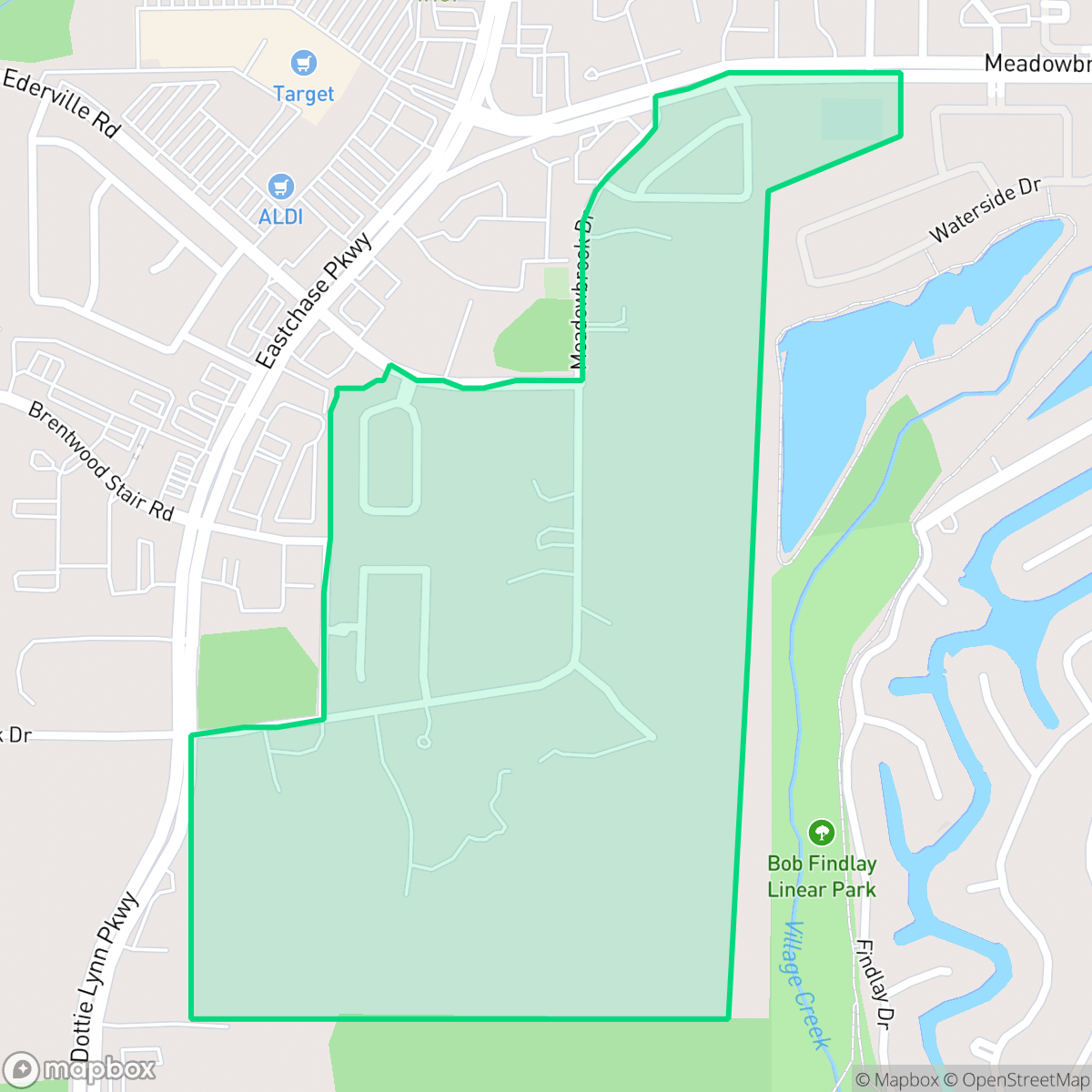
The Far East neighborhood of Fort Worth, Texas, has roots tracing back to pioneer-era agricultural settlements. In 1856, Archibald Leonard built the area's first mill, which was later operated by R.A. Randol as Randol Mill, giving rise to modern-day Randol Mill Road. The historic Harrison Cemetery on Meadowbrook Drive preserves local graves dating as far back as 1871. Once containing land owned by the Eder family (commemorated by Ederville Road) and the Boaz family, the area transitioned toward suburban development in 1973 under the Randolwood Investment Company. This led to the creation of the Eastchase community in 1984 and the Hollow Hills development in 1989. Today, the Far East Fort Worth Homeowners' Association actively monitors zoning to balance modern residential growth with the area's historic open spaces.
This neighborhood functions as a primarily residential and light commercial community, featuring a suburban grid that supports pedestrian activity. The area maintains a high level of visual appeal and is well-suited for dog owners who benefit from the balance of local streets and green spaces. Residents have convenient access to neighborhood level amenities, including various fast food options and social hubs that are reachable on foot.
Prospective residents should weigh these benefits against specific livability trade-offs. The area experiences notable noise levels from nearby road traffic and faces challenges with air quality and flood safety. Additionally, families should consider that the local school district, Fort Worth ISD, is currently navigating significant financial and operational instability. Given these factors, the area is best suited for individuals who prioritize a walkable, dog friendly environment and are comfortable navigating the broader urban challenges of the region.
Neighborhood Scores Across 15 Qualities
Residential spacing is mixed, featuring both narrow single-family lots and dense multi-family housing. This level of density is slightly higher than the Fort Worth average, according to iHuus data.
Sidewalks are consistent throughout residential areas and include safe crossings, though a major highway bisects the neighborhood. This level of connectivity is slightly above the Fort Worth average according to iHuus data.
Large homes, spacious driveways, and upscale amenities contribute to a landscape that is more visually appealing than the Fort Worth average. According to iHuus data, the area features a mix of suburban housing density alongside significant retail centers and large apartment complexes.
Large central greenbelt spaces and wide, traffic-safe paths make this area significantly more pet-friendly than the Fort Worth average, according to iHuus data.
Open land and scattered greenery characterize the area, providing a landscape that is very similar to the Fort Worth average. Residents will find a mix of dense apartment complexes and large commercial centers alongside pockets of woodland and fields, according to iHuus data.
Low-density residential pockets and light industrial zones create a tranquil atmosphere that is slightly below the Fort Worth average for activity. Most residents will find a steady but subdued rhythm of services, with occasional social hubs and dining options accessible via short trips.
Frequent noise from nearby freeways and railroad tracks makes this area significantly louder than the Fort Worth average. Residents can expect consistent acoustic disturbances throughout the day according to iHuus data.
Frequent unhealthy air quality levels pose a significant risk to sensitive groups. According to iHuus data, the air quality in this area is notably worse than the Fort Worth average.
Residential streets remain largely free of industrial activity, matching the Fort Worth average for nearby manufacturing or heavy commercial zones. While some large retail warehouses and highway-related noise exist in certain pockets, most of the area consists of quiet residential spaces and light commercial use.
Health insurance accessibility is notably higher than the Fort Worth average, according to iHuus data. Most residents in this area have access to comprehensive medical coverage.
Political leanings in this area trend more liberal than the Fort Worth average. This demographic profile is reflected in the local community landscape according to iHuus data.
Residents live alongside a balanced mix of young adults, families, and older individuals. This demographic spread is slightly more varied than the Fort Worth average, according to iHuus data.
Frequent flood risks exist here because parts of the neighborhood sit within a designated floodplain. According to iHuus data, this area is more prone to flooding than the Fort Worth average, which typically necessitates flood insurance.
Address-Level Insights for Far East


iHuus Neighborhood Intelligence Insights
Get address-level neighborhood insights for Far East
- Street-level scores — see how individual blocks compare, not just neighborhood averages
- Micro-zone boundaries — identify quiet pockets, flood boundaries, and walkable clusters before you visit
- 15 dimensions in full — walkability, noise, air quality, school quality, insurance coverage, population age profile, urban/rural index, and more
- Boundary risk alerts — know if your address sits near a block boundary where scores drop, the kind of detail no listing will ever mention
- School insights — individual school ratings and insights, not just district-level data
- Compare before you commit — side-by-side data across neighborhoods, down to block precision
No credit card required
Compare with Any Neighborhood
| Dimension | Far East | Alamo Heights |
|---|---|---|
| 🚶 Walkabilityavg 7.5 | ||
| 🔊 Acoustic Comfortavg 4.12 | ||
| 🤫 Privacy Indexavg 5.64 | ||
| 🎨 Visual Appealavg 6.38 | ||
| 🐕 Dog Friendlinessavg 6.57 | ||
| 🗺️ Urban-Rural Indexavg 6.92 | ||
| ✨ Neighborhood Vibeavg 4.56 | ||
| 🏥 Health Insurance Coverageavg 5.8 | ||
| 🌿 Air Qualityavg 3.68 | ||
| 🏭 Industrial Proximityavg 8.13 | ||
| 🌊 Flood Safetyavg 3.61 | ||
| 🗳️ Ideological Leanavg 5.62 | ||
| 👥 Population Age Profileavg 4.51 | ||
| 🔥 Fire Safety | ||
| 🏫 School Quality |
Far East Rankings
School Districts Serving Far East
School Insights for Far East
Below average outcomes; significant attendance and academic challenges.
School Insights
See what's really behind every school rating near Far East
- Individual school ratings — each school's own score with outcome context, not just a district average
- Enrollment & class size data — student-to-teacher ratio and how it compares to the state average
- Full demographics breakdown — ethnicity and gender composition for every school in the enrollment zone
- Every school in the district — all schools within the enrollment boundary ranked by rating, not just the closest one
- Grade levels & benchmarks — elementary through high school, with below/above state-average flags
No credit card required