Echo Heights, Fort Worth
Updated · 1,977 residents
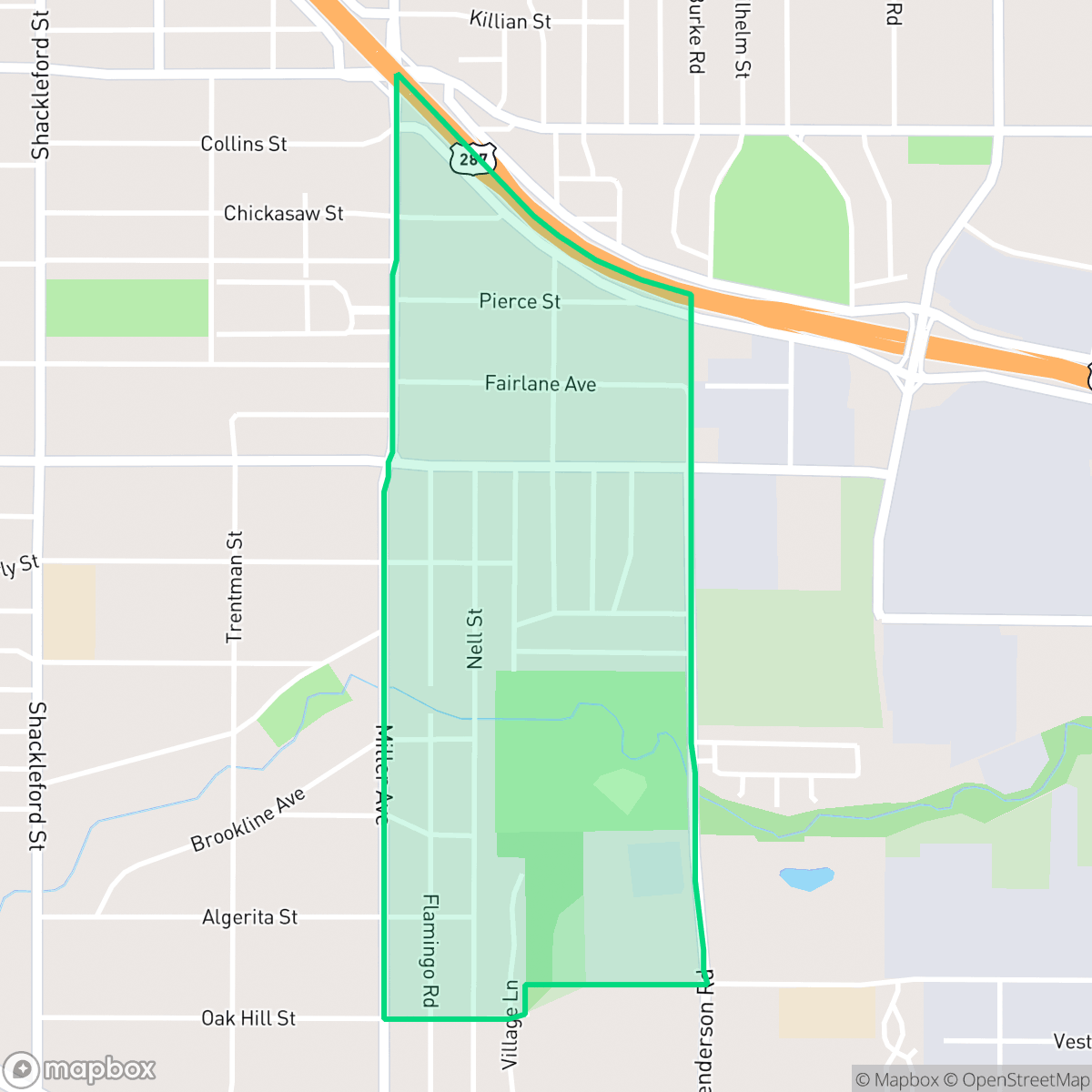
Echo Heights is a southeast Fort Worth neighborhood defined by its industrial-suburban mix and active community advocacy. While the area offers relatively quiet acoustic conditions, it remains car-dependent with limited walkability and a landscape shaped by its proximity to logistics hubs.
Key Highlights
About Echo Heights
Located in southeast Fort Worth, Echo Heights was originally platted by the P.A. Gaston Construction Company, though development halted with the onset of World War I. A notable local landmark is Prairie Dog Park, which originated in the 1960s after a resident's pet prairie dog escaped; the landowner later dedicated 60 acres to contain the colony before the city eventually relocated the animals. Since 2000, Fort Worth has designated Echo Heights as an "Industrial Growth Center," resulting in the influx of nearly 200 trucking hubs, warehouses, and industrial facilities. In response to rising pollution and health concerns, local residents organized the Echo Heights Stop Six Environmental Coalition in 2021. The grassroots group actively fights further industrial rezoning to protect the neighborhood's residential character.
Echo Heights is characterized by a dense suburban layout that sits alongside a high concentration of industrial warehouses and trucking hubs. This unique blend creates a landscape where residential streets meet active logistics corridors, fostering a community that is deeply engaged in local land-use planning. Residents often gather at neighborhood spaces like Prairie Dog Park, which provides a necessary green buffer amidst the surrounding industrial activity.
Prospective residents should note that the area is primarily car-dependent, with limited pedestrian infrastructure and low walkability. While the neighborhood benefits from relatively low noise levels, it faces ongoing challenges regarding air quality and industrial proximity. Families considering the area should also account for the current operational instability within the Fort Worth Independent School District, which serves local students. The neighborhood is best suited for those who prioritize proximity to major transit routes and value the grassroots spirit of a community actively shaping its own future.
Neighborhood Scores Across 15 Qualities
Residential spacing in Echo Heights provides a moderate level of separation between homes, appearing slightly less private than the typical Fort Worth neighborhood according to iHuus data.
Quiet streets allow for casual walking, but the lack of sidewalks makes this area less walkable than the Fort Worth average. According to iHuus data, pedestrian infrastructure is underdeveloped compared to other parts of the city.
Dense residential layouts and small yards characterize this area, offering significantly less visual variety and greenery than the Fort Worth average. According to iHuus data, the landscape consists primarily of basic housing with limited ornamental amenities.
Access to public parks and wide green verges is below the Fort Worth average. Residents may find fewer dedicated spaces for walking pets compared to other parts of the city.
Open land and woodland pockets are common here, though the landscape features a mix of residential lots and large industrial warehouses. This level of open space is slightly lower than the Fort Worth average according to iHuus data.
Low levels of social activity and a reliance on vehicles characterize this area, making it less lively than the Fort Worth average. The landscape consists mostly of industrial zones and residential blocks with limited walkable commercial options, according to iHuus data.
A steady hum of local traffic from nearby busy streets is present, though acoustic levels remain more tranquil than the Fort Worth average according to iHuus data.
Air quality in this area fluctuates between acceptable and unhealthy levels, presenting occasional concerns for sensitive groups. According to iHuus data, conditions are slightly better than the Fort Worth average.
Light industrial and commercial activities exist alongside residential areas, resulting in lower industrial density than the Fort Worth average. While some zones feature active daytime commercial traffic, the area lacks the heavy logistics hubs and large-scale freight dominance found elsewhere in the city.
Health insurance access is significantly below the Fort Worth average, indicating a high rate of uninsured residents according to iHuus data.
Voting patterns and census indicators show a significantly more liberal leaning than the Fort Worth average, according to iHuus data.
Residents live alongside a balanced mix of young adults, families, and seniors. This demographic spread is largely in line with the average seen across Fort Worth, according to iHuus data.
Properties in this area are located within a designated floodplain, which represents a higher risk of flooding compared to the Fort Worth average. Residents should be aware that flood insurance is typically required for homes in this zone according to iHuus data.
Address-Level Insights for Echo Heights


iHuus Neighborhood Intelligence Insights
Get address-level neighborhood insights for Echo Heights
- Street-level scores — see how individual blocks compare, not just neighborhood averages
- Micro-zone boundaries — identify quiet pockets, flood boundaries, and walkable clusters before you visit
- 15 dimensions in full — walkability, noise, air quality, school quality, insurance coverage, population age profile, urban/rural index, and more
- Boundary risk alerts — know if your address sits near a block boundary where scores drop, the kind of detail no listing will ever mention
- School insights — individual school ratings and insights, not just district-level data
- Compare before you commit — side-by-side data across neighborhoods, down to block precision
No credit card required
Compare with Any Neighborhood
| Dimension | Echo Heights | Alamo Heights |
|---|---|---|
| 🚶 Walkabilityavg 7.5 | ||
| 🔊 Acoustic Comfortavg 4.12 | ||
| 🤫 Privacy Indexavg 5.64 | ||
| 🎨 Visual Appealavg 6.38 | ||
| 🐕 Dog Friendlinessavg 6.57 | ||
| 🗺️ Urban-Rural Indexavg 6.92 | ||
| ✨ Neighborhood Vibeavg 4.56 | ||
| 🏥 Health Insurance Coverageavg 5.8 | ||
| 🌿 Air Qualityavg 3.68 | ||
| 🏭 Industrial Proximityavg 8.13 | ||
| 🌊 Flood Safetyavg 3.61 | ||
| 🗳️ Ideological Leanavg 5.62 | ||
| 👥 Population Age Profileavg 4.51 | ||
| 🔥 Fire Safety | ||
| 🏫 School Quality |
Echo Heights Rankings
School Districts Serving Echo Heights
School Insights for Echo Heights
Below average outcomes; significant attendance and academic challenges.
School Insights
See what's really behind every school rating near Echo Heights
- Individual school ratings — each school's own score with outcome context, not just a district average
- Enrollment & class size data — student-to-teacher ratio and how it compares to the state average
- Full demographics breakdown — ethnicity and gender composition for every school in the enrollment zone
- Every school in the district — all schools within the enrollment boundary ranked by rating, not just the closest one
- Grade levels & benchmarks — elementary through high school, with below/above state-average flags
No credit card required