Carver Heights, Fort Worth
Updated · 962 residents
Carver Heights is a historic, architecturally distinct community in southeast Fort Worth characterized by its mid-century homes and curvilinear street layout. Residents benefit from high walkability and excellent dog friendliness, though the area experiences notable ambient noise from nearby road traffic.
Key Highlights
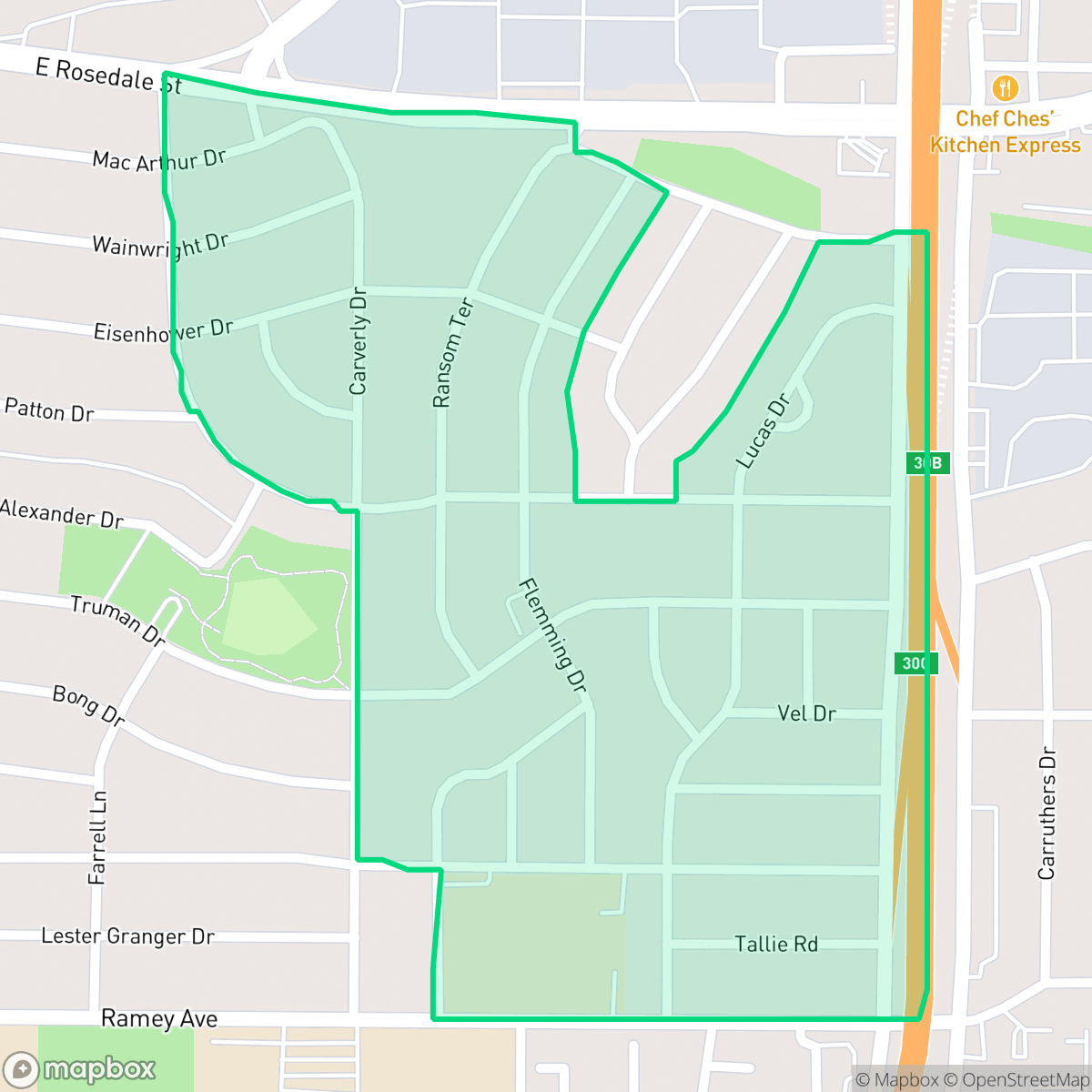
About Carver Heights
Located in southeast Fort Worth, Historic Carver Heights was developed starting in 1950 as a premier neighborhood of high-quality homes for Black middle-class professionals. Named after George Washington Carver, the auto-oriented community features curvilinear streets and mid-century architectural styles, including Minimal Traditional and Ranch homes. To preserve its residential character, the developer established protective deed restrictions that limited commercial activity. During the Jim Crow era, many pioneering residents achieved notable local "firsts" in integrated professional fields, including educator and politician Reby Cary and civil rights attorney L. Clifford Davis. Designated as a local historic district in 2006, the neighborhood features the 2017 public sculpture *The Ancestors*, which honors its early residents and rich African American heritage.
The neighborhood maintains a quiet, suburban atmosphere that blends residential life with active commercial corridors. It is a highly walkable area that welcomes pet owners, offering a unique layout that deviates from standard grid patterns. According to iHuus data, the community provides a distinct suburban landscape that feels separate from the denser urban core while still maintaining proximity to essential services and local landmarks like Christland Baptist Church. The area is best suited for individuals who prioritize a historic sense of place and pedestrian access over the quietude found in more isolated residential zones. Prospective residents should be aware of specific livability trade-offs, including elevated noise levels from surrounding road traffic and challenges regarding local air quality. The school district faces significant operational instability, which is a factor for families to consider. While the neighborhood offers a strong identity, the lack of private health insurance coverage and flood safety risks are important considerations for those evaluating the area for long-term residency.
Neighborhood Scores Across 15 Qualities
Residential spacing provides a moderate level of separation between homes, offering slightly more buffer from neighbors than the Fort Worth average.
Sidewalks are available on one side of the street with safe crossings provided. This level of pedestrian accessibility is slightly below the Fort Worth average according to iHuus data.
Standard tract housing with tidy but small yards characterizes the area, which is slightly below the Fort Worth average for visual appeal. Most properties feature simple, boxy rooflines and consistent residential layouts.
Connected green spaces and wide paths provide adequate areas for walking pets; this level of accessibility is consistent with the Fort Worth average.
Open land and scattered homes among woodland areas provide a sense of space. This setting is slightly less developed than the typical Fort Worth landscape, according to iHuus data.
Residential life here is characterized by a calm, suburban rhythm with significant green space and light industrial pockets. This setting offers less activity and fewer commercial services than the Fort Worth average.
Frequent sounds from nearby railways and major freeways contribute to higher noise levels than the Fort Worth average. According to iHuus data, residents may experience more consistent acoustic disturbances than other parts of the city.
Air quality in this area fluctuates between acceptable and unhealthy levels. According to iHuus data, the air quality is slightly better than the Fort Worth average, though sensitive groups may still experience occasional concern.
Light industrial and commercial units exist alongside residential areas, resulting in a higher level of daytime commercial traffic than the Fort Worth average. According to iHuus data, this creates a mixed-use environment where residential life blends with active commercial activity.
Health insurance accessibility is notably lower here than the Fort Worth average, according to iHuus data. Residents may face higher challenges in accessing employer-sponsored or private coverage within the community.
Voting patterns and census indicators in this area reflect a much more liberal leaning than the Fort Worth average, according to iHuus data.
Residents live alongside a balanced mix of young adults, families, and older individuals. This demographic spread is slightly more varied than the average found across Fort Worth, according to iHuus data.
Flood risk levels remain undetermined due to a lack of detailed federal studies in this area. According to iHuus data, the potential for flooding is slightly higher than the Fort Worth average.
Address-Level Insights for Carver Heights


iHuus Neighborhood Intelligence Insights
Get address-level neighborhood insights for Carver Heights
- Street-level scores — see how individual blocks compare, not just neighborhood averages
- Micro-zone boundaries — identify quiet pockets, flood boundaries, and walkable clusters before you visit
- 15 dimensions in full — walkability, noise, air quality, school quality, insurance coverage, population age profile, urban/rural index, and more
- Boundary risk alerts — know if your address sits near a block boundary where scores drop, the kind of detail no listing will ever mention
- School insights — individual school ratings and insights, not just district-level data
- Compare before you commit — side-by-side data across neighborhoods, down to block precision
No credit card required
Compare with Any Neighborhood
| Dimension | Carver Heights | Alamo Heights |
|---|---|---|
| 🚶 Walkabilityavg 7.5 | ||
| 🔊 Acoustic Comfortavg 4.12 | ||
| 🤫 Privacy Indexavg 5.64 | ||
| 🎨 Visual Appealavg 6.38 | ||
| 🐕 Dog Friendlinessavg 6.57 | ||
| 🗺️ Urban-Rural Indexavg 6.92 | ||
| ✨ Neighborhood Vibeavg 4.56 | ||
| 🏥 Health Insurance Coverageavg 5.8 | ||
| 🌿 Air Qualityavg 3.68 | ||
| 🏭 Industrial Proximityavg 8.13 | ||
| 🌊 Flood Safetyavg 3.61 | ||
| 🗳️ Ideological Leanavg 5.62 | ||
| 👥 Population Age Profileavg 4.51 | ||
| 🔥 Fire Safety | ||
| 🏫 School Quality |
Carver Heights Rankings
School Districts Serving Carver Heights
School Insights for Carver Heights
Below average outcomes; significant attendance and academic challenges.
School Insights
See what's really behind every school rating near Carver Heights
- Individual school ratings — each school's own score with outcome context, not just a district average
- Enrollment & class size data — student-to-teacher ratio and how it compares to the state average
- Full demographics breakdown — ethnicity and gender composition for every school in the enrollment zone
- Every school in the district — all schools within the enrollment boundary ranked by rating, not just the closest one
- Grade levels & benchmarks — elementary through high school, with below/above state-average flags
No credit card required