Burton Hill Trinity Trails, Fort Worth
Updated · 917 residents
Burton Hill Trinity Trails is a serene, nature-oriented enclave in northwest Fort Worth characterized by high visual appeal and exceptional dog friendliness. While the area offers a quiet, rural-like atmosphere with direct access to the Trinity Trails, it remains relatively isolated with limited walkability to commercial amenities.
Key Highlights
About Burton Hill Trinity Trails
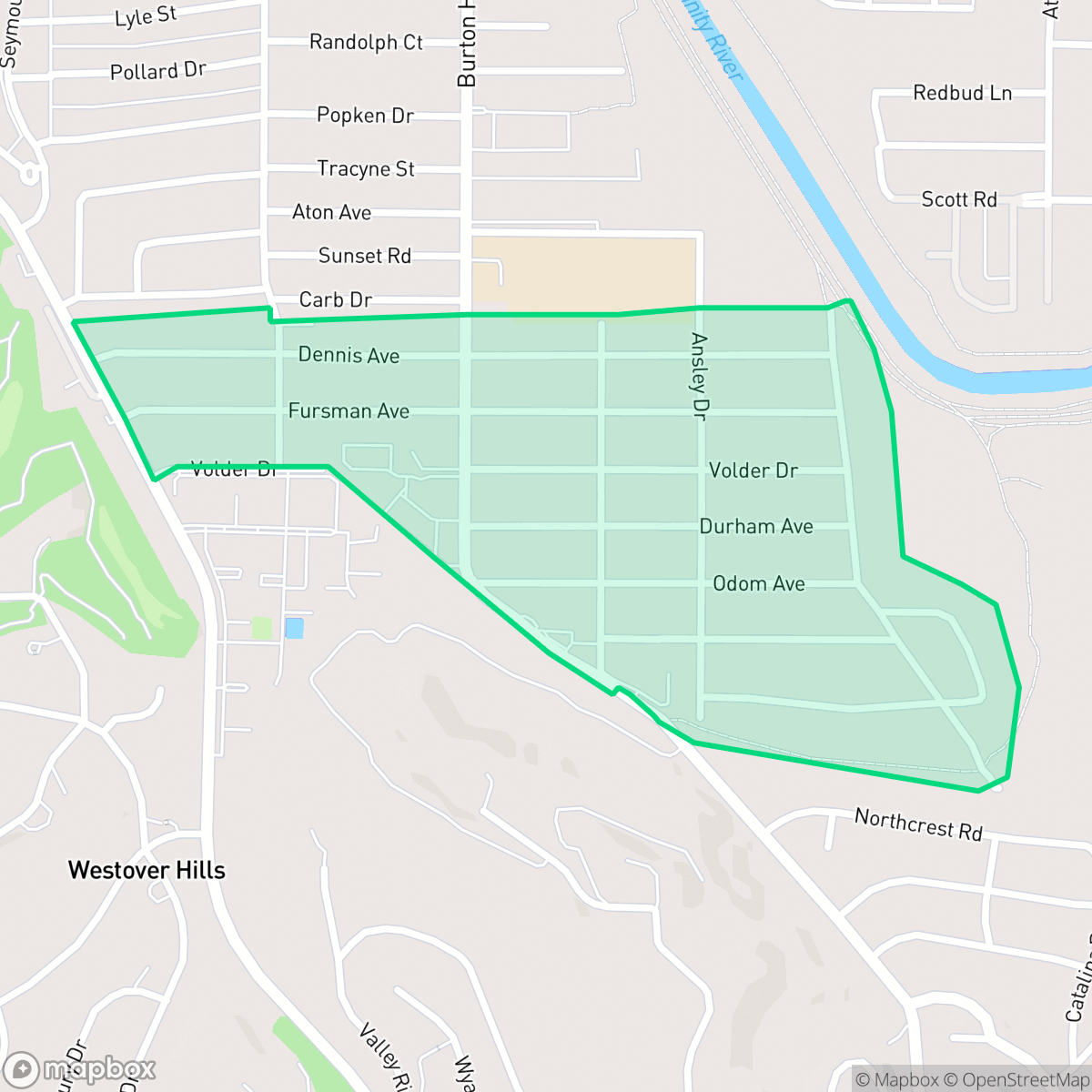
Tucked away in near-northwest Fort Worth, the Burton Hill Trinity Trails neighborhood is historically tied to the adjacent military presence. Developed largely in the 1950s, the neighborhood originally served as housing for personnel stationed at the nearby Carswell Air Force Base (now Naval Air Station Joint Reserve Base Fort Worth). Reflecting this era, the area is characterized by simple, mid-century ranch homes. A central landmark is the Burton Hill Elementary School, which opened in March 1958 in an International-influenced design by architects Harkrider, Clark, and Jones to serve local military families. Bordered by the West Fork of the Trinity River, the neighborhood offers direct access to the Trinity Trails system and is located near the Airfield Falls Trailhead, which features Fort Worth's only natural waterfall and showcases the area's aviation history.
The neighborhood functions as a quiet residential retreat, defined by its open green spaces and proximity to the West Fork of the Trinity River. Residents benefit from a high degree of visual appeal and a strong connection to the outdoors, making it a notable destination for pet owners and those seeking a calm, rural-like environment within the city limits. According to iHuus data, the area maintains a low-density feel, prioritizing natural landscapes over dense commercial development.
Prospective residents should note the trade-offs associated with this seclusion, including limited walkability to daily services and a relatively quiet social scene. Transportation noise from nearby roads contributes to a moderate acoustic environment, and the local school district currently faces significant operational and financial challenges. This area is best suited for individuals or families who prioritize outdoor recreation and a peaceful, low-traffic setting over immediate access to urban nightlife or highly-rated public school infrastructure.
Neighborhood Scores Across 15 Qualities
Residential spacing offers a moderate level of separation between neighbors, which is slightly higher than the Fort Worth average according to iHuus data.
Sidewalks are available on one side of the street and safe crossings are provided, though the overall ease of pedestrian travel is slightly below the Fort Worth average according to iHuus data.
Large residential properties and frequent upscale amenities define the local landscape. According to iHuus data, the area offers a more aesthetically pleasing environment than the Fort Worth average.
Extensive trail networks and large open spaces provide significant opportunities for pet owners. According to iHuus data, the availability of parks and recreational areas here is much higher than the Fort Worth average.
Open land and wooded areas are common throughout the area, providing a more spread out landscape than the Fort Worth average. According to iHuus data, residents can expect more frequent sightings of fields and scattered homes.
Low density and sparse commercial development create a tranquil, suburban atmosphere that is notably more subdued than the Fort Worth average. Most residents will find a serene landscape characterized by greenery and minimal local business activity, making the area primarily car-dependent for daily needs.
Steady noise from nearby busy streets is present. According to iHuus data, the acoustic environment is slightly more active than the Fort Worth average.
Air quality in this area fluctuates between acceptable and unhealthy levels, though it remains slightly better than the Fort Worth average. Sensitive groups may experience occasional concern on certain days according to iHuus data.
Industrial activity and warehouses are absent from this area, providing a much cleaner environment than the Fort Worth average. Residents can expect quiet streets consisting of residential homes and open green spaces according to iHuus data.
Health insurance access is notably higher here than the Fort Worth average, according to iHuus data. Most residents in this area are covered by a health insurance plan.
Conservative viewpoints represent the vast majority of the community, showing a notable difference from the more balanced political landscape seen across Fort Worth.
Residents live among a balanced distribution of young adults, families, and older individuals. This demographic variety is slightly more even than the typical age spread found across Fort Worth, according to iHuus data.
Significant flood risk exists here because parts of the area fall within a designated hundred year floodplain. According to iHuus data, this level of risk is notably higher than the Fort Worth average and may necessitate flood insurance.
Address-Level Insights for Burton Hill Trinity Trails


iHuus Neighborhood Intelligence Insights
Get address-level neighborhood insights for Burton Hill Trinity Trails
- Street-level scores — see how individual blocks compare, not just neighborhood averages
- Micro-zone boundaries — identify quiet pockets, flood boundaries, and walkable clusters before you visit
- 15 dimensions in full — walkability, noise, air quality, school quality, insurance coverage, population age profile, urban/rural index, and more
- Boundary risk alerts — know if your address sits near a block boundary where scores drop, the kind of detail no listing will ever mention
- School insights — individual school ratings and insights, not just district-level data
- Compare before you commit — side-by-side data across neighborhoods, down to block precision
No credit card required
Compare with Any Neighborhood
| Dimension | Burton Hill Trinity Trails | Alamo Heights |
|---|---|---|
| 🚶 Walkabilityavg 7.5 | ||
| 🔊 Acoustic Comfortavg 4.12 | ||
| 🤫 Privacy Indexavg 5.64 | ||
| 🎨 Visual Appealavg 6.38 | ||
| 🐕 Dog Friendlinessavg 6.57 | ||
| 🗺️ Urban-Rural Indexavg 6.92 | ||
| ✨ Neighborhood Vibeavg 4.56 | ||
| 🏥 Health Insurance Coverageavg 5.8 | ||
| 🌿 Air Qualityavg 3.68 | ||
| 🏭 Industrial Proximityavg 8.13 | ||
| 🌊 Flood Safetyavg 3.61 | ||
| 🗳️ Ideological Leanavg 5.62 | ||
| 👥 Population Age Profileavg 4.51 | ||
| 🔥 Fire Safety | ||
| 🏫 School Quality |
Burton Hill Trinity Trails Rankings
School Districts Serving Burton Hill Trinity Trails
School Insights for Burton Hill Trinity Trails
Below average outcomes; significant attendance and academic challenges.
School Insights
See what's really behind every school rating near Burton Hill Trinity Trails
- Individual school ratings — each school's own score with outcome context, not just a district average
- Enrollment & class size data — student-to-teacher ratio and how it compares to the state average
- Full demographics breakdown — ethnicity and gender composition for every school in the enrollment zone
- Every school in the district — all schools within the enrollment boundary ranked by rating, not just the closest one
- Grade levels & benchmarks — elementary through high school, with below/above state-average flags
No credit card required