Brookside, Fort Worth
Updated · 1,131 residents
Brookside is a quiet, residential enclave defined by its proximity to the Trinity Trails and Rockwood Park. While the area offers a serene environment perfect for dog owners, it remains relatively isolated from commercial amenities and faces notable challenges regarding flood safety and air quality.
Key Highlights
About Brookside
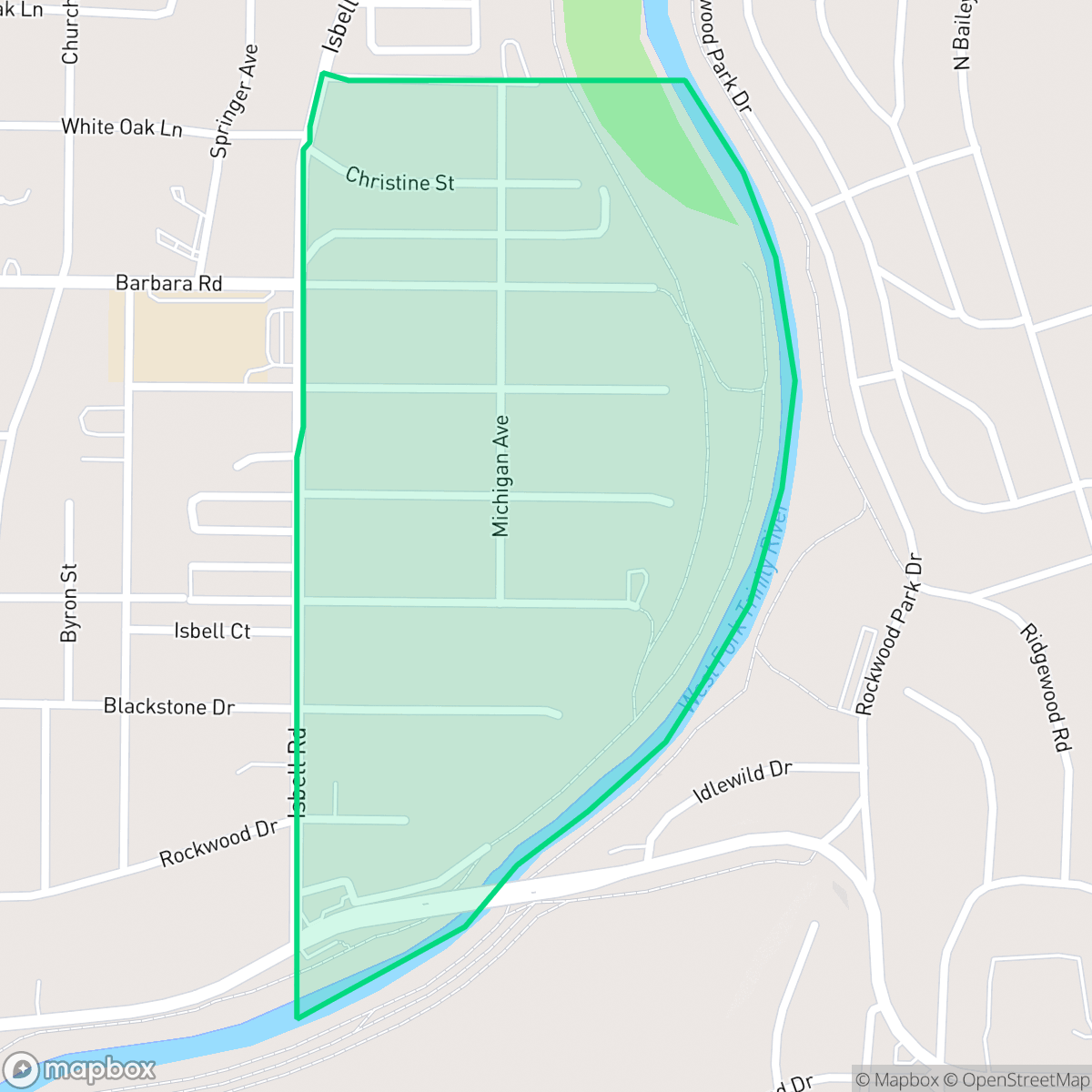
Developed by prominent Fort Worth real estate developer and former Texas State Senator William J. Bailey (1860–1949), the Brookside neighborhood (encompassing Brookside Acres and Brookside Annex) is a historic enclave in northwest Fort Worth. Bounded by the West Fork of the Trinity River, Rockwood Park, Poinsettia Drive, and Churchill Road, the neighborhood's origins are closely tied to Bailey’s extensive landholdings. In 1932, Bailey sold adjacent acreage to the city to establish Rockwood Park, which remains a key local landmark. Brookside's residential building stock features well-preserved pre-war and mid-century homes, including Craftsman-style residences dating back to the 1930s and 1940s. Today, this quiet, established community is defined by its mature trees, large lots, and immediate proximity to the Trinity Trails and Rockwood Golf Course.
The neighborhood functions as a secluded residential pocket in northwest Fort Worth, characterized by mature trees and a quiet atmosphere. According to iHuus data, the area provides a high level of dog friendliness, making it a natural choice for pet owners who value immediate access to outdoor recreation. Residents benefit from proximity to the Trinity Trails and local golf facilities, which serve as primary hubs for community activity and leisure.
Potential residents should note that the neighborhood is largely removed from major commercial corridors, resulting in limited walkability to daily services. While the area offers a peaceful environment with moderate road noise, it is important to consider the low ratings for air quality and flood safety identified by iHuus. The community is served by the Castleberry Independent School District, which provides a stable academic environment, though families should weigh these factors against the broader regional infrastructure and environmental risks.
Neighborhood Scores Across 15 Qualities
Residential spacing provides a moderate level of separation between neighbors, which is slightly higher than the Fort Worth average according to iHuus data.
Low traffic volumes and quiet streets make for pleasant strolls, though the lack of sidewalks makes walking less convenient than in many other Fort Worth areas.
Standard tract housing with modest yards and simple rooflines characterizes the area. This level of visual variety is lower than the Fort Worth average, according to iHuus data.
Extensive parks, trails, and open green spaces are readily available for pet owners. According to iHuus data, the amount of accessible space for dogs is significantly higher than the Fort Worth average.
Open land and scattered homes among woodlands characterize the landscape. This area is slightly less dense than the Fort Worth average according to iHuus data.
Local activity is subdued and focused on residential tranquility, sitting below the city average for social density. While walkable paths connect some green spaces and dining spots, the area functions primarily as a serene, car-oriented community.
Steady hum from local traffic is noticeable near busy streets, though levels are slightly more tranquil than the Fort Worth average according to iHuus data.
Frequent unhealthy air quality levels pose significant risks to sensitive groups. According to iHuus data, the air quality in Brookside is worse than the average for Fort Worth.
Industrial facilities and warehouses are entirely absent from this area. According to iHuus data, the neighborhood maintains a much cleaner residential profile than the Fort Worth average.
Health insurance access is significantly lower than the Fort Worth average. Residents in this area may face higher challenges regarding medical coverage accessibility according to iHuus data.
Political leanings in Brookside are notably more conservative than the Fort Worth average, featuring a significant conservative majority and a smaller presence of opposing viewpoints.
Residents live alongside a balanced mix of young adults, families, and older individuals. This demographic distribution aligns closely with the average found across Fort Worth.
Significant flood risk exists here due to the area being located within a 100-year floodplain; according to iHuus data, this risk is considerably higher than the Fort Worth average.
Address-Level Insights for Brookside


iHuus Neighborhood Intelligence Insights
Get address-level neighborhood insights for Brookside
- Street-level scores — see how individual blocks compare, not just neighborhood averages
- Micro-zone boundaries — identify quiet pockets, flood boundaries, and walkable clusters before you visit
- 15 dimensions in full — walkability, noise, air quality, school quality, insurance coverage, population age profile, urban/rural index, and more
- Boundary risk alerts — know if your address sits near a block boundary where scores drop, the kind of detail no listing will ever mention
- School insights — individual school ratings and insights, not just district-level data
- Compare before you commit — side-by-side data across neighborhoods, down to block precision
No credit card required
Compare with Any Neighborhood
| Dimension | Brookside | Alamo Heights |
|---|---|---|
| 🚶 Walkabilityavg 7.5 | ||
| 🔊 Acoustic Comfortavg 4.12 | ||
| 🤫 Privacy Indexavg 5.64 | ||
| 🎨 Visual Appealavg 6.38 | ||
| 🐕 Dog Friendlinessavg 6.57 | ||
| 🗺️ Urban-Rural Indexavg 6.92 | ||
| ✨ Neighborhood Vibeavg 4.56 | ||
| 🏥 Health Insurance Coverageavg 5.8 | ||
| 🌿 Air Qualityavg 3.68 | ||
| 🏭 Industrial Proximityavg 8.13 | ||
| 🌊 Flood Safetyavg 3.61 | ||
| 🗳️ Ideological Leanavg 5.62 | ||
| 👥 Population Age Profileavg 4.51 | ||
| 🔥 Fire Safety | ||
| 🏫 School Quality |
Brookside Rankings
School Districts Serving Brookside
School Insights for Brookside
Below average outcomes; significant attendance and academic challenges.
School Insights
See what's really behind every school rating near Brookside
- Individual school ratings — each school's own score with outcome context, not just a district average
- Enrollment & class size data — student-to-teacher ratio and how it compares to the state average
- Full demographics breakdown — ethnicity and gender composition for every school in the enrollment zone
- Every school in the district — all schools within the enrollment boundary ranked by rating, not just the closest one
- Grade levels & benchmarks — elementary through high school, with below/above state-average flags
No credit card required