Zach White, El Paso
Updated · 4,488 residents
Zach White is a quiet, low-density residential community in El Paso's Upper Valley known for its high visual appeal and excellent air quality. While the area lacks a distinct commercial center, it offers a peaceful, car-dependent environment with convenient access to the historic El Paso Country Club and local green spaces.
Key Highlights
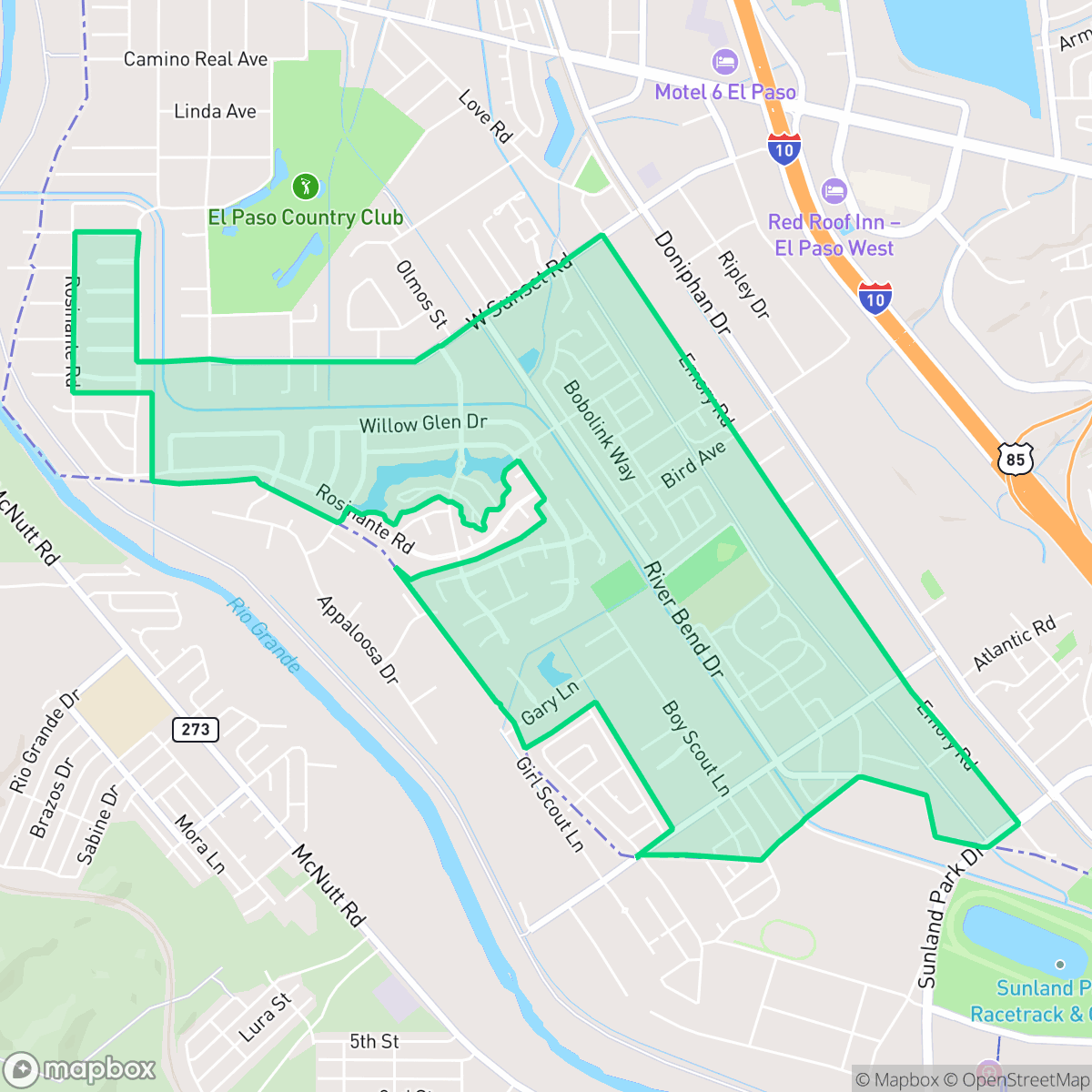
About Zach White
The Zach White neighborhood in El Paso’s Upper Valley is named after pioneer developer Zachary Taliaferro “Zach” White, who arrived in 1881 and acquired 8,000 acres in the valley. White laid the area's first streets and water mains, and in a bid to attract upscale investors, he donated 126 acres of his land to establish the El Paso Country Club. The modern residential neighborhood, represented by the Zach White Neighborhood Association, began taking its current shape in the late 1970s, with many homes and townhouses constructed around 1978. Today, the peaceful community remains defined by its proximity to the historic country club, the Rio Grande, and the namesake Zach White Elementary School.
The area functions primarily as a residential enclave, characterized by its low-density layout and significant open space. Residents benefit from high levels of visual appeal and superior air quality compared to the city average. The neighborhood maintains a calm atmosphere, with limited commercial activity and a reliance on personal vehicles for daily errands. While it features proximity to the Rio Grande and the El Paso Country Club, the local environment remains largely suburban and remote.
Prospective residents should note that the neighborhood is best suited for those seeking a quiet, car-oriented lifestyle rather than an active urban experience. While it offers high health insurance coverage and a stable, family-friendly environment, individuals should be aware of the lower flood safety rating and the need for travel to reach essential services. The local school, Zach White Elementary, remains a strong asset for families, though the broader school district is currently navigating significant administrative and structural transitions.
Neighborhood Scores Across 15 Qualities
Residential spacing provides a moderate level of separation between properties, offering more privacy than the typical El Paso neighborhood. According to iHuus data, the layout features mixed density with some consistent buffers between adjacent homes.
Low traffic volumes and quiet streets make for pleasant walking, though the lack of sidewalks means pedestrians must share the roadway with vehicles. According to iHuus data, walkability in this area is slightly below the El Paso average.
Large residences and premium amenities characterize this area, making the landscape significantly more manicured than the El Paso average. According to iHuus data, the presence of spacious driveways and well-maintained properties creates a highly polished streetscape.
Access to public parks and wide grassy verges provides more opportunities for pet owners than the average El Paso neighborhood. According to iHuus data, the area offers more suitable spaces for walking dogs compared to the rest of the city.
Open land and scattered residential pockets characterize this area, providing a more open environment than the typical El Paso urban core. According to iHuus data, the landscape features a mix of dense residential clusters and large industrial or undeveloped lots.
Low density and significant open space create a quiet atmosphere, but a lack of local businesses makes the area notably less lively than the El Paso average. Residents will find the neighborhood primarily functional and reliant on vehicles for access to commercial services.
Steady sounds from nearby busy streets are common here, though this level of activity is notably higher than the El Paso average according to iHuus data.
Air quality remains consistently high with minimal health concerns. This level of cleanliness is even better than the average for El Paso, according to iHuus data.
Residential life remains largely undisturbed by heavy industry, as the area features primarily quiet streets and open green spaces. According to iHuus data, the neighborhood maintains a lower presence of large warehouses and logistics hubs compared to the El Paso average.
Health insurance enrollment is significantly higher in this area than the El Paso average, according to iHuus data.
Political views in this area are relatively balanced, showing a much more even split between conservative and liberal leanings than the city average according to iHuus data.
A diverse range of age groups, including young adults and families, resides here. This demographic spread is slightly more varied than the typical El Paso population according to iHuus data.
Property locations within this area are situated inside the 100-year floodplain, which may necessitate flood insurance. According to iHuus data, this level of risk is slightly higher than the El Paso city average.
Address-Level Insights for Zach White


iHuus Neighborhood Intelligence Insights
Get address-level neighborhood insights for Zach White
- Street-level scores — see how individual blocks compare, not just neighborhood averages
- Micro-zone boundaries — identify quiet pockets, flood boundaries, and walkable clusters before you visit
- 15 dimensions in full — walkability, noise, air quality, school quality, insurance coverage, population age profile, urban/rural index, and more
- Boundary risk alerts — know if your address sits near a block boundary where scores drop, the kind of detail no listing will ever mention
- School insights — individual school ratings and insights, not just district-level data
- Compare before you commit — side-by-side data across neighborhoods, down to block precision
No credit card required
Compare with Any Neighborhood
| Dimension | Zach White | A Presidential Neighborhood |
|---|---|---|
| 🚶 Walkabilityavg 6.43 | ||
| 🔊 Acoustic Comfortavg 3.42 | ||
| 🤫 Privacy Indexavg 5.26 | ||
| 🎨 Visual Appealavg 5.76 | ||
| 🐕 Dog Friendlinessavg 4.74 | ||
| 🗺️ Urban-Rural Indexavg 6.67 | ||
| ✨ Neighborhood Vibeavg 4.56 | ||
| 🏥 Health Insurance Coverageavg 4.91 | ||
| 🌿 Air Qualityavg 9.4 | ||
| 🏭 Industrial Proximityavg 7.86 | ||
| 🌊 Flood Safetyavg 3.36 | ||
| 🗳️ Ideological Leanavg 8 | ||
| 👥 Population Age Profileavg 4.76 | ||
| 🔥 Fire Safety | ||
| 🏫 School Quality |
Zach White Rankings
School Districts Serving Zach White
School Insights for Zach White
Below average outcomes; significant attendance and academic challenges.
School Insights
See what's really behind every school rating near Zach White
- Individual school ratings — each school's own score with outcome context, not just a district average
- Enrollment & class size data — student-to-teacher ratio and how it compares to the state average
- Full demographics breakdown — ethnicity and gender composition for every school in the enrollment zone
- Every school in the district — all schools within the enrollment boundary ranked by rating, not just the closest one
- Grade levels & benchmarks — elementary through high school, with below/above state-average flags
No credit card required