Montoya Heights, El Paso
Updated · 1,374 residents
Montoya Heights is a quiet, car-dependent community in northwest El Paso defined by a blend of older residences and newer Mediterranean-style homes. While it offers excellent air quality and high health insurance coverage, residents should be prepared for significant road noise and limited pedestrian infrastructure.
Key Highlights
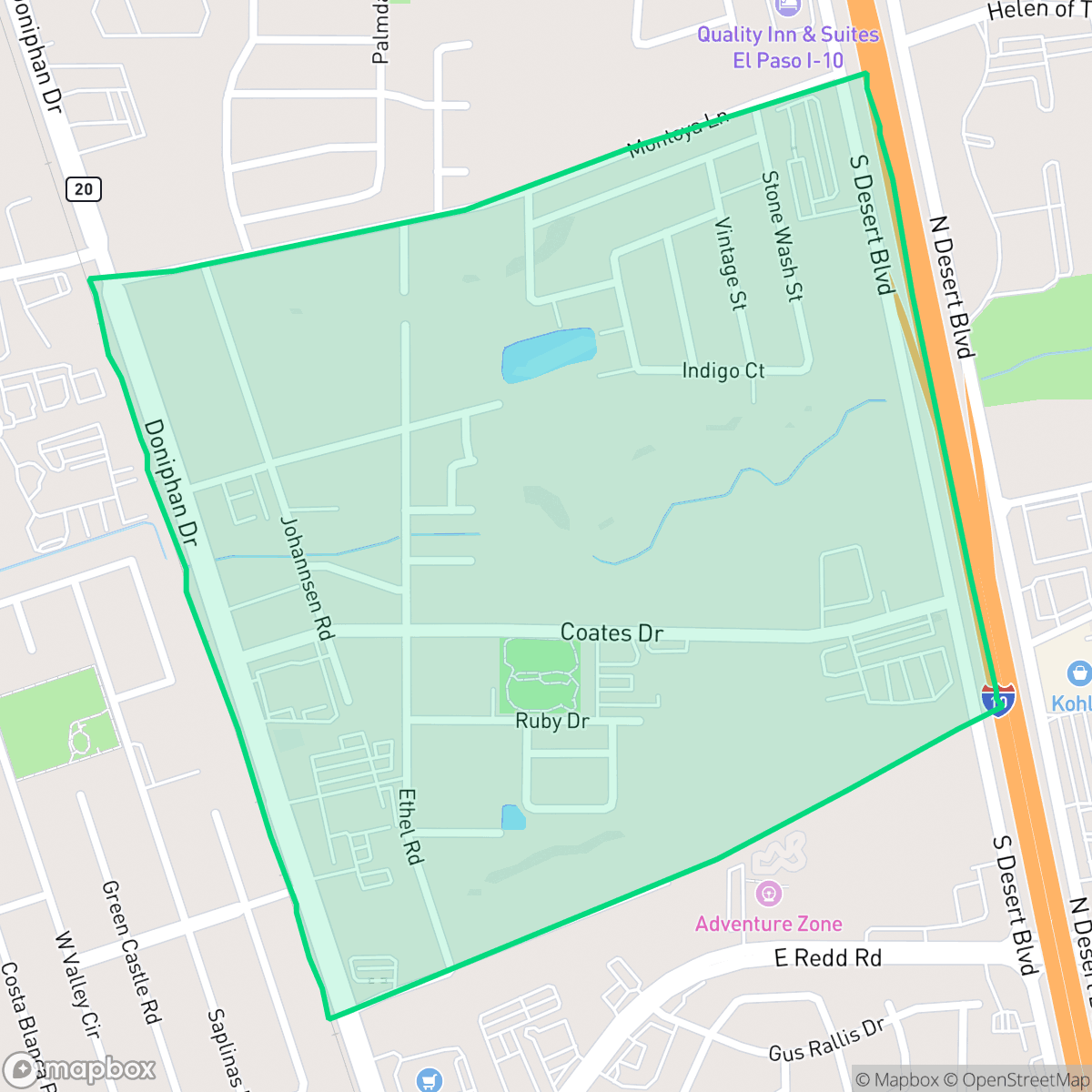
About Montoya Heights
Located in northwest El Paso, Montoya Heights was originally part of El Paso County before being annexed by the city in phases between 1977 and 1987. Due to topographical constraints and municipal policy changes, early residents lacked basic utilities. This prompted the 1999 formation of the Montoya Heights Community Improvement Association, which successfully lobbied for infrastructure and paved roads. Today, the neighborhood features a mix of older residences alongside modern, Mediterranean-influenced stucco homes built primarily after 2000. A central local landmark is Montoya Heights Park, established in 2006, which is home to El Paso’s only dedicated butterfly and pollinator garden.
Montoya Heights serves as a tranquil, suburban enclave in northwest El Paso, characterized by its mix of established housing and newer Mediterranean-influenced stucco architecture. The area functions as a blend of residential life and active commercial zones, contributing to a landscape that is heavily oriented toward automobile travel. According to iHuus data, the community benefits from superior air quality compared to the regional average, providing a cleaner environment for its residents.
Prospective residents should note that the neighborhood presents specific trade-offs regarding daily convenience and acoustic comfort. The proximity to major roadways results in elevated noise levels, and the lack of extensive pedestrian pathways makes walking a less viable option for daily errands. While the local El Paso Independent School District faces challenges with budget and consolidation, the presence of highly-rated options like William C Herrera Elementary offers a strong academic foundation for families. The area is best suited for those who prioritize suburban quietude and access to healthcare over proximity to walkable urban amenities.
Neighborhood Scores Across 15 Qualities
Residential spacing is consistent with the El Paso average, offering a mix of open areas and some buffer between neighbors. This level of density provides a balanced living environment according to iHuus data.
Low street traffic makes for a peaceful walking environment, though the lack of sidewalks makes this area slightly less walkable than the El Paso average.
Uniform tract housing with small yards and simple rooflines defines the local landscape. This visual character is slightly more varied than the typical aesthetic found across El Paso.
Limited access to public parks and green spaces makes pet walking less convenient here compared to the rest of El Paso. According to iHuus data, the area lacks the wide verges or integrated park access found in more dog-friendly neighborhoods.
Open land and scattered homes sit alongside dense suburban tracts and large-scale logistics warehouses. This landscape features a blend of residential areas and heavy industrial pockets that is largely comparable to the El Paso average.
Low-intensity activity and light industrial zones define the area, offering a calmer atmosphere than the El Paso average. While essential dining and services are available, the neighborhood is primarily car-oriented with limited pedestrian-friendly commercial density.
Frequent auditory disturbances from nearby railroad tracks and major freeway traffic characterize this area. According to iHuus data, acoustic comfort is significantly lower than the El Paso city average.
Air quality remains consistently high with minimal health concerns, performing even better than the El Paso average according to iHuus data.
Residential streets and open green spaces predominate here, offering a quieter environment than the more industrial-heavy areas found elsewhere in El Paso. According to iHuus data, the neighborhood lacks the massive logistics hubs and heavy warehouse activity seen at the city average.
Health insurance access is slightly higher than the El Paso average. According to iHuus data, a notable portion of the population remains uninsured.
Political leanings in this area align closely with the broader El Paso landscape, showing a slight tilt toward liberal-leaning residents. This demographic profile is consistent with the overall city average according to iHuus data.
Residents live alongside a varied demographic of young adults, families, and seniors. This age distribution is relatively comparable to the typical profile found across El Paso.
Property locations within this area are situated inside a designated floodplain, which presents a greater risk of flooding than much of El Paso. According to iHuus data, residents should anticipate that flood insurance will likely be a requirement for properties here.
Address-Level Insights for Montoya Heights


iHuus Neighborhood Intelligence Insights
Get address-level neighborhood insights for Montoya Heights
- Street-level scores — see how individual blocks compare, not just neighborhood averages
- Micro-zone boundaries — identify quiet pockets, flood boundaries, and walkable clusters before you visit
- 15 dimensions in full — walkability, noise, air quality, school quality, insurance coverage, population age profile, urban/rural index, and more
- Boundary risk alerts — know if your address sits near a block boundary where scores drop, the kind of detail no listing will ever mention
- School insights — individual school ratings and insights, not just district-level data
- Compare before you commit — side-by-side data across neighborhoods, down to block precision
No credit card required
Compare with Any Neighborhood
| Dimension | Montoya Heights | A Presidential Neighborhood |
|---|---|---|
| 🚶 Walkabilityavg 6.43 | ||
| 🔊 Acoustic Comfortavg 3.42 | ||
| 🤫 Privacy Indexavg 5.26 | ||
| 🎨 Visual Appealavg 5.76 | ||
| 🐕 Dog Friendlinessavg 4.74 | ||
| 🗺️ Urban-Rural Indexavg 6.67 | ||
| ✨ Neighborhood Vibeavg 4.56 | ||
| 🏥 Health Insurance Coverageavg 4.91 | ||
| 🌿 Air Qualityavg 9.4 | ||
| 🏭 Industrial Proximityavg 7.86 | ||
| 🌊 Flood Safetyavg 3.36 | ||
| 🗳️ Ideological Leanavg 8 | ||
| 👥 Population Age Profileavg 4.76 | ||
| 🔥 Fire Safety | ||
| 🏫 School Quality |
Montoya Heights Rankings
School Districts Serving Montoya Heights
School Insights for Montoya Heights
Below average outcomes; significant attendance and academic challenges.
School Insights
See what's really behind every school rating near Montoya Heights
- Individual school ratings — each school's own score with outcome context, not just a district average
- Enrollment & class size data — student-to-teacher ratio and how it compares to the state average
- Full demographics breakdown — ethnicity and gender composition for every school in the enrollment zone
- Every school in the district — all schools within the enrollment boundary ranked by rating, not just the closest one
- Grade levels & benchmarks — elementary through high school, with below/above state-average flags
No credit card required