Kern Place, El Paso
Updated · 1,744 residents
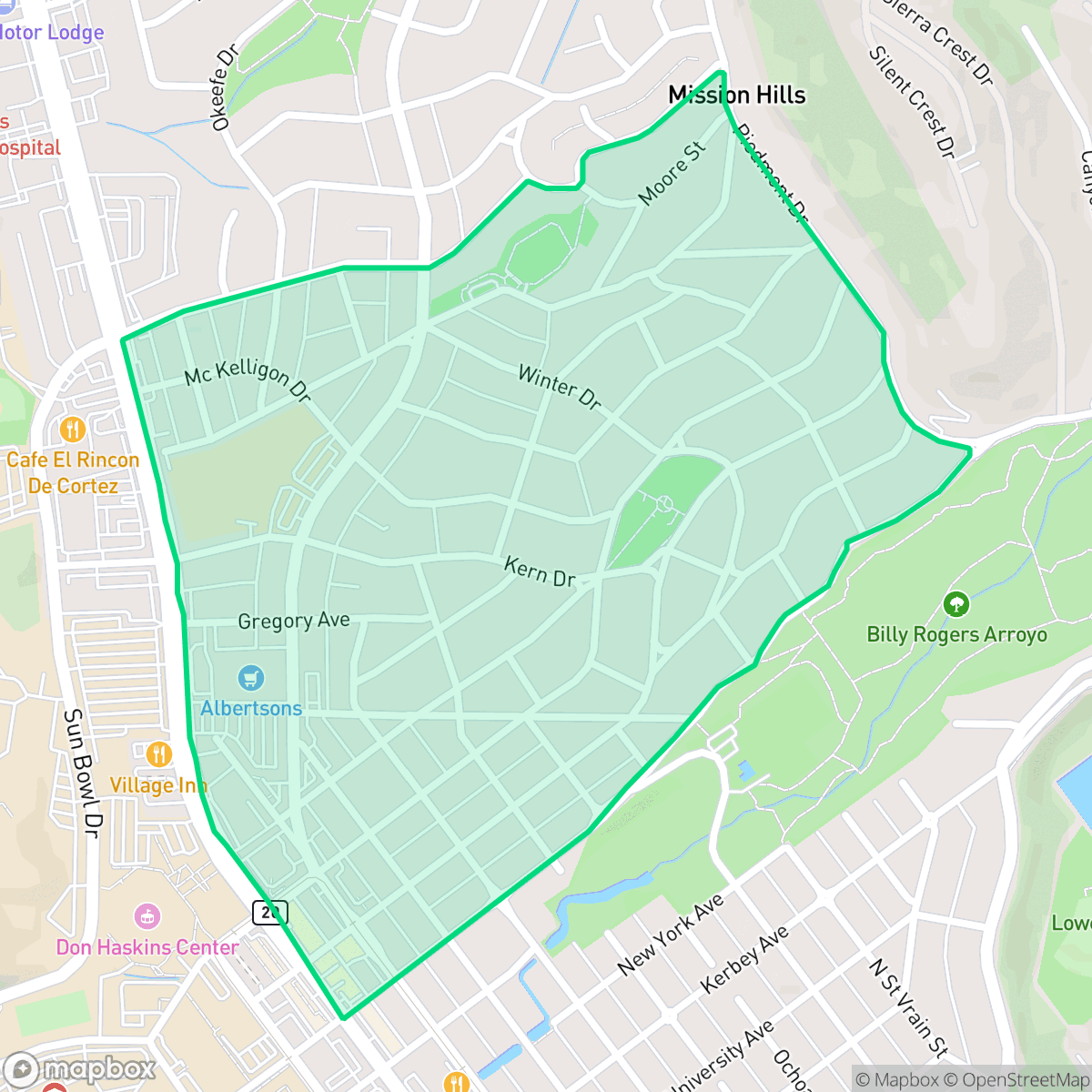
Kern Place is a highly walkable El Paso neighborhood known for its eclectic residential architecture and proximity to the University of Texas at El Paso. Residents benefit from excellent air quality, high health insurance coverage, and a lack of industrial hazards, though the area experiences moderate noise levels from local road traffic.
Key Highlights
About Kern Place
Founded by jeweler and real estate entrepreneur Peter E. Kern, development of the West El Paso neighborhood of Kern Place began in late 1914. Kern envisioned a unique residential community, commissioning engineer W.I. Rider to design a layout featuring horse trails, custom homes, and streets named after friends. He also established Madeline Park, named for his daughter, at the neighborhood's center. Architecturally, Kern Place is celebrated for its eclectic housing stock, ranging from grand Federal-style mansions to unique stone cottages. Notable landmarks include "The Castle"—the local-rock Paul Luckett Home built with a crenelated rooftop—and the Hoover House, which serves as the residence for the president of the adjacent University of Texas at El Paso. Today, the neighborhood is also defined by the lively Cincinnati Entertainment District.
The area serves as a vibrant residential hub characterized by its hilly terrain and proximity to the Cincinnati Entertainment District. It offers a unique mix of residential comfort and local amenities, maintaining a high standard for health insurance coverage and environmental safety. According to iHuus data, the neighborhood stands out for its exceptional air quality and complete absence of industrial activity, providing a clean living environment for its residents.
While the neighborhood is highly walkable and well-connected to academic life at the neighboring university, potential residents should consider the acoustic environment. The area faces moderate noise levels primarily driven by road traffic. It remains an attractive option for those seeking an established community with strong educational access, such as the well-regarded Mesita Elementary, while balancing the trade-offs of urban density and traffic-related sound.
Neighborhood Scores Across 15 Qualities
Residential spacing varies throughout the area, ranging from closely positioned houses to shared-wall apartment complexes. This level of privacy is consistent with the average density found across El Paso.
Sidewalks are consistent within residential pockets, though large parking lots and busy arterials occasionally interrupt pedestrian paths. This level of walkability is higher than the El Paso average according to iHuus data.
Large homes and frequent upscale amenities provide a visual landscape that is more polished than the El Paso average. According to iHuus data, the area features spacious driveways and well-maintained properties typical of middle-class suburban density.
Limited public green space and narrow street verges make off-leash exercise difficult, though the area remains more pet-friendly than the El Paso average. Most yards are privately fenced, which provides security for residents with dogs according to iHuus data.
Residential layouts consist of a dense mix of single-family homes and mid-sized apartment complexes, mirroring the typical urban-rural balance found across El Paso.
Residential blocks offer a calm atmosphere with plenty of green space and local dining, though the area is less active than the El Paso average. Most social spots and businesses require a car for access, as walking options are limited compared to more dense urban centers.
A steady hum of local traffic from nearby busy streets is present; however, acoustic comfort levels are higher than the El Paso city average according to iHuus data.
Air quality remains consistently high with minimal health concerns for residents. According to iHuus data, the atmosphere in Kern Place is cleaner than the El Paso city average.
Industrial activity is virtually nonexistent within the neighborhood, offering a more tranquil environment than the El Paso average. According to iHuus data, the area is primarily composed of residential streets and light commercial zones with no detected warehouses or hazard sites.
Health insurance enrollment is notably higher here than in the rest of El Paso. According to iHuus data, a significant majority of the population is covered.
Voting patterns and census indicators reflect a predominantly liberal political leaning that is more pronounced than the El Paso city average.
Residents live alongside a balanced mix of young professionals, families, and seniors. This demographic spread is slightly more varied than the average seen across El Paso, according to iHuus data.
Flood risk in this area is significantly lower than the El Paso average, though some residual risk remains as parts of the neighborhood fall within a 500-year floodplain. According to iHuus data, residents should be aware of potential seasonal drainage issues during extreme weather events.
Address-Level Insights for Kern Place


iHuus Neighborhood Intelligence Insights
Get address-level neighborhood insights for Kern Place
- Street-level scores — see how individual blocks compare, not just neighborhood averages
- Micro-zone boundaries — identify quiet pockets, flood boundaries, and walkable clusters before you visit
- 15 dimensions in full — walkability, noise, air quality, school quality, insurance coverage, population age profile, urban/rural index, and more
- Boundary risk alerts — know if your address sits near a block boundary where scores drop, the kind of detail no listing will ever mention
- School insights — individual school ratings and insights, not just district-level data
- Compare before you commit — side-by-side data across neighborhoods, down to block precision
No credit card required
Compare with Any Neighborhood
| Dimension | Kern Place | A Presidential Neighborhood |
|---|---|---|
| 🚶 Walkabilityavg 6.43 | ||
| 🔊 Acoustic Comfortavg 3.42 | ||
| 🤫 Privacy Indexavg 5.26 | ||
| 🎨 Visual Appealavg 5.76 | ||
| 🐕 Dog Friendlinessavg 4.74 | ||
| 🗺️ Urban-Rural Indexavg 6.67 | ||
| ✨ Neighborhood Vibeavg 4.56 | ||
| 🏥 Health Insurance Coverageavg 4.91 | ||
| 🌿 Air Qualityavg 9.4 | ||
| 🏭 Industrial Proximityavg 7.86 | ||
| 🌊 Flood Safetyavg 3.36 | ||
| 🗳️ Ideological Leanavg 8 | ||
| 👥 Population Age Profileavg 4.76 | ||
| 🔥 Fire Safety | ||
| 🏫 School Quality |
Kern Place Rankings
School Districts Serving Kern Place
School Insights for Kern Place
Below average outcomes; significant attendance and academic challenges.
School Insights
See what's really behind every school rating near Kern Place
- Individual school ratings — each school's own score with outcome context, not just a district average
- Enrollment & class size data — student-to-teacher ratio and how it compares to the state average
- Full demographics breakdown — ethnicity and gender composition for every school in the enrollment zone
- Every school in the district — all schools within the enrollment boundary ranked by rating, not just the closest one
- Grade levels & benchmarks — elementary through high school, with below/above state-average flags
No credit card required