Chihuahuita, El Paso
Updated · 273 residents
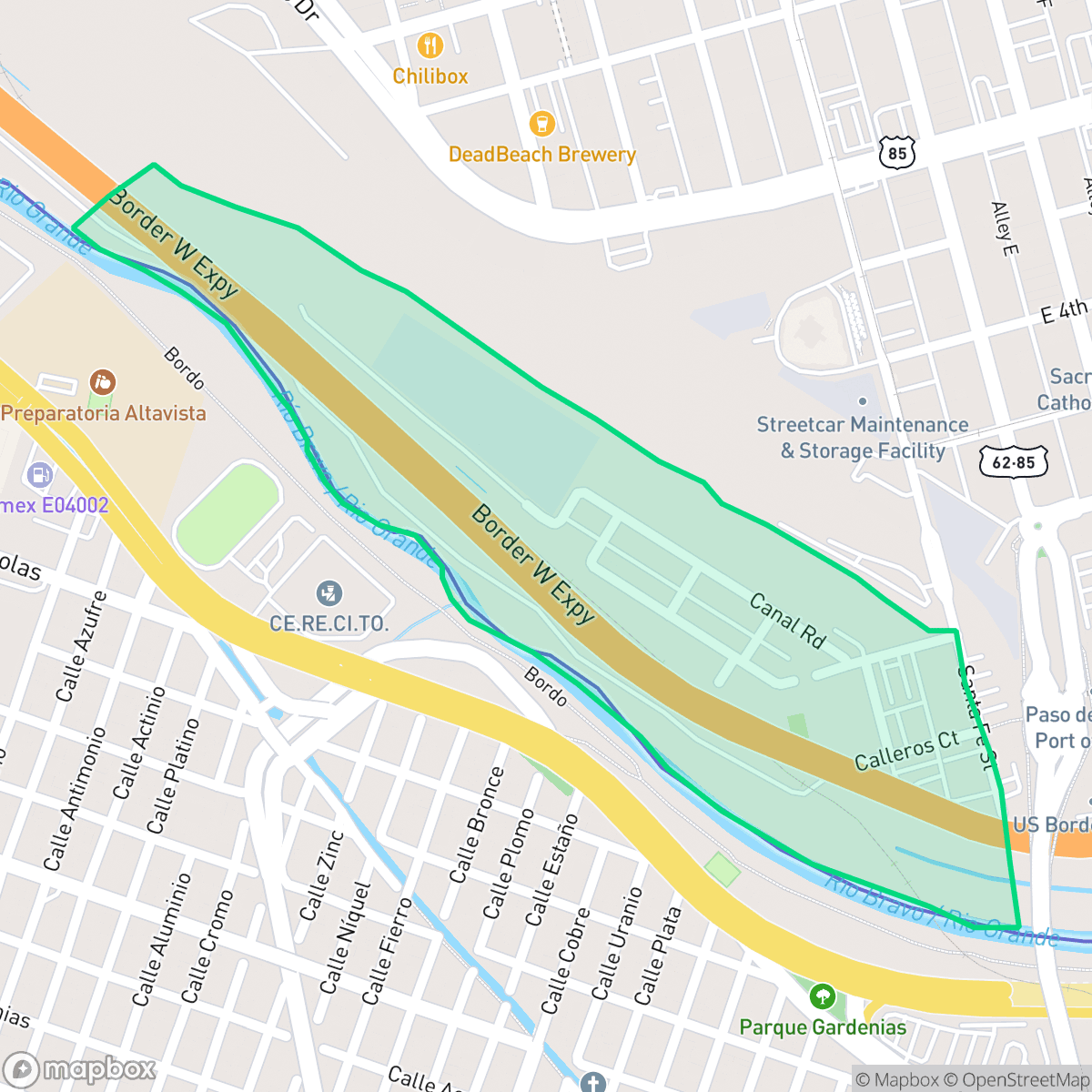
Chihuahuita is a dense, historic district defined by its tightly packed, wall-to-wall adobe architecture and proximity to major industrial rail infrastructure. While the area offers a unique glimpse into the earliest residential roots of El Paso, it is characterized by high noise levels from road traffic, limited walkability, and a lack of accessible green space.
Key Highlights
About Chihuahuita
Chihuahuita, El Paso’s oldest neighborhood, originated from an 1818 Spanish land grant awarded to Ricardo Brusuelas for a ranch along the Rio Grande. Known as the "Ellis Island of the Border," this historic district became a vital gateway for Mexican immigrants, growing rapidly after the Santa Fe Railroad arrived in 1881 and the Santa Fe Bridge opened in 1892. During the 1910 Mexican Revolution, it served as a refuge and a center of political intrigue; residents famously watched battles across the river from the levee and the 1896 El Paso Laundry building. Architecturally, Chihuahuita features traditional, brightly painted stucco and adobe homes reminiscent of Mexican style. Designated a historic district in 1991, the neighborhood's notable former residents include Oscar-winning actor Anthony Quinn.
The neighborhood is an extremely dense urban grid located near the border, dominated by low-rise structures and significant industrial logistics hubs. The environment is heavily influenced by its proximity to a major railway yard, which, combined with constant road traffic, contributes to elevated noise levels throughout the area. The layout features narrow streets and a lack of modern pedestrian infrastructure, which creates challenges for mobility and navigation for those without private vehicles.
Residents face specific livability trade-offs, including limited privacy due to the wall-to-wall construction of homes and poor air quality resulting from the surrounding industrial activity. The area lacks public parks and dedicated pet-friendly amenities, making it a difficult environment for those seeking traditional residential comforts. It is best suited for individuals interested in the preservation of the city's oldest residential enclave who are comfortable with the realities of living in a high-density, industrial-adjacent setting.
Neighborhood Scores Across 15 Qualities
Structures are situated in very close proximity with shared walls or extremely narrow separations. This level of density is significantly higher than the El Paso average, according to iHuus data.
Most street segments feature sidewalks and controlled intersections, making the area significantly more navigable on foot than the El Paso average. However, pedestrian crossings near highway ramps and rail barriers can be difficult to navigate safely.
Visual surroundings consist primarily of functional industrial structures and high density housing with limited private greenery. According to iHuus data, the area's aesthetic is slightly more utilitarian than the El Paso average.
Limited green space and a high density of pavement make finding areas for pet exercise difficult. According to iHuus data, the neighborhood lacks the parks and grassy verges found more commonly throughout El Paso.
Heavy industrial infrastructure and dense commercial blocks characterize this area; according to iHuus data, the environment is significantly more urbanized and paved than the El Paso average.
Dense commercial activity and constant movement define this area, making it significantly more vibrant than the El Paso average. Residents have access to a variety of local dining options within a heavily developed, concrete-dominant landscape.
Frequent noise from nearby railroad tracks and major freeways characterizes the area. This level of acoustic disturbance is slightly higher than the average for El Paso.
Air quality in this area remains mostly clean with infrequent periods of elevated readings. According to iHuus data, the air quality is slightly lower than the El Paso city average.
Residential life remains largely undisturbed by heavy industry, though residents should note the proximity to significant railway and logistics infrastructure. According to iHuus data, this area maintains a level of industrial isolation similar to the El Paso average.
Voting patterns and census indicators reflect a more liberal political leaning than the El Paso average, according to iHuus data.
Residents live alongside a varied demographic of young adults, families, and seniors. According to iHuus data, this population spread is more balanced than the typical age distribution found across El Paso.
Address-Level Insights for Chihuahuita


iHuus Neighborhood Intelligence Insights
Get address-level neighborhood insights for Chihuahuita
- Street-level scores — see how individual blocks compare, not just neighborhood averages
- Micro-zone boundaries — identify quiet pockets, flood boundaries, and walkable clusters before you visit
- 15 dimensions in full — walkability, noise, air quality, school quality, insurance coverage, population age profile, urban/rural index, and more
- Boundary risk alerts — know if your address sits near a block boundary where scores drop, the kind of detail no listing will ever mention
- School insights — individual school ratings and insights, not just district-level data
- Compare before you commit — side-by-side data across neighborhoods, down to block precision
No credit card required
Compare with Any Neighborhood
| Dimension | Chihuahuita | A Presidential Neighborhood |
|---|---|---|
| 🚶 Walkabilityavg 6.43 | ||
| 🔊 Acoustic Comfortavg 3.42 | ||
| 🤫 Privacy Indexavg 5.26 | ||
| 🎨 Visual Appealavg 5.76 | ||
| 🐕 Dog Friendlinessavg 4.74 | ||
| 🗺️ Urban-Rural Indexavg 6.67 | ||
| ✨ Neighborhood Vibeavg 4.56 | ||
| 🏥 Health Insurance Coverageavg 4.91 | ||
| 🌿 Air Qualityavg 9.4 | ||
| 🏭 Industrial Proximityavg 7.86 | ||
| 🌊 Flood Safetyavg 3.36 | ||
| 🗳️ Ideological Leanavg 8 | ||
| 👥 Population Age Profileavg 4.76 | ||
| 🔥 Fire Safety | ||
| 🏫 School Quality |
Chihuahuita Rankings
School Districts Serving Chihuahuita
School Insights for Chihuahuita
Below average outcomes; significant attendance and academic challenges.
School Insights
See what's really behind every school rating near Chihuahuita
- Individual school ratings — each school's own score with outcome context, not just a district average
- Enrollment & class size data — student-to-teacher ratio and how it compares to the state average
- Full demographics breakdown — ethnicity and gender composition for every school in the enrollment zone
- Every school in the district — all schools within the enrollment boundary ranked by rating, not just the closest one
- Grade levels & benchmarks — elementary through high school, with below/above state-average flags
No credit card required