Vickery Meadows PID, Dallas
Updated · 22,828 residents
Vickery Meadows is a dense, diverse enclave in Dallas characterized by high-density multi-family living and a vibrant, multicultural atmosphere. While the area offers high walkability and accessible green spaces for pet owners, residents should expect frequent road noise and limited private outdoor space.
Key Highlights
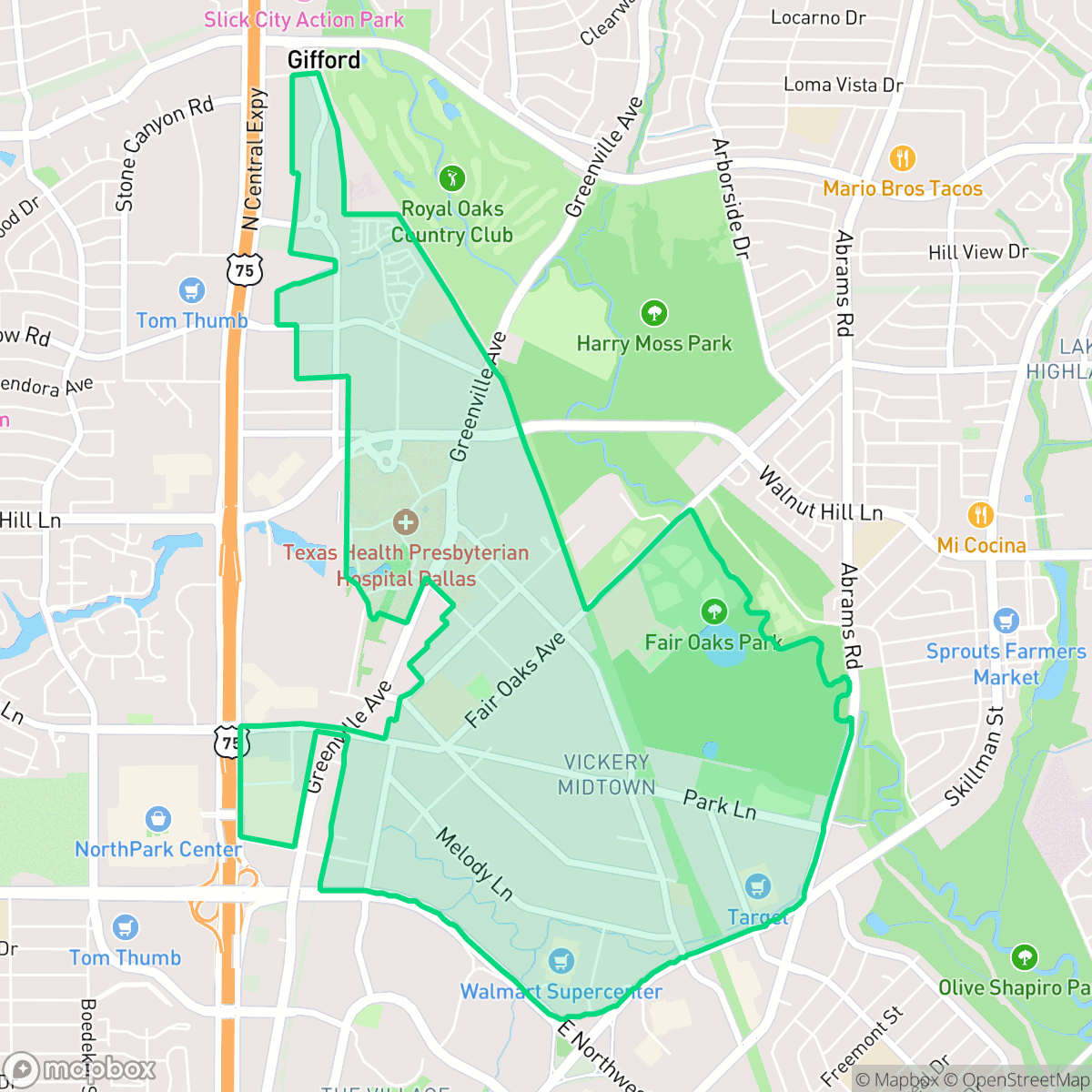
About Vickery Meadows PID
Originally settled in the 1850s and promoted as a townsite by John E. Vickery in the early 1900s, the community of Vickery was annexed by Dallas in 1945. Historically home to spacious family lots and the popular Vickery Park amusement park, the neighborhood underwent a dramatic physical transformation in the 1970s. It was redeveloped with dense apartment complexes designed for young, affluent professionals. However, economic shifts and the Fair Housing Act in subsequent decades transitioned Vickery Meadow into one of Dallas’s most densely populated immigrant and refugee enclaves, often called a local "melting pot". To address infrastructure and safety, the Vickery Meadow Public Improvement District (now the Midtown Improvement District) was established in 1993, focusing revitalization efforts on key areas like the Five Points intersection.
The area functions as a dense suburban hub, defined by its high-density apartment complexes and a diverse mix of commercial activity. Residents benefit from an extensive network of sidewalks and pedestrian paths that make the neighborhood highly walkable, while proximity to major thoroughfares provides convenient access to broader Dallas amenities. According to iHuus data, the neighborhood balances its urban intensity with significant tree canopy and access to local parks, creating a functional, if compact, living environment for its residents.
Prospective residents should consider the trade-offs inherent in this high-density setting, including limited acoustic privacy and a lack of private outdoor buffers. The area is well-suited for those who prioritize walkability and proximity to diverse social and dining options over quiet, secluded living. While it provides strong educational support through highly-rated local schools, individuals should also be aware of the environmental factors, such as the area's low flood safety score and higher levels of road traffic noise.
Neighborhood Scores Across 15 Qualities
Dense apartment clusters and shared walls create less personal buffer than is typical for Dallas. Some areas provide relief through large green belts, but much of the neighborhood features closely packed multi-family structures.
Pedestrian-friendly layouts and well-defined sidewalk networks make most errands accessible on foot. This area offers better connectivity for walkers than the Dallas average, though large parking lots and nearby highways can occasionally create barriers.
Visual surroundings consist primarily of functional apartment complexes and uniform housing. This landscape is slightly below the Dallas average for visual appeal due to the prevalence of high-density, boxy architectural styles.
Abundant forested nature preserves, golf courses, and connected greenways provide extensive walking trails and pet-friendly spaces. This access to large parks and grassy buffers is notably higher than the Dallas average, according to iHuus data.
An array of multi-family residential complexes and large-scale commercial structures creates a dense suburban feel that is slightly less open than the Dallas average. Large institutional buildings and significant tree canopies are interspersed with dense, multi-story apartment layouts according to iHuus data.
A variety of social hubs and dining options create a more active atmosphere than the typical Dallas neighborhood. While some blocks feature high-energy clusters near major highways, other areas remain quiet and suburban in character.
Frequent noise from nearby heavy traffic and railroad proximity makes this area louder than the Dallas average. Residents may experience significant acoustic disturbances due to the nearby freeway and transit corridors.
Air quality levels in this area fluctuate between acceptable and unhealthy, particularly for sensitive groups. This level of air quality is consistent with the average found across Dallas.
Heavy industrial facilities and warehouses are absent from this area, providing a cleaner environment than the Dallas average. According to iHuus data, the landscape is primarily composed of residential, recreational, and light commercial uses with no detectable industrial hazards.
Health insurance enrollment among residents is roughly in line with the Dallas average. Access to coverage remains a notable factor for the area according to iHuus data.
Political leanings in this area lean toward the liberal side, representing a more progressive tilt than the Dallas average according to iHuus data.
Residents will find a balanced demographic spread of young adults, families, and older individuals. This age distribution is largely in line with the average seen across Dallas.
Significant flood risk exists here due to the area's location within a designated floodplain. According to iHuus data, this risk level is notably higher than the Dallas average and typically necessitates flood insurance.
Address-Level Insights for Vickery Meadows PID


iHuus Neighborhood Intelligence Insights
Get address-level neighborhood insights for Vickery Meadows PID
- Street-level scores — see how individual blocks compare, not just neighborhood averages
- Micro-zone boundaries — identify quiet pockets, flood boundaries, and walkable clusters before you visit
- 15 dimensions in full — walkability, noise, air quality, school quality, insurance coverage, population age profile, urban/rural index, and more
- Boundary risk alerts — know if your address sits near a block boundary where scores drop, the kind of detail no listing will ever mention
- School insights — individual school ratings and insights, not just district-level data
- Compare before you commit — side-by-side data across neighborhoods, down to block precision
No credit card required
Compare with Any Neighborhood
| Dimension | Vickery Meadows PID | Arts District |
|---|---|---|
| 🚶 Walkabilityavg 7.43 | ||
| 🔊 Acoustic Comfortavg 3.98 | ||
| 🤫 Privacy Indexavg 5.4 | ||
| 🎨 Visual Appealavg 6.6 | ||
| 🐕 Dog Friendlinessavg 6.65 | ||
| 🗺️ Urban-Rural Indexavg 6.6 | ||
| ✨ Neighborhood Vibeavg 4.96 | ||
| 🏥 Health Insurance Coverageavg 5.31 | ||
| 🌿 Air Qualityavg 4.05 | ||
| 🏭 Industrial Proximityavg 8.56 | ||
| 🌊 Flood Safetyavg 3.3 | ||
| 🗳️ Ideological Leanavg 7.84 | ||
| 👥 Population Age Profileavg 4.6 | ||
| 🔥 Fire Safety | ||
| 🏫 School Quality |
Vickery Meadows PID Rankings
School Districts Serving Vickery Meadows PID
School Insights for Vickery Meadows PID
Below average outcomes; significant attendance and academic challenges.
School Insights
See what's really behind every school rating near Vickery Meadows PID
- Individual school ratings — each school's own score with outcome context, not just a district average
- Enrollment & class size data — student-to-teacher ratio and how it compares to the state average
- Full demographics breakdown — ethnicity and gender composition for every school in the enrollment zone
- Every school in the district — all schools within the enrollment boundary ranked by rating, not just the closest one
- Grade levels & benchmarks — elementary through high school, with below/above state-average flags
No credit card required