South Side PID, Dallas
Updated · 476 residents
The South Side PID is an industrial-leaning district in Dallas characterized by high-rise structures and proximity to major transit corridors. While the area offers a lively social scene with popular coffee shops and eateries, residents should expect significant noise from road traffic and limited pedestrian connectivity.
Key Highlights
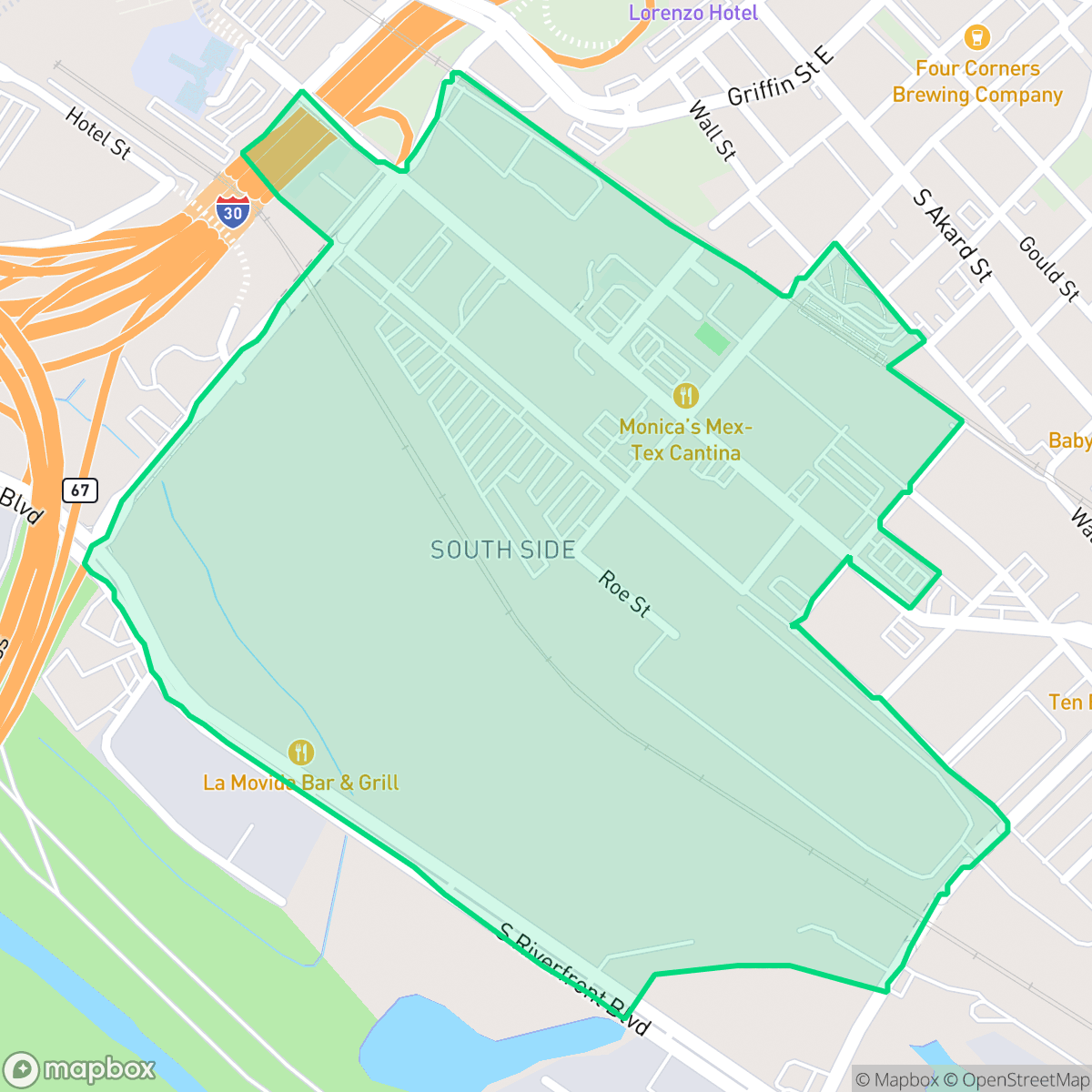
About South Side PID
Established in 2005, the South Side Public Improvement District (SSPID) is a special assessment district located in the historic Cedars neighborhood of Dallas, Texas. Managed by the South Side Quarter Development Corporation—an arm of real estate developer Matthews Southwest—the district encompasses a mix of business, residential, public, and light industrial properties. The area's character is deeply tied to the industrial and creative evolution of the Cedars, transitioning from a late 19th-century grand residential enclave to a mid-century industrial hub, and finally into a modern transit-oriented arts and loft district. Today, the SSPID funds supplemental security, infrastructure improvements, and beautification efforts to support local landmarks, creative studios, and businesses along key corridors like Botham Jean Boulevard.
Located within the historic Cedars, the area serves as a dense, mixed-use environment where industrial heritage meets modern urban living. The landscape is defined by massive transit infrastructure and a blend of commercial and residential properties. According to iHuus data, the district maintains a distinct, energetic vibe supported by local social hubs, though this activity is balanced against a highly urbanized setting that prioritizes vehicular access over pedestrian connectivity. The neighborhood benefits from strong flood safety ratings and higher-than-average health insurance coverage among its residents.
Prospective residents should note that the area presents specific trade-offs regarding acoustic comfort, as road traffic contributes to elevated noise levels. The neighborhood is less suited for those seeking a quiet or highly walkable environment, as it is best suited for individuals who value proximity to the city core and an active, industrial-adjacent lifestyle over suburban tranquility.
Neighborhood Scores Across 15 Qualities
Residential spacing is mixed, offering some buffer between neighbors that is roughly in line with the Dallas average.
Quiet streets provide a calm environment for walking, though a lack of sidewalks makes the area significantly less walkable than the Dallas average. According to iHuus data, the area is not ideal for those who rely on pedestrian infrastructure for daily travel.
Standard tract housing dominates the area, featuring simple rooflines and modest yards. This level of visual variety is lower than the average found across Dallas.
Limited access to public parks and a lack of wide green verges make this area less ideal for dog owners. According to iHuus data, pet-friendly infrastructure in this neighborhood is below the Dallas city average.
Land use consists of a mix of dense transit infrastructure and vast open floodplains. This area feels more rural and industrial than the typical Dallas urban environment according to iHuus data.
Social activity fluctuates between vibrant dining hubs and quiet industrial pockets. This area offers a higher level of amenities and dining options than the Dallas average, though some sections remain largely rural and remote.
Frequent noise from nearby railroad tracks and heavy freeway traffic makes this area louder than the Dallas average. Residents may experience significant acoustic disturbances due to the proximity of major transportation corridors.
Air quality levels fluctuate between acceptable and unhealthy conditions, presenting occasional concerns for sensitive groups. This level of-air quality is consistent with the average found across Dallas.
Residential areas coexist with logistics hubs, rail yards, and active commercial traffic. This level of industrial proximity is notably lower than the city average for Dallas.
Health insurance access for residents is significantly higher than the Dallas average, according to iHuus data.
Voting patterns and census indicators reflect a significantly more liberal leaning than the broader Dallas average, according to iHuus data.
Residents live alongside a balanced variety of young adults, families, and older individuals. This demographic spread is largely consistent with the broader Dallas area, according to iHuus data.
Flood safety in this area is significantly higher than the Dallas average. While some residual risk exists within the 500-year floodplain, according to iHuus data, the area is generally well-positioned regarding flood safety.
Address-Level Insights for South Side PID


iHuus Neighborhood Intelligence Insights
Get address-level neighborhood insights for South Side PID
- Street-level scores — see how individual blocks compare, not just neighborhood averages
- Micro-zone boundaries — identify quiet pockets, flood boundaries, and walkable clusters before you visit
- 15 dimensions in full — walkability, noise, air quality, school quality, insurance coverage, population age profile, urban/rural index, and more
- Boundary risk alerts — know if your address sits near a block boundary where scores drop, the kind of detail no listing will ever mention
- School insights — individual school ratings and insights, not just district-level data
- Compare before you commit — side-by-side data across neighborhoods, down to block precision
No credit card required
Compare with Any Neighborhood
| Dimension | South Side PID | Arts District |
|---|---|---|
| 🚶 Walkabilityavg 7.43 | ||
| 🔊 Acoustic Comfortavg 3.98 | ||
| 🤫 Privacy Indexavg 5.4 | ||
| 🎨 Visual Appealavg 6.6 | ||
| 🐕 Dog Friendlinessavg 6.65 | ||
| 🗺️ Urban-Rural Indexavg 6.6 | ||
| ✨ Neighborhood Vibeavg 4.96 | ||
| 🏥 Health Insurance Coverageavg 5.31 | ||
| 🌿 Air Qualityavg 4.05 | ||
| 🏭 Industrial Proximityavg 8.56 | ||
| 🌊 Flood Safetyavg 3.3 | ||
| 🗳️ Ideological Leanavg 7.84 | ||
| 👥 Population Age Profileavg 4.6 | ||
| 🔥 Fire Safety | ||
| 🏫 School Quality |
South Side PID Rankings
School Districts Serving South Side PID
School Insights for South Side PID
Below average outcomes; significant attendance and academic challenges.
School Insights
See what's really behind every school rating near South Side PID
- Individual school ratings — each school's own score with outcome context, not just a district average
- Enrollment & class size data — student-to-teacher ratio and how it compares to the state average
- Full demographics breakdown — ethnicity and gender composition for every school in the enrollment zone
- Every school in the district — all schools within the enrollment boundary ranked by rating, not just the closest one
- Grade levels & benchmarks — elementary through high school, with below/above state-average flags
No credit card required