Tyrrell Park, Beaumont
Updated · 1,186 residents
Tyrrell Park is a sprawling, rural-leaning area in Beaumont characterized by vast wooded tracts, wetlands, and a mix of industrial logistics hubs. While the neighborhood offers excellent air quality and a quiet, low-density atmosphere, residents must rely on personal vehicles due to limited walkability and significant noise from nearby highways and freight corridors.
Key Highlights
About Tyrrell Park
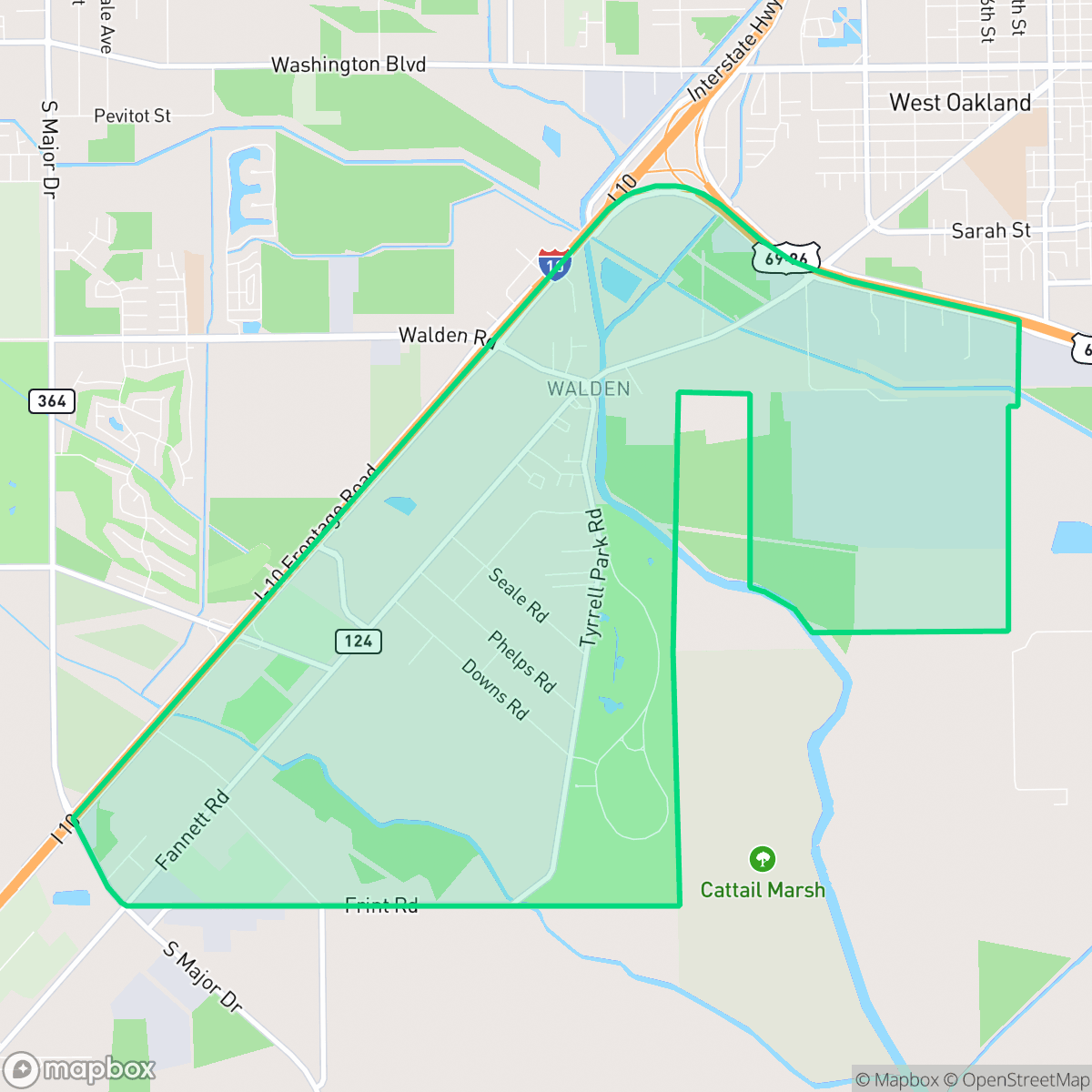
Tyrrell Park is defined by its expansive, undeveloped landscape, featuring significant forest patches, canals, and wetlands that create a distinct rural feel within the Beaumont city limits. The area serves as a transitional zone, blending low-density residential pockets with active industrial and logistics infrastructure. Large-scale entertainment venues and freight corridors near major highways define the local landscape, resulting in a quiet, car-dependent environment with minimal local commercial activity.
Living here presents a unique set of trade-offs, particularly regarding acoustic comfort, as road traffic from nearby logistics routes contributes to elevated noise levels. While the neighborhood boasts high air quality and a sense of privacy, prospective residents should be aware of the limited local amenities and the ongoing challenges within the Beaumont Independent School District. This area is best suited for those seeking a remote, low-density lifestyle who prioritize open space over immediate access to urban services or high-performing school districts.
Neighborhood Scores Across 15 Qualities
Large residential lots with significant separation between homes provide a higher level of privacy than is typical for the Beaumont area. According to iHuus data, this spacing creates a more secluded living environment compared to the city average.
Low traffic levels allow for walking through the area, though the lack of sidewalks makes it less pedestrian-friendly than the Beaumont average.
Standard tract housing with tidy but small yards defines the visual landscape. This area offers a slightly more varied aesthetic than the Beaumont average according to iHuus data.
Access to green verges and nearby public park areas is better than the Beaumont average. This provides more opportunities for walking pets throughout the neighborhood according to iHuus data.
Expansive wooded areas, wetlands, and scattered industrial facilities create a more open, low-density environment than the Beaumont average. Residents will find a landscape characterized by significant greenery and large tracts of undeveloped land.
Low commercial density and a heavy industrial presence create a much more subdued atmosphere than the Beaumont average. Residents should expect a quiet, suburban environment where driving is necessary for most services and dining.
Constant auditory disruptions from nearby railroad tracks and freeway traffic characterize this area. According to iHuus data, acoustic comfort levels are significantly lower than the Beaumont city average.
Air remains mostly clean with rare instances of elevated readings. This level of air quality is slightly better than the Beaumont average, according to iHuus data.
Light industrial warehouses and commercial logistics facilities are interspersed with residential areas, resulting in a lower industrial density than the Beaumont average. Residents may encounter daytime commercial traffic and nearby utility infrastructure, though the area lacks heavy manufacturing or large scale toxic facilities.
Health insurance accessibility is notably low in this area, falling significantly below the Beaumont average according to iHuus data.
Voting patterns and census indicators reflect a predominantly liberal leaning that is notably higher than the Beaumont average, according to iHuus data.
Residents live alongside a balanced mix of young adults, families, and seniors. This demographic spread is slightly more varied than the average found across Beaumont.
Flood risk in this area is higher than the Beaumont average because FEMA has not yet completed a detailed flood study for this specific location. According to iHuus data, the level of risk remains undetermined for residents.
Address-Level Insights for Tyrrell Park


iHuus Neighborhood Intelligence Insights
Get address-level neighborhood insights for Tyrrell Park
- Street-level scores — see how individual blocks compare, not just neighborhood averages
- Micro-zone boundaries — identify quiet pockets, flood boundaries, and walkable clusters before you visit
- 15 dimensions in full — walkability, noise, air quality, school quality, insurance coverage, population age profile, urban/rural index, and more
- Boundary risk alerts — know if your address sits near a block boundary where scores drop, the kind of detail no listing will ever mention
- School insights — individual school ratings and insights, not just district-level data
- Compare before you commit — side-by-side data across neighborhoods, down to block precision
No credit card required
Compare with Any Neighborhood
| Dimension | Tyrrell Park | Acorn |
|---|---|---|
| 🚶 Walkabilityavg 5.61 | ||
| 🔊 Acoustic Comfortavg 4.45 | ||
| 🤫 Privacy Indexavg 6.18 | ||
| 🎨 Visual Appealavg 5.53 | ||
| 🐕 Dog Friendlinessavg 5.08 | ||
| 🗺️ Urban-Rural Indexavg 7.3 | ||
| ✨ Neighborhood Vibeavg 4.21 | ||
| 🏥 Health Insurance Coverageavg 5.2 | ||
| 🌿 Air Qualityavg 8.01 | ||
| 🏭 Industrial Proximityavg 7.7 | ||
| 🌊 Flood Safetyavg 7.26 | ||
| 🗳️ Ideological Leanavg 7.25 | ||
| 👥 Population Age Profileavg 4.85 | ||
| 🔥 Fire Safety | ||
| 🏫 School Quality |
Tyrrell Park Rankings
School Districts Serving Tyrrell Park
School Insights for Tyrrell Park
Below average outcomes; significant attendance and academic challenges.
School Insights
See what's really behind every school rating near Tyrrell Park
- Individual school ratings — each school's own score with outcome context, not just a district average
- Enrollment & class size data — student-to-teacher ratio and how it compares to the state average
- Full demographics breakdown — ethnicity and gender composition for every school in the enrollment zone
- Every school in the district — all schools within the enrollment boundary ranked by rating, not just the closest one
- Grade levels & benchmarks — elementary through high school, with below/above state-average flags
No credit card required