North End, Beaumont
Updated · 12,062 residents
The North End is a quiet, low-density residential area characterized by its expansive green spaces and rural atmosphere. Residents benefit from high air quality and relatively peaceful noise levels, though the area offers limited local commercial amenities and walkable services.
Key Highlights
About North End
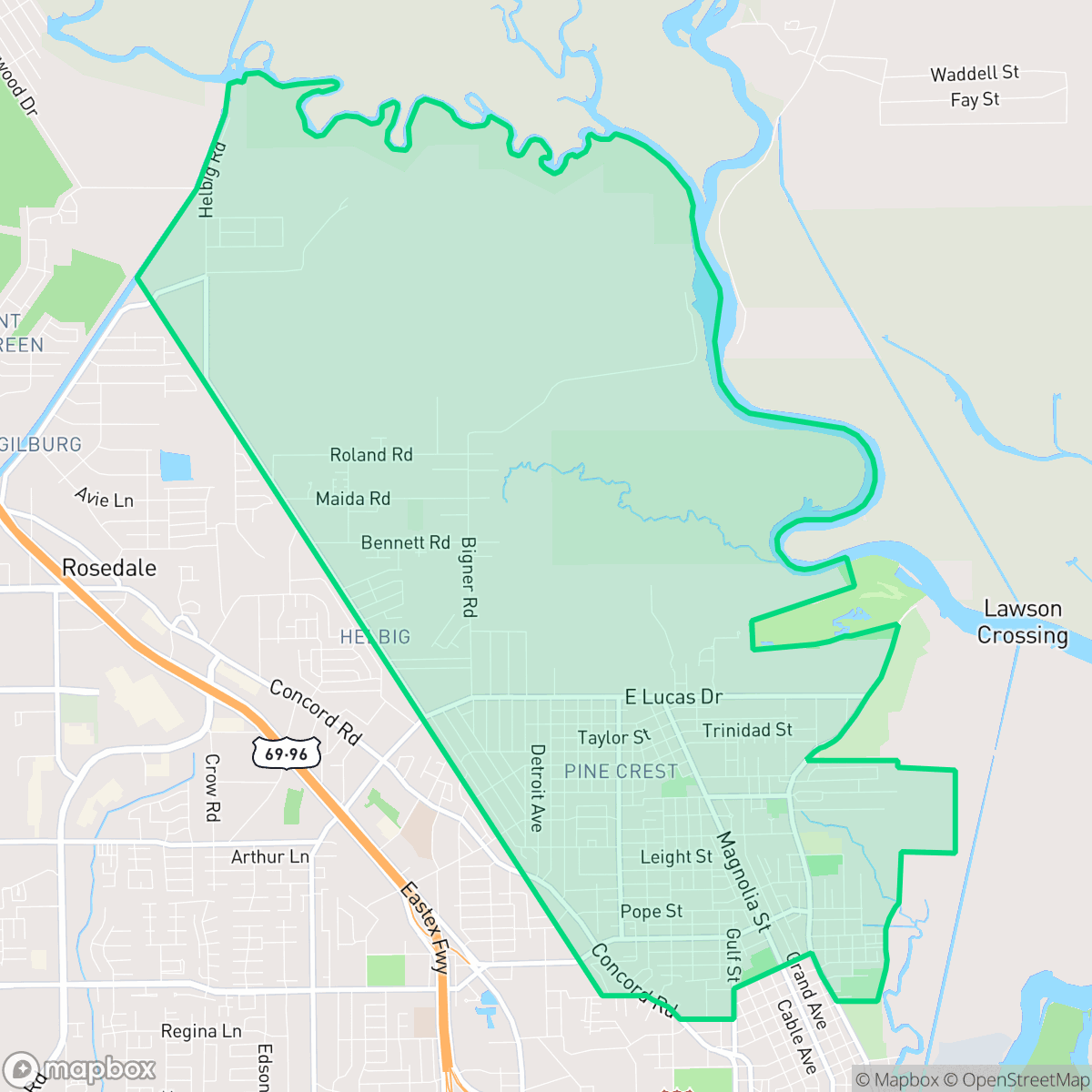
The North End neighborhood of Beaumont, Texas, developed in the late 19th century during the region's lumber boom. Historically situated north of the downtown business district, the area grew around major sawmills lining the Neches River, including Long and Company and Reliance Lumber. African American mill workers established settlements here, notably "Red Town"—named for the red-painted houses within the Reliance yard—and another settlement around an 1880s brickyard along the Texas and New Orleans Railroad. These enclaves formed the core of Beaumont's historic North End Black community. The neighborhood’s early cultural and civic life was anchored by pioneering institutions, such as an early elementary school named for Woodson Pipkin, the city's first Black schoolteacher, and the North End Baptist Church, which was organized in 1932 in the Pinecrest Addition.
The North End functions as a serene, rural-suburban fringe that balances residential pockets with significant undeveloped forest and marshland. The landscape is defined by its low-density housing and quiet streets, which provide a stark contrast to more bustling parts of Beaumont. While the area maintains a peaceful environment with favorable acoustic comfort and high air quality, it features minimal commercial development, requiring residents to travel for most daily necessities. Life in this neighborhood is best suited for those seeking privacy and a connection to nature rather than immediate access to urban conveniences. The local infrastructure includes scattered religious institutions and small utility facilities, but the lack of diverse local businesses makes it a car-dependent environment. Prospective residents should note the limited health insurance coverage in the area and consider the surrounding school district options, which vary significantly in performance and stability.
Neighborhood Scores Across 15 Qualities
Residential spacing in this area provides a balanced level of separation between homes. This degree of privacy is roughly consistent with the typical density found across Beaumont.
Low traffic volumes on residential streets provide a peaceful environment for walking, although the absence of sidewalks is a notable feature. This level of walkability is consistent with the city average.
Standard residential architecture and modest yards characterize the area, which offers slightly less visual variety than the Beaumont average according to iHuus data.
Limited access to public parks and narrow street verges mean pet owners may find fewer walking opportunities here compared to the Beaumont average, according to iHuus data.
Open landscapes and dense forest canopy characterize this area, which features a higher degree of rurality than the Beaumont average. Residents will find scattered housing integrated with significant woodland and undeveloped green space according to iHuus data.
Low density and significant open space create a serene, largely residential environment with very few local businesses. According to iHuus data, this area is notably less active than the Beaumont average, offering a peaceful setting that lacks a distinct commercial bustle.
Steady noise from nearby busy streets is more noticeable here than in most of Beaumont. According to iHuus data, the area experiences a consistent hum of local traffic.
Air quality in this area is consistently good, matching the city average for clean air and rare instances of elevated readings according to iHuus data.
Residential life is primarily undisturbed by heavy industry, featuring far fewer manufacturing facilities than the Beaumont average. While minor utility infrastructure and water treatment facilities exist, the area is characterized by quiet streets and minimal industrial traffic.
Health insurance coverage is notably lower here than the Beaumont average. Residents may face greater challenges accessing employer-sponsored or private medical plans according to iHuus data.
Voting patterns and census indicators show a distinctly liberal political leaning, which is significantly more pronounced than the Beaumont average according to iHuus data.
Residents will find a varied demographic mix of young adults, families, and seniors. This age distribution is largely consistent with the broader Beaumont area, according to iHuus data.
Residual flood risks exist within this area due to its location in a 500-year floodplain; however, safety levels remain slightly above the Beaumont city average according to iHuus data.
Address-Level Insights for North End


iHuus Neighborhood Intelligence Insights
Get address-level neighborhood insights for North End
- Street-level scores — see how individual blocks compare, not just neighborhood averages
- Micro-zone boundaries — identify quiet pockets, flood boundaries, and walkable clusters before you visit
- 15 dimensions in full — walkability, noise, air quality, school quality, insurance coverage, population age profile, urban/rural index, and more
- Boundary risk alerts — know if your address sits near a block boundary where scores drop, the kind of detail no listing will ever mention
- School insights — individual school ratings and insights, not just district-level data
- Compare before you commit — side-by-side data across neighborhoods, down to block precision
No credit card required
Compare with Any Neighborhood
| Dimension | North End | Acorn |
|---|---|---|
| 🚶 Walkabilityavg 5.61 | ||
| 🔊 Acoustic Comfortavg 4.45 | ||
| 🤫 Privacy Indexavg 6.18 | ||
| 🎨 Visual Appealavg 5.53 | ||
| 🐕 Dog Friendlinessavg 5.08 | ||
| 🗺️ Urban-Rural Indexavg 7.3 | ||
| ✨ Neighborhood Vibeavg 4.21 | ||
| 🏥 Health Insurance Coverageavg 5.2 | ||
| 🌿 Air Qualityavg 8.01 | ||
| 🏭 Industrial Proximityavg 7.7 | ||
| 🌊 Flood Safetyavg 7.26 | ||
| 🗳️ Ideological Leanavg 7.25 | ||
| 👥 Population Age Profileavg 4.85 | ||
| 🔥 Fire Safety | ||
| 🏫 School Quality |
North End Rankings
School Districts Serving North End
School Insights for North End
Below average outcomes; significant attendance and academic challenges.
School Insights
See what's really behind every school rating near North End
- Individual school ratings — each school's own score with outcome context, not just a district average
- Enrollment & class size data — student-to-teacher ratio and how it compares to the state average
- Full demographics breakdown — ethnicity and gender composition for every school in the enrollment zone
- Every school in the district — all schools within the enrollment boundary ranked by rating, not just the closest one
- Grade levels & benchmarks — elementary through high school, with below/above state-average flags
No credit card required