Charlton Pollard, Beaumont
Updated · 1,988 residents
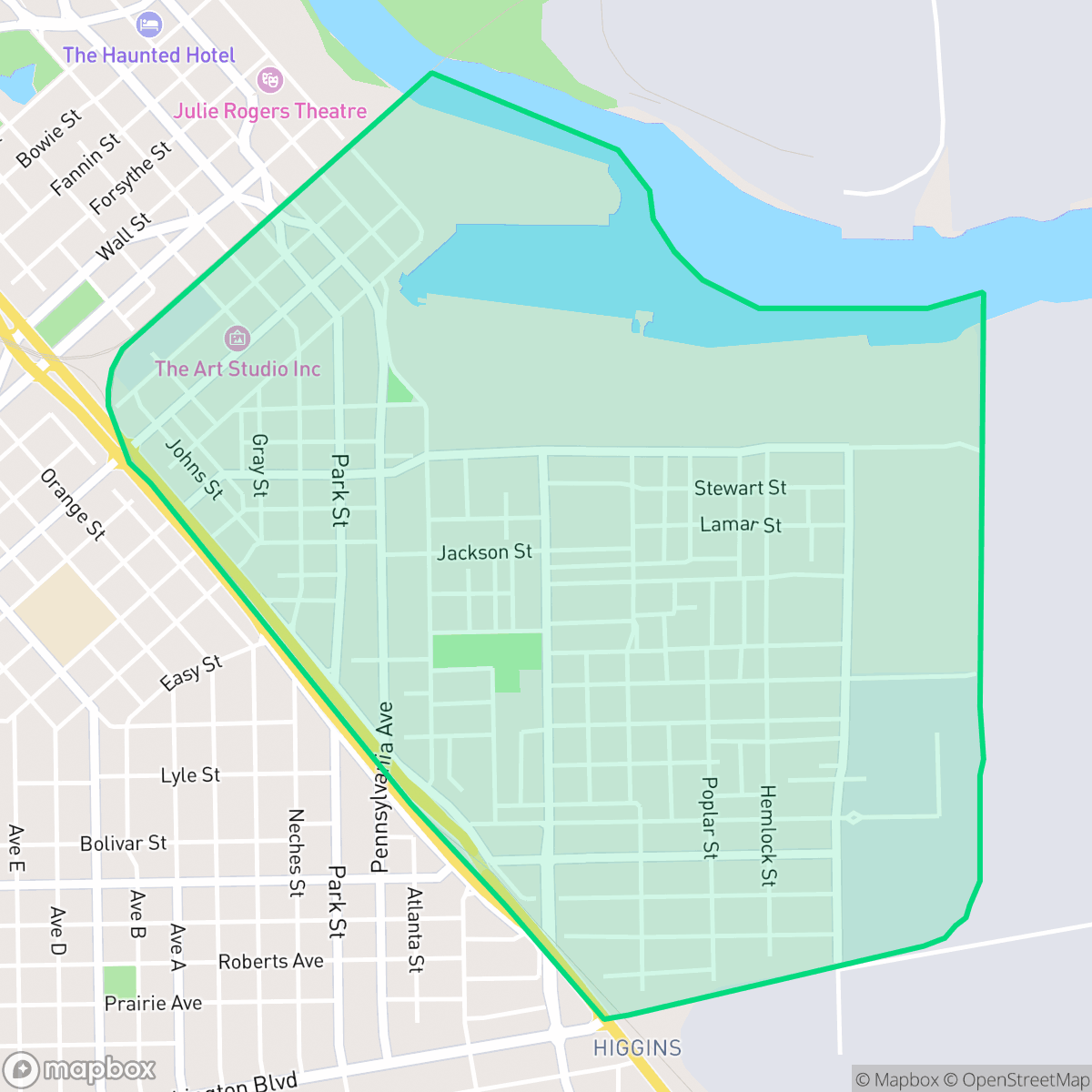
Charlton Pollard is a quiet, car-dependent community defined by its proximity to heavy industrial infrastructure and rail corridors. While the area maintains a steady, suburban residential rhythm, residents face significant industrial surroundings and limited local commercial amenities.
Key Highlights
About Charlton Pollard
Established in the late 19th century as the "Southend," Charlton-Pollard is Beaumont’s oldest Black neighborhood. It grew rapidly following the 1901 Spindletop oil boom as African American workers settled near the Neches River sawmills and refineries. The neighborhood was named in honor of Charles Pole Charlton, a freedman who founded the city's first Black schools in the 1870s, and prominent educator Titus Thomas Pollard. In 1924, their legacies culminated in the naming of Charlton-Pollard High School, making education the community's cornerstone. Charlton-Pollard thrived as a self-sustaining cultural and commercial hub, hosting legendary "Chitlin' Circuit" musicians like James Brown and Jimi Hendrix. Today, its rich heritage is celebrated at Charlton Pollard Park and commemorated by the vibrant Charlton-Pollard underpass mural on Irving Street, which honors the neighborhood's pioneering educators.
The neighborhood functions as a quiet residential enclave situated amidst heavy industrial zones, including expansive rail yards and oil storage facilities. The landscape is characterized by a mix of suburban housing blocks and significant grey infrastructure, resulting in a low-density environment that requires a vehicle for most daily tasks. According to iHuus data, the area offers a stable residential experience with relatively good air quality and favorable flood safety, though it lacks the visual appeal and vibrant commercial activity found in more central parts of Beaumont. Prospective residents should note that the local educational landscape, managed by the Beaumont Independent School District, faces significant operational challenges. The area is best suited for those seeking a quiet, industrial-adjacent location who prioritize consistent residential life over immediate access to retail or walkable amenities. While the neighborhood provides a unique glimpse into the city's industrial roots, the prevalence of nearby logistics and manufacturing sites remains a defining feature of the daily environment.
Neighborhood Scores Across 15 Qualities
Residential spacing provides a fair amount of buffer between neighbors, though density remains slightly higher than the Beaumont average according to iHuus data.
Low traffic volumes allow for peaceful walking, though the lack of sidewalks remains a notable feature. This level of walkability is consistent with the Beaumont average.
Dense housing layouts and minimal greenery characterize this area. According to iHuus data, the visual landscape lacks the amenities and yard space found in many other parts of Beaumont.
Limited access to public parks and a lack of wide green verges make this area less ideal for dog owners. This level of dog friendliness is below the Beaumont average according to iHuus data.
Open land and scattered homes are interspersed with heavy industrial zones and rail corridors. This area is less urbanized than the Beaumont average, featuring a mix of low-density residential pockets and significant grey infrastructure.
A blend of heavy industrial zones and suburban residential blocks creates a steady but subdued rhythm of life. According to iHuus data, the area's level of activity is consistent with the Beaumont average, characterized by a car-dependent landscape where social hubs are sparse.
Steady traffic sounds from a nearby busy street are present, though levels are slightly higher than the Beaumont average according to iHuus data.
Air quality remains consistently good with rare instances of elevated readings. According to iHuus data, the levels in this area are consistent with the Beaumont city average.
Heavy industrial facilities, including oil tank farms and rail yards, are situated near residential areas. This level of industrial proximity is notably higher than the Beaumont average, according to iHuus data.
Health insurance coverage among residents is lower than the Beaumont city average, according to iHuus data. This indicates a higher proportion of uninsured individuals living in the area.
Voting patterns and census indicators show a strong liberal leaning, which is notably more pronounced than the Beaumont city average according to iHuus data.
Residents live among a balanced mix of young adults, families, and older individuals. This demographic distribution is consistent with the broader Beaumont area, according to iHuus data.
Residual flood risk exists within this area because it sits inside a 500-year floodplain, though safety levels remain slightly above the Beaumont city average according to iHuus data.
Address-Level Insights for Charlton Pollard


iHuus Neighborhood Intelligence Insights
Get address-level neighborhood insights for Charlton Pollard
- Street-level scores — see how individual blocks compare, not just neighborhood averages
- Micro-zone boundaries — identify quiet pockets, flood boundaries, and walkable clusters before you visit
- 15 dimensions in full — walkability, noise, air quality, school quality, insurance coverage, population age profile, urban/rural index, and more
- Boundary risk alerts — know if your address sits near a block boundary where scores drop, the kind of detail no listing will ever mention
- School insights — individual school ratings and insights, not just district-level data
- Compare before you commit — side-by-side data across neighborhoods, down to block precision
No credit card required
Compare with Any Neighborhood
| Dimension | Charlton Pollard | Acorn |
|---|---|---|
| 🚶 Walkabilityavg 5.61 | ||
| 🔊 Acoustic Comfortavg 4.45 | ||
| 🤫 Privacy Indexavg 6.18 | ||
| 🎨 Visual Appealavg 5.53 | ||
| 🐕 Dog Friendlinessavg 5.08 | ||
| 🗺️ Urban-Rural Indexavg 7.3 | ||
| ✨ Neighborhood Vibeavg 4.21 | ||
| 🏥 Health Insurance Coverageavg 5.2 | ||
| 🌿 Air Qualityavg 8.01 | ||
| 🏭 Industrial Proximityavg 7.7 | ||
| 🌊 Flood Safetyavg 7.26 | ||
| 🗳️ Ideological Leanavg 7.25 | ||
| 👥 Population Age Profileavg 4.85 | ||
| 🔥 Fire Safety | ||
| 🏫 School Quality |
Charlton Pollard Rankings
School Districts Serving Charlton Pollard
School Insights for Charlton Pollard
Below average outcomes; significant attendance and academic challenges.
School Insights
See what's really behind every school rating near Charlton Pollard
- Individual school ratings — each school's own score with outcome context, not just a district average
- Enrollment & class size data — student-to-teacher ratio and how it compares to the state average
- Full demographics breakdown — ethnicity and gender composition for every school in the enrollment zone
- Every school in the district — all schools within the enrollment boundary ranked by rating, not just the closest one
- Grade levels & benchmarks — elementary through high school, with below/above state-average flags
No credit card required