Virginia Park, Tampa
Updated · 5,442 residents
Virginia Park is a highly walkable enclave in South Tampa characterized by its upscale, manicured aesthetic and dense network of pedestrian-friendly streets. Residents enjoy a vibrant, energetic atmosphere with convenient access to local dining and retail, alongside a diverse demographic mix that fosters a balanced suburban community.
Key Highlights
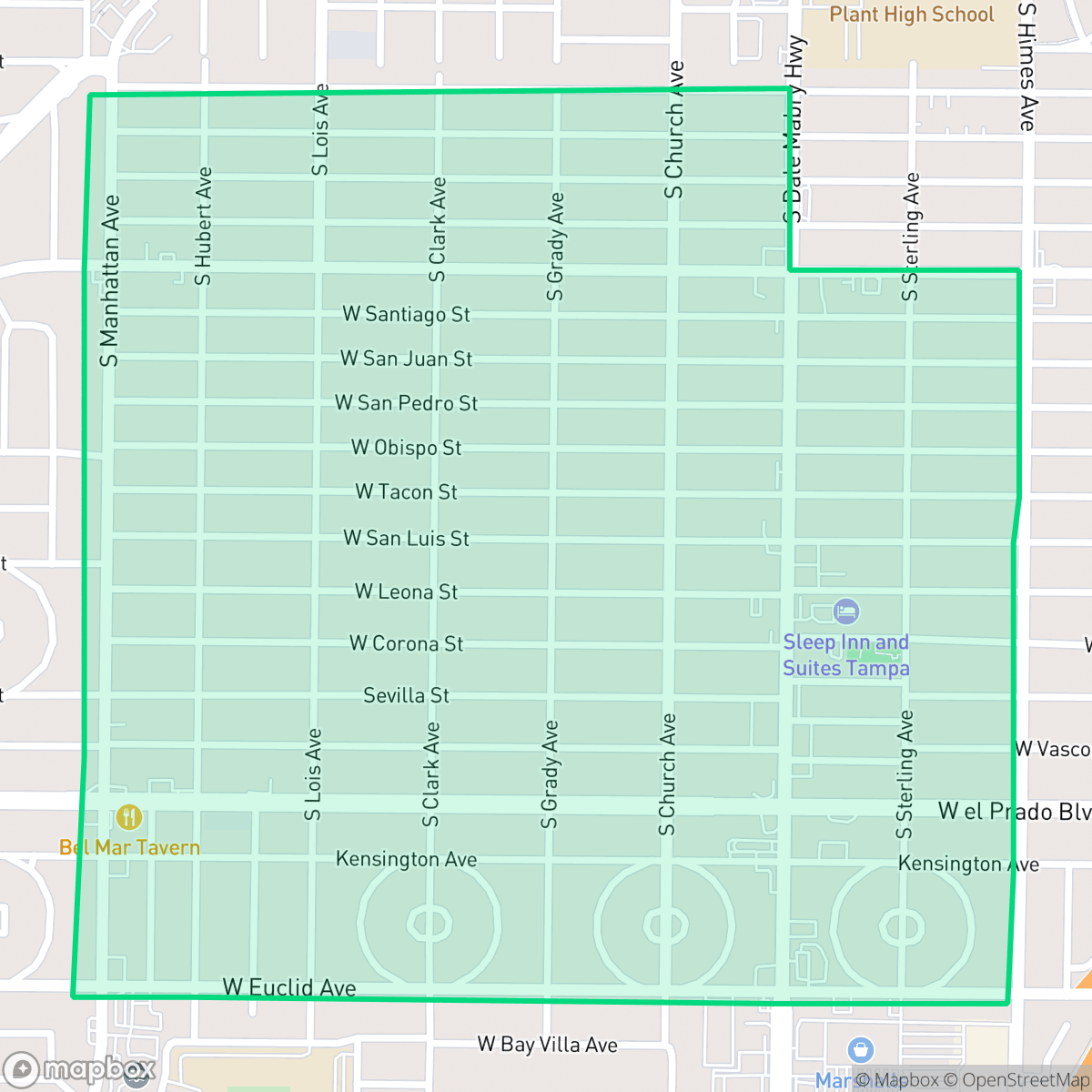
About Virginia Park
Virginia Park, located in the heart of South Tampa, transitioned from pine forest to a residential enclave during the post-World War II suburban expansion of the 1950s. Developed by Palmer Potter and named after his wife, the neighborhood was designed as a suburban retreat for middle-class families. Its architectural character is defined by a blend of mid-century modern ranch homes and modest bungalows, which reflect the functional design trends of the era. Over time, the neighborhood has evolved into an eclectic community, balancing its established mid-century roots with ongoing redevelopment and luxury new construction. Today, Virginia Park is recognized for its residential focus, proximity to the Bay-to-Bay corridor, and local landmarks like the revitalized Corona Playground, maintaining a distinct identity as a central, family-oriented neighborhood within the broader South Tampa landscape.
The neighborhood presents a polished residential environment where large custom homes, private pools, and well-maintained landscaping define the visual landscape. Its layout is exceptionally well-suited for pedestrians, as the dense grid of sidewalks and frequent crossings allow for easy movement throughout the area. This walkability contributes to an energetic local vibe, with residents frequently accessing nearby retail, wellness services, and dining options that exceed the typical activity levels found in other parts of the city. The demographic profile is notably varied, bringing together young adults, families, and older residents within a settled, suburban fabric.
While the area offers significant lifestyle benefits, prospective residents should consider a few trade-offs. The proximity to busy arterial streets results in a persistent hum of traffic noise, and the local air quality can occasionally reach unhealthy levels for sensitive groups. Additionally, the neighborhood carries a moderate flood risk that is slightly higher than the Tampa average, necessitating awareness during heavy weather events. Despite these factors, the high rate of health insurance coverage and the presence of reputable local schools, such as the nearby Plant High School, make this a sought-after location for those prioritizing a central, active, and well-connected lifestyle.
Neighborhood Scores Across 15 Qualities
Detached homes feature moderate spacing and natural buffering from mature trees, providing more privacy than the typical Tampa residential area. According to iHuus data, backyard fencing and significant foliage help create a sense of separation between neighbors.
Pedestrian infrastructure is exceptionally well-developed, featuring a dense grid of sidewalks and frequent crossings that far exceed the Tampa average. Most residential and arterial streets offer safe, continuous pathways for walking.
Large custom homes with private pools and well-maintained landscaping create a visually polished environment. This level of aesthetic upkeep and property scale is notably higher than the Tampa average, according to iHuus data.
Wide, grassy verges and a mature tree canopy provide shaded walking paths that are safer from traffic than the city average. Continuous sidewalks paired with nearby retention ponds offer pleasant routes for pet owners.
Residential streets and green spaces are found in roughly equal measure, mirroring the overall suburban density of Tampa. This layout provides a mix of single-family homes and community athletic fields within a settled urban fabric.
Bustling commercial corridors and accessible dining options provide a level of activity that is significantly higher than the Tampa average. Residents can enjoy a varied mix of retail, bars, and wellness services within highly walkable pockets of the neighborhood.
A steady hum of local traffic persists due to proximity to a busy street. According to iHuus data, acoustic comfort levels in Virginia Park are notably higher than the city average.
Frequent unhealthy air quality levels pose significant risks to sensitive groups. According to iHuus data, the air quality in Virginia Park is worse than the Tampa average.
Largely residential and light commercial, this area lacks significant industrial footprints. According to iHuus data, the presence of heavy industry is noticeably lower than the Tampa average.
Health insurance access among residents is notably higher than the Tampa average, according to iHuus data.
Political views in the area are relatively evenly split between conservative and liberal leanings. This balance represents a more moderate landscape compared to the broader Tampa area, according to iHuus data.
Residents live alongside a balanced spread of young adults, families, and older individuals. According to iHuus data, this demographic variety is slightly more diverse than the average found throughout Tampa.
Flood risk in this area is slightly higher than the Tampa average, though a detailed FEMA study for this specific location has not yet been finalized. Residents should remain aware of potential vulnerabilities during heavy rain events according to iHuus data.
Address-Level Insights for Virginia Park


iHuus Neighborhood Intelligence Insights
Get address-level neighborhood insights for Virginia Park
- Street-level scores — see how individual blocks compare, not just neighborhood averages
- Micro-zone boundaries — identify quiet pockets, flood boundaries, and walkable clusters before you visit
- 15 dimensions in full — walkability, noise, air quality, school quality, insurance coverage, population age profile, urban/rural index, and more
- Boundary risk alerts — know if your address sits near a block boundary where scores drop, the kind of detail no listing will ever mention
- School insights — individual school ratings and insights, not just district-level data
- Compare before you commit — side-by-side data across neighborhoods, down to block precision
No credit card required
Compare with Any Neighborhood
| Dimension | Virginia Park | Arbor Greene |
|---|---|---|
| 🚶 Walkabilityavg 6.08 | ||
| 🔊 Acoustic Comfortavg 2.94 | ||
| 🤫 Privacy Indexavg 5.25 | ||
| 🎨 Visual Appealavg 5.82 | ||
| 🐕 Dog Friendlinessavg 5.48 | ||
| 🗺️ Urban-Rural Indexavg 6.28 | ||
| ✨ Neighborhood Vibeavg 3.39 | ||
| 🏥 Health Insurance Coverageavg 5.93 | ||
| 🌿 Air Qualityavg 1.36 | ||
| 🏭 Industrial Proximityavg 6.63 | ||
| 🌊 Flood Safetyavg 4.98 | ||
| 🗳️ Ideological Leanavg 5.57 | ||
| 👥 Population Age Profileavg 4.16 | ||
| 🔥 Fire Safety | ||
| 🏫 School Quality |
Virginia Park Rankings
School Districts Serving Virginia Park
School Insights for Virginia Park
Below average outcomes; significant attendance and academic challenges.
School Insights
See what's really behind every school rating near Virginia Park
- Individual school ratings — each school's own score with outcome context, not just a district average
- Enrollment & class size data — student-to-teacher ratio and how it compares to the state average
- Full demographics breakdown — ethnicity and gender composition for every school in the enrollment zone
- Every school in the district — all schools within the enrollment boundary ranked by rating, not just the closest one
- Grade levels & benchmarks — elementary through high school, with below/above state-average flags
No credit card required