Palmetto Beach, Tampa
Updated · 3,589 residents
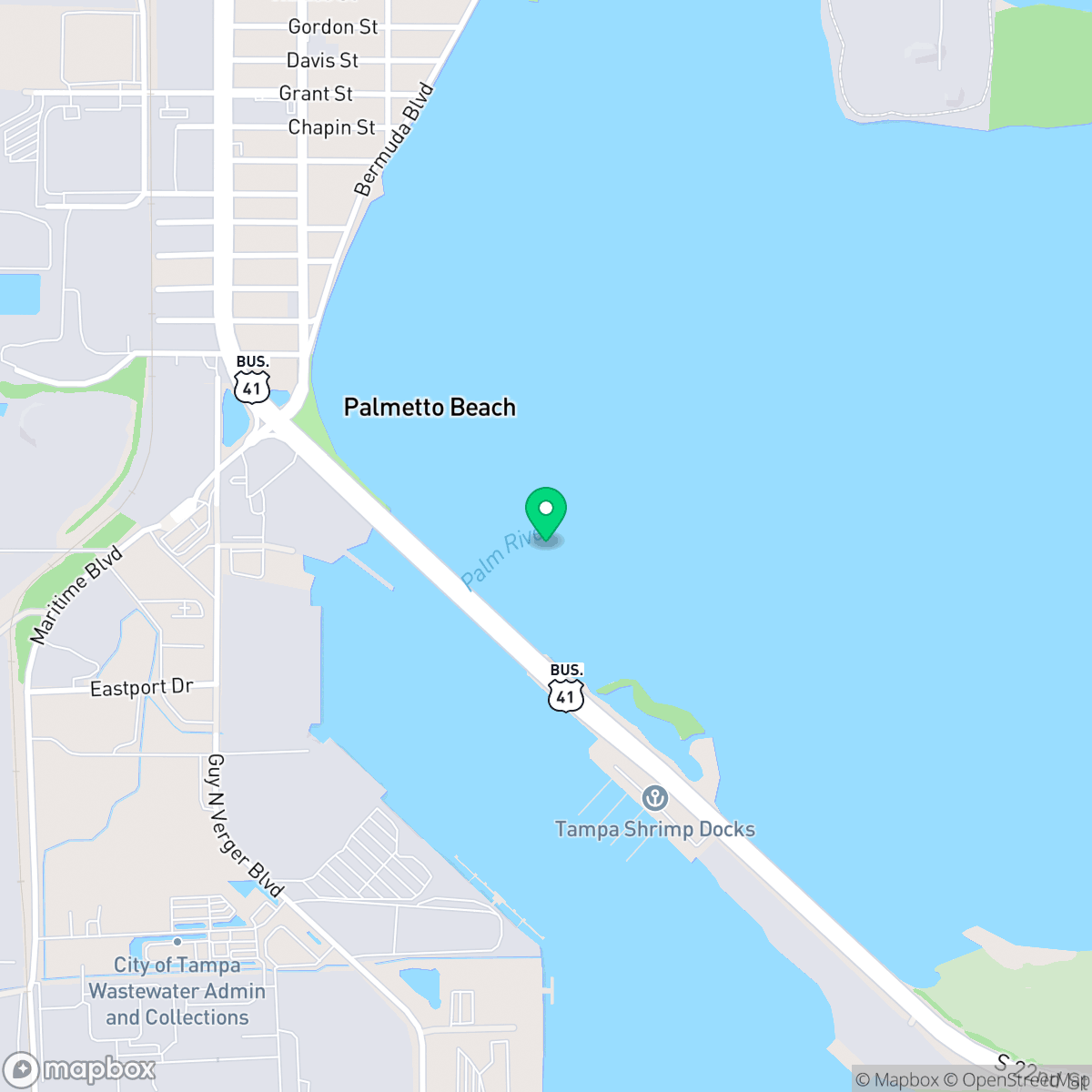
Palmetto Beach is a historic waterfront community along McKay Bay, defined by its early 20th-century architecture and deep roots in Tampa's cigar industry. While it offers a quiet, residential atmosphere, residents face challenges regarding consistent traffic noise, limited walkability, and significant flood risk.
Key Highlights
About Palmetto Beach
Established in 1894 and platted the same year, Palmetto Beach is one of Tampa's oldest neighborhoods, situated along the shores of McKay Bay. Historically linked to the cigar industry that defined much of early Tampa, the neighborhood once housed several cigar factories, three of which remain standing today. It was designated a National Register Historic District in 2012, encompassing 205 contributing structures within 28 blocks. The neighborhood’s development was shaped by its proximity to the port and its role as a working-class community for Spanish, Italian, and Cuban immigrants. Key landmarks include the historic DeSoto Park, which has long served as a focal point for local recreation. The area’s architectural character is defined by a mix of early 20th-century homes and historic industrial buildings, reflecting its maritime and manufacturing heritage.
The neighborhood maintains a subdued, residential character that blends historic housing blocks with functional, industrial-adjacent lots. Its layout creates a balanced suburban feel, though the visual landscape is often defined by its utilitarian roots rather than manicured aesthetics. Daily life here is quiet, with low levels of commercial activity, making it a distinct departure from the more vibrant and amenity-dense sections of Tampa. The area attracts a diverse mix of residents, including families and long-term locals who value the neighborhood's connection to the city's maritime and manufacturing heritage.
Prospective residents should weigh the neighborhood's historic charm against several practical trade-offs. The area experiences notable acoustic disturbances from nearby transit corridors and heavy vehicle traffic, and the lack of pedestrian-friendly infrastructure makes walking for daily errands difficult. Furthermore, the location within a designated floodplain necessitates careful consideration of insurance requirements. Families served by the Hillsborough County School District will find a system with recent financial improvements, though academic outcomes remain varied across the region. This area is best suited for those seeking an established, quiet community who are comfortable navigating the realities of living in a historic, flood-prone, and industrial-adjacent environment.
Neighborhood Scores Across 15 Qualities
Residential spacing varies between clustered multi-family units and homes with some separation. This level of density is slightly higher than the Tampa average, according to iHuus data.
High traffic volumes and significant highway infrastructure create barriers for pedestrians. Walking for daily errands is notably more challenging here than in most other parts of Tampa.
Visual variety is limited by a prevalence of industrial zones, commercial lots, and high-density housing. This landscape lacks the lush amenities and aesthetic polish found more frequently across the rest of Tampa.
Limited access to public parks and narrow sidewalks with minimal greenery make walking pets difficult. According to iHuus data, the lack of accessible green space makes this area significantly less dog-friendly than much of Tampa.
A mix of residential streets and green space defines the area, offering a less dense environment than the Tampa average. The landscape transitions between single-family homes and light industrial structures according to iHuus data.
Low levels of commercial activity and street life create a subdued atmosphere that is less active than the Tampa city average. Residents can expect a calm, suburban environment focused on established housing blocks with limited nearby amenities.
Frequent noise from nearby major roadways and transit corridors makes this area significantly louder than the Tampa average. According to iHuus data, residents can expect consistent acoustic disturbances from heavy vehicle traffic.
Frequent unhealthy air quality levels pose significant risks to sensitive groups. This area experiences worse atmospheric conditions than the average for Tampa, according to iHuus data.
Industrial proximity remains significantly lower than the Tampa average, as most areas are comprised of residential zones and local services. While some pockets near storage facilities or gas stations may experience occasional transit traffic and utility odors, the neighborhood avoids the heavy industrial density found elsewhere in the city.
Health insurance access is notably lower in this area compared to the Tampa average, according to iHuus data.
Political leanings in this area are relatively balanced, showing a more even split between conservative and liberal perspectives than the broader Tampa average.
Residents live alongside a balanced mix of young professionals, families, and seniors. According to iHuus data, the age distribution in this area is slightly more concentrated toward certain age brackets than the broader Tampa average.
Significant flood risk exists due to the area's location within a designated floodplain, which is considerably higher than the Tampa average. According to iHuus data, residents should anticipate much higher requirements for flood insurance coverage.
Address-Level Insights for Palmetto Beach


iHuus Neighborhood Intelligence Insights
Get address-level neighborhood insights for Palmetto Beach
- Street-level scores — see how individual blocks compare, not just neighborhood averages
- Micro-zone boundaries — identify quiet pockets, flood boundaries, and walkable clusters before you visit
- 15 dimensions in full — walkability, noise, air quality, school quality, insurance coverage, population age profile, urban/rural index, and more
- Boundary risk alerts — know if your address sits near a block boundary where scores drop, the kind of detail no listing will ever mention
- School insights — individual school ratings and insights, not just district-level data
- Compare before you commit — side-by-side data across neighborhoods, down to block precision
No credit card required
Compare with Any Neighborhood
| Dimension | Palmetto Beach | Arbor Greene |
|---|---|---|
| 🚶 Walkabilityavg 6.08 | ||
| 🔊 Acoustic Comfortavg 2.94 | ||
| 🤫 Privacy Indexavg 5.25 | ||
| 🎨 Visual Appealavg 5.82 | ||
| 🐕 Dog Friendlinessavg 5.48 | ||
| 🗺️ Urban-Rural Indexavg 6.28 | ||
| ✨ Neighborhood Vibeavg 3.39 | ||
| 🏥 Health Insurance Coverageavg 5.93 | ||
| 🌿 Air Qualityavg 1.36 | ||
| 🏭 Industrial Proximityavg 6.63 | ||
| 🌊 Flood Safetyavg 4.98 | ||
| 🗳️ Ideological Leanavg 5.57 | ||
| 👥 Population Age Profileavg 4.16 | ||
| 🔥 Fire Safety | ||
| 🏫 School Quality |
Palmetto Beach Rankings
School Districts Serving Palmetto Beach
School Insights for Palmetto Beach
Below average outcomes; significant attendance and academic challenges.
School Insights
See what's really behind every school rating near Palmetto Beach
- Individual school ratings — each school's own score with outcome context, not just a district average
- Enrollment & class size data — student-to-teacher ratio and how it compares to the state average
- Full demographics breakdown — ethnicity and gender composition for every school in the enrollment zone
- Every school in the district — all schools within the enrollment boundary ranked by rating, not just the closest one
- Grade levels & benchmarks — elementary through high school, with below/above state-average flags
No credit card required