Downtown, Tampa
Updated · 2,340 residents
Downtown Tampa is a high-energy urban core defined by its impressive skyline and exceptional walkability. Residents enjoy immediate access to the waterfront and a vibrant nightlife, though the area is characterized by dense living conditions and frequent noise from nearby transit infrastructure.
Key Highlights
About Downtown
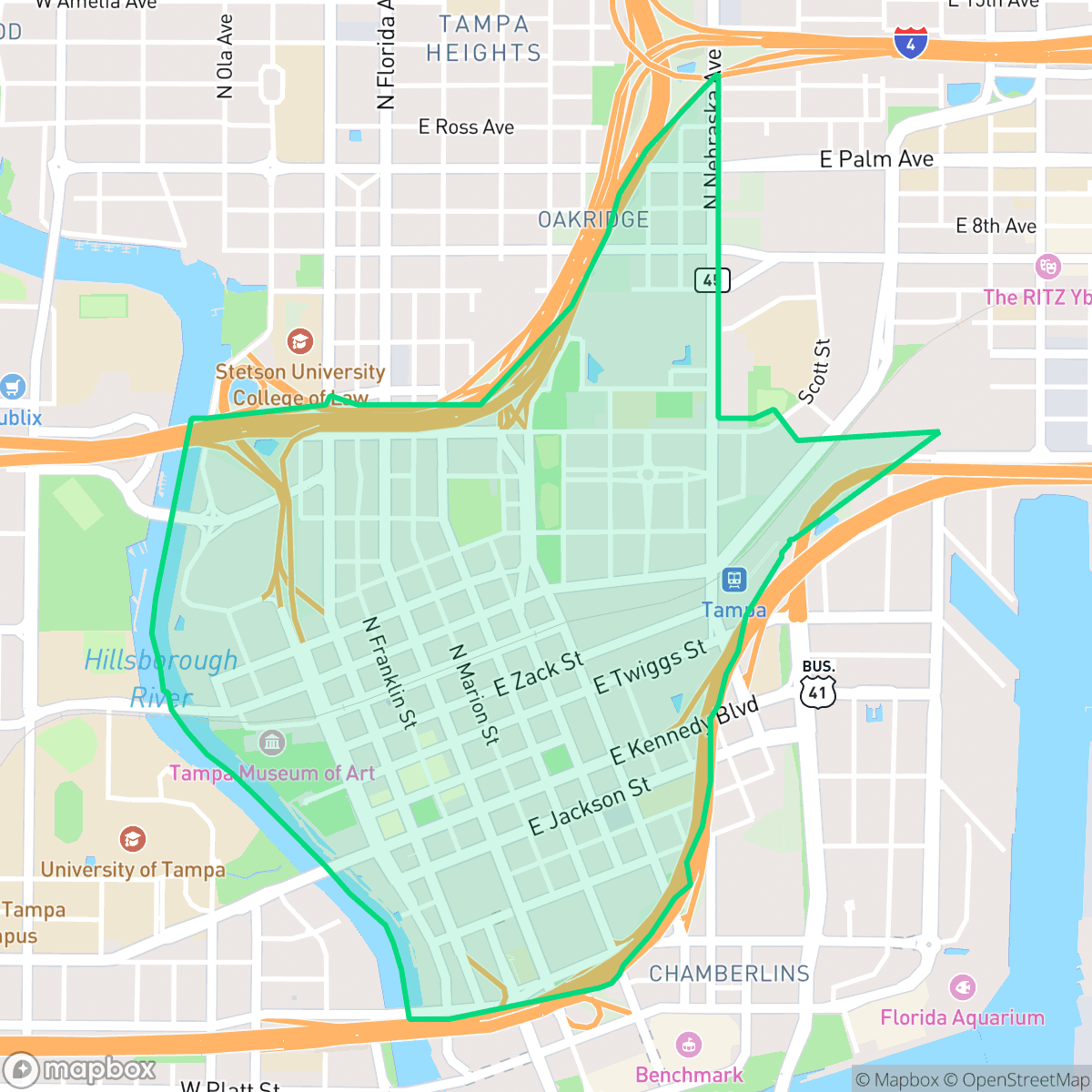
Downtown Tampa, the city's historic core, originated with the 1824 establishment of Fort Brooke, which served as a strategic military outpost. The area was officially platted in 1847 by John Jackson, and the arrival of Henry Plant’s railroad in 1883 catalyzed its transformation into a commercial hub. Historically defined by Franklin Street’s banking and retail dominance, the neighborhood evolved from an industrial waterfront to a modern urban center. Notable landmarks include the 1926 Tampa Theatre, the 1915 Old City Hall, and the 1905 former federal courthouse, now Le Meridien hotel. Following a mid-20th-century decline, downtown has been revitalized by major projects like the Tampa Riverwalk and the development of the Curtis Hixon Waterfront Park, shifting its character toward a dense, mixed-use cultural and residential district.
This neighborhood serves as a bustling commercial and cultural hub where high-rise architecture meets the waterfront. The area offers a high-energy environment with constant movement, making it a prime location for those who prioritize proximity to dining, entertainment, and major city landmarks. The pedestrian-friendly layout, supported by a network of bridges and plazas, allows for easy navigation of the dense urban landscape. Residents benefit from a central location that keeps them connected to the pulse of the city, with a diverse mix of ages and backgrounds contributing to the local atmosphere.
Living here involves trade-offs typical of a dense city center, including limited privacy due to the close proximity of neighboring structures and higher ambient noise levels from nearby rail and highway corridors. While the area provides access to the Riverwalk for pet owners, dedicated green space remains somewhat limited compared to suburban alternatives. Prospective residents should also consider the moderate flood risk and localized air quality challenges. This neighborhood is best suited for professionals and active individuals who thrive in a fast-paced environment and value the convenience of a central location over the seclusion of a traditional residential neighborhood.
Neighborhood Scores Across 15 Qualities
Buildings are situated in very close proximity with many structures sharing walls or separated only by narrow streets. This level of density and lack of physical separation from neighbors is significantly lower than the Tampa average, according to iHuus data.
A dense network of sidewalks, pedestrian bridges, and plazas makes most trips easy to complete on foot. This level of connectivity for pedestrians is significantly higher than the Tampa city average.
High-rise luxury condos and professional sports arenas create a varied skyline, though some areas feature more utilitarian industrial zones. This visual diversity sits slightly above the city average for architectural interest according to iHuus data.
Riverwalk trails and waterfront parks provide dedicated walking space for pets, though much of the area consists of paved urban surfaces. According to iHuus data, the accessibility of green space in this neighborhood is slightly below the city average.
High-rise buildings and significant large-scale infrastructure dominate the landscape, creating a much more built-up environment than the Tampa average. This area features limited unbuilt land and dense clusters of commercial and residential skyscrapers.
Constant movement and a dense concentration of dining, nightlife, and landmarks create an atmosphere significantly more active than the rest of Tampa. This area serves as a high-activity commercial hub where street-level energy remains intense well after dark.
Frequent sounds from nearby highways and rail lines characterize the area. This level of acoustic disturbance is consistent with the rest of Tampa.
Frequent unhealthy air quality levels pose significant risks to sensitive groups. According to iHuus data, the pollution levels in this area are higher than the Tampa average.
Industrial activity is notably lower than the city average, consisting primarily of light commercial uses and institutional structures. While heavy industry is absent, residents may experience localized noise or traffic from nearby highway interchanges and freight-related facilities.
Health insurance accessibility is significantly lower in this area than the Tampa average, according to iHuus data.
Political leanings in this area trend more liberal than the Tampa average. According to iHuus data, a liberal majority resides here alongside a modest opposing presence.
A varied mix of young professionals, families, and older residents characterizes the area. This demographic spread is slightly more balanced than the broader Tampa average according to iHuus data.
Flood risk levels in this area are slightly higher than the Tampa average. According to iHuus data, specific flood studies for this neighborhood remain incomplete by federal authorities.
Address-Level Insights for Downtown


iHuus Neighborhood Intelligence Insights
Get address-level neighborhood insights for Downtown
- Street-level scores — see how individual blocks compare, not just neighborhood averages
- Micro-zone boundaries — identify quiet pockets, flood boundaries, and walkable clusters before you visit
- 15 dimensions in full — walkability, noise, air quality, school quality, insurance coverage, population age profile, urban/rural index, and more
- Boundary risk alerts — know if your address sits near a block boundary where scores drop, the kind of detail no listing will ever mention
- School insights — individual school ratings and insights, not just district-level data
- Compare before you commit — side-by-side data across neighborhoods, down to block precision
No credit card required
Compare with Any Neighborhood
| Dimension | Downtown | Arbor Greene |
|---|---|---|
| 🚶 Walkabilityavg 6.08 | ||
| 🔊 Acoustic Comfortavg 2.94 | ||
| 🤫 Privacy Indexavg 5.25 | ||
| 🎨 Visual Appealavg 5.82 | ||
| 🐕 Dog Friendlinessavg 5.48 | ||
| 🗺️ Urban-Rural Indexavg 6.28 | ||
| ✨ Neighborhood Vibeavg 3.39 | ||
| 🏥 Health Insurance Coverageavg 5.93 | ||
| 🌿 Air Qualityavg 1.36 | ||
| 🏭 Industrial Proximityavg 6.63 | ||
| 🌊 Flood Safetyavg 4.98 | ||
| 🗳️ Ideological Leanavg 5.57 | ||
| 👥 Population Age Profileavg 4.16 | ||
| 🔥 Fire Safety | ||
| 🏫 School Quality |
Downtown Rankings
School Districts Serving Downtown
School Insights for Downtown
Below average outcomes; significant attendance and academic challenges.
School Insights
See what's really behind every school rating near Downtown
- Individual school ratings — each school's own score with outcome context, not just a district average
- Enrollment & class size data — student-to-teacher ratio and how it compares to the state average
- Full demographics breakdown — ethnicity and gender composition for every school in the enrollment zone
- Every school in the district — all schools within the enrollment boundary ranked by rating, not just the closest one
- Grade levels & benchmarks — elementary through high school, with below/above state-average flags
No credit card required