Carver City, Tampa
Updated · 2,530 residents
Carver City is a functional, predominantly residential community characterized by its utilitarian landscape and dense housing. While the area offers a central location near major sports complexes and commercial hubs, residents face challenges such as high noise levels from nearby freeways and limited pedestrian accessibility.
Key Highlights
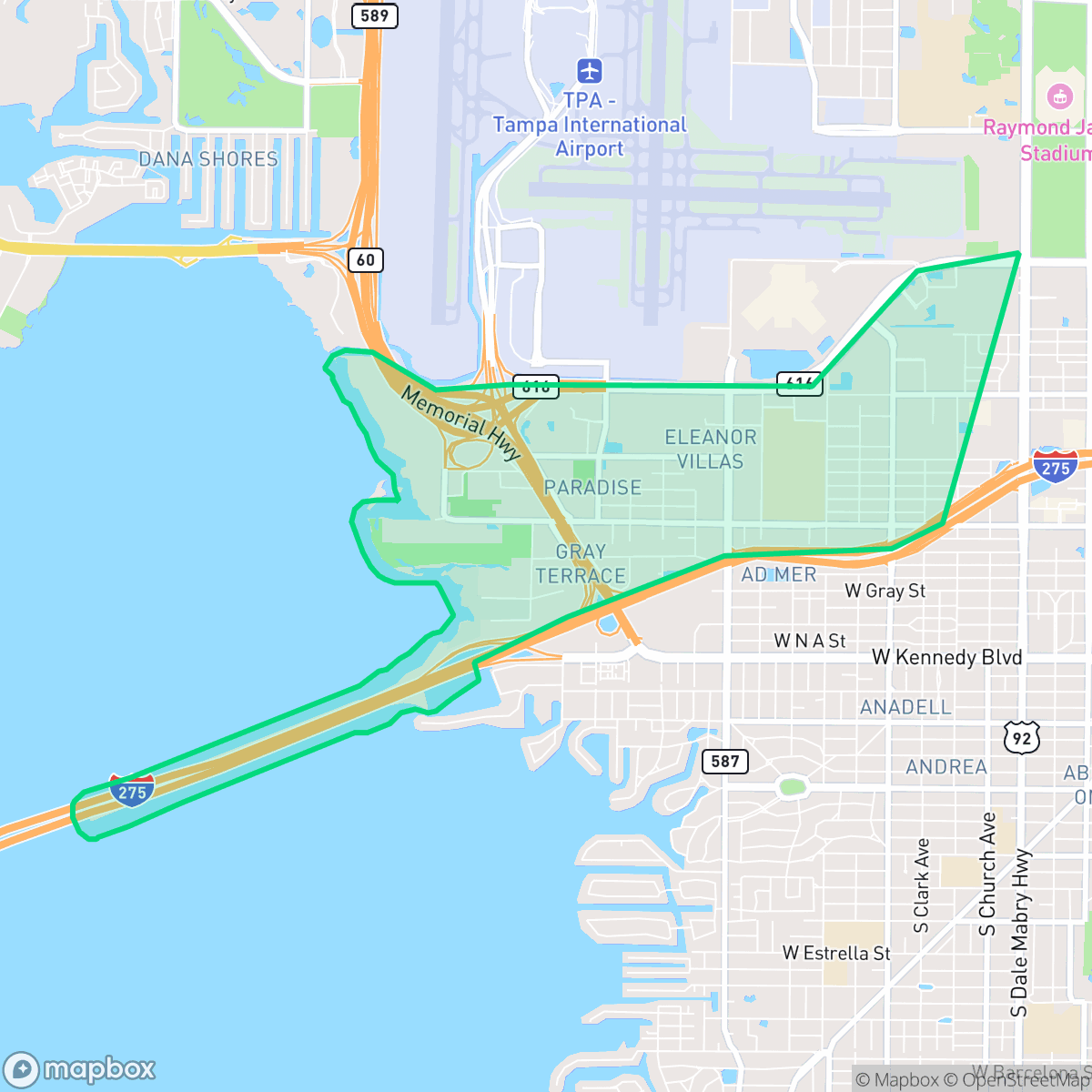
About Carver City
Carver City, often associated with the adjacent Lincoln Gardens, was developed in the late 1940s as a planned residential community for African American veterans returning from World War II. Facing discriminatory housing policies that barred them from utilizing GI Bill benefits elsewhere, these veterans and their families established the neighborhood on land that was then considered marginal. The area was named to honor George Washington Carver and Abraham Lincoln. Historically, the community faced systemic neglect, including the local government's placement of a jail and a trash dump nearby. Despite these challenges, the neighborhood grew into a close-knit enclave of concrete-block homes. In 1983, the two subdivisions unified under a single civic association. Today, the area has evolved into a multicultural community, with recent efforts including the 2024 dedication of a Veterans Plaza at Jim Walter Park.
The area functions as a low-density suburban enclave that balances single-family homes with nearby commercial plazas and sports facilities. Its layout is primarily utilitarian, featuring dense housing configurations that prioritize proximity over expansive private outdoor spaces. The neighborhood serves a demographic primarily composed of young adults, contributing to a quiet, functional atmosphere that contrasts with the more vibrant, tourist-heavy districts of Tampa.
Prospective residents should consider the trade-offs associated with the local infrastructure. According to iHuus data, the area experiences high levels of noise from nearby rail lines and major traffic arteries, which can impact daily acoustic comfort. Additionally, the neighborhood is situated within a designated floodplain and faces challenges regarding air quality and limited access to public green spaces. While the Hillsborough County School District provides access to a range of educational resources, the neighborhood is best suited for those prioritizing functional proximity to city amenities over suburban tranquility or high walkability.
Neighborhood Scores Across 15 Qualities
Residential lots feature high density with houses situated in close quarters. According to iHuus data, separation between detached homes is notably lower than the Tampa average.
Pedestrian movement is hindered by high-traffic arterials and large parking lots that act as significant barriers. While some residential grid streets include sidewalks, the overall walkability is notably lower than the Tampa average according to iHuus data.
Dense housing and large-scale commercial complexes create a functional but utilitarian landscape. According to iHuus data, the area lacks significant greenery and scenic amenities compared to the broader Tampa area.
Public baseball complexes and park areas offer some space for exercise, but narrow sidewalks and limited green buffers make the area less dog friendly than much of Tampa. According to iHuus data, most residential streets lack the wide verges or open greenery found elsewhere in the city.
Residential streets and green spaces are balanced in a suburban layout that feels less dense than the Tampa average. This area features a mix of single-family homes and commercial plazas alongside large sports complexes.
Vibrancy levels in this area are consistent with the city average, ranging from calm residential pockets to high-energy hubs near transit and stadiums. Residents can expect a mix of low-key suburban streets and active commercial clusters centered around dining and hospitality.
Frequent disruptions from nearby railroad tracks and major freeway traffic are characteristic of this area. According to iHuus data, acoustic comfort in Carver City is lower than the Tampa average.
Consistently hazardous air quality levels pose serious health risks to residents. According to iHuus data, these readings are slightly worse than the average seen across Tampa.
Light industrial and commercial buildings are interspersed with residential areas, resulting in lower levels of heavy industry than the Tampa average. Residents may experience increased transit traffic and occasional utility odors due to the presence of nearby gas stations, breweries, and logistics hubs.
Health insurance coverage rates in Carver City are notably lower than the Tampa average. According to iHuus data, a small portion of the resident population maintains active health coverage.
Political leanings in this area skew conservative, representing a notable departure from the more moderate political landscape found across the rest of Tampa.
Young adults make up the majority of the population, creating a demographic profile that is notably younger than the Tampa average. According to iHuus data, there is a limited presence of families or older residents in this area.
Significant flood vulnerability exists due to the area being situated within a designated floodplain. According to iHuus data, this risk level is notably higher than the average for Tampa.
Address-Level Insights for Carver City


iHuus Neighborhood Intelligence Insights
Get address-level neighborhood insights for Carver City
- Street-level scores — see how individual blocks compare, not just neighborhood averages
- Micro-zone boundaries — identify quiet pockets, flood boundaries, and walkable clusters before you visit
- 15 dimensions in full — walkability, noise, air quality, school quality, insurance coverage, population age profile, urban/rural index, and more
- Boundary risk alerts — know if your address sits near a block boundary where scores drop, the kind of detail no listing will ever mention
- School insights — individual school ratings and insights, not just district-level data
- Compare before you commit — side-by-side data across neighborhoods, down to block precision
No credit card required
Compare with Any Neighborhood
| Dimension | Carver City | Arbor Greene |
|---|---|---|
| 🚶 Walkabilityavg 6.08 | ||
| 🔊 Acoustic Comfortavg 2.94 | ||
| 🤫 Privacy Indexavg 5.25 | ||
| 🎨 Visual Appealavg 5.82 | ||
| 🐕 Dog Friendlinessavg 5.48 | ||
| 🗺️ Urban-Rural Indexavg 6.28 | ||
| ✨ Neighborhood Vibeavg 3.39 | ||
| 🏥 Health Insurance Coverageavg 5.93 | ||
| 🌿 Air Qualityavg 1.36 | ||
| 🏭 Industrial Proximityavg 6.63 | ||
| 🌊 Flood Safetyavg 4.98 | ||
| 🗳️ Ideological Leanavg 5.57 | ||
| 👥 Population Age Profileavg 4.16 | ||
| 🔥 Fire Safety | ||
| 🏫 School Quality |
Carver City Rankings
School Districts Serving Carver City
School Insights for Carver City
Below average outcomes; significant attendance and academic challenges.
School Insights
See what's really behind every school rating near Carver City
- Individual school ratings — each school's own score with outcome context, not just a district average
- Enrollment & class size data — student-to-teacher ratio and how it compares to the state average
- Full demographics breakdown — ethnicity and gender composition for every school in the enrollment zone
- Every school in the district — all schools within the enrollment boundary ranked by rating, not just the closest one
- Grade levels & benchmarks — elementary through high school, with below/above state-average flags
No credit card required