Yacht Club Estates, St. Petersburg
Updated · 836 residents
Yacht Club Estates is a premier waterfront community near the Treasure Island Bridge, defined by its deep-water access and canal-front residential layout. While the area offers high-end coastal scenery and a suburban feel, residents should be prepared for significant flood risks and elevated noise levels from nearby transit corridors.
Key Highlights
About Yacht Club Estates
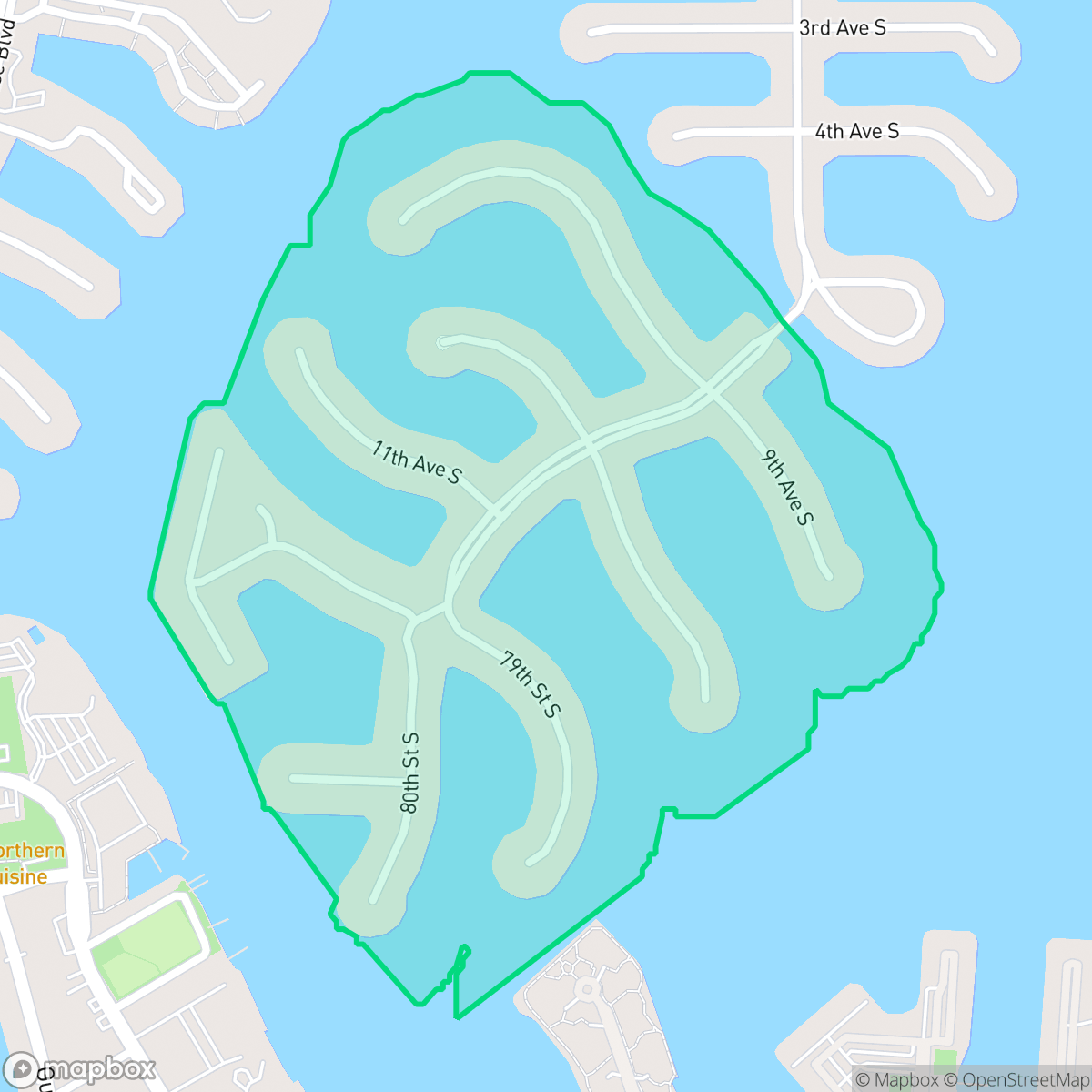
Yacht Club Estates is a premier waterfront community in St. Petersburg, Florida, situated near the Treasure Island Bridge along the Intercoastal Waterway. Developed primarily during the 1960s, the neighborhood was designed as a maritime-focused enclave, with approximately 95% of its 368 single-family homes positioned on waterfront lots. The community is characterized by its canal-front layout, which provides deep-water access to Boca Ciega Bay, catering specifically to boating enthusiasts. Over the decades, the area has transitioned from its mid-century origins into a sought-after residential district featuring a mix of original ranch-style architecture and contemporary luxury estates. The neighborhood maintains a distinct identity through its active civic association, which organizes community-wide events and fosters a family-oriented atmosphere centered on the shared lifestyle of coastal living.
The area offers a polished aesthetic with spacious driveways and premium amenities, catering to those who prioritize maritime access and a quiet residential environment. Because it is entirely free of industrial activity, the neighborhood maintains a consistent, suburban character that appeals to a mature demographic. Residents enjoy a visual landscape of private pools and docks that is significantly more refined than the city average.
Prospective residents should weigh the benefits of this upscale lifestyle against specific environmental and infrastructure factors. The neighborhood sits within a designated floodplain, necessitating careful consideration of insurance requirements. Additionally, while the streets are generally walkable, the area experiences higher noise levels from surrounding traffic and faces challenges regarding air quality. It remains a stable choice for those seeking a quiet, established community within the well-regarded Pinellas County School District.
Neighborhood Scores Across 15 Qualities
Residential spacing varies between single-family homes and condos, offering a level of separation from neighbors that is roughly in line with the St. Petersburg average.
Pedestrian accessibility is slightly above the St. Petersburg average, featuring continuous sidewalks along major roads and safe crossings within residential cul-de-sacs.
Large homes featuring private pools and boat docks characterize this area, offering a visual landscape that is significantly more polished than the St. Petersburg average. According to iHuus data, the presence of spacious driveways and premium amenities defines the neighborhood's aesthetic.
Sidewalks feature manicured lawns and green verges suitable for walking, but the neighborhood offers fewer pet-friendly amenities than the St. Petersburg average according to iHuus data.
Residential density features a mix of multi-story condos and single-family homes with more open space than the typical St. Petersburg neighborhood, according to iHuus data.
This low-key residential area offers a calm, suburban atmosphere with limited commercial activity. According to iHuus data, the level of local activity and vibrancy is in line with the St. Petersburg average.
Frequent disruptions from nearby heavy traffic and transportation corridors make this area significantly louder than the St. Petersburg average. Residents may experience persistent acoustic disturbances due to proximity to major transit routes.
Frequent unhealthy air quality levels pose a significant risk to sensitive groups. According to iHuus data, these conditions are slightly worse than the St. Petersburg average.
Industrial activity and warehouses are entirely absent from this area, offering a significantly quieter environment than the St. Petersburg average. According to iHuus data, the neighborhood consists exclusively of residential and recreational spaces with no detectable industrial hazards.
Health insurance access among residents is notably higher than the St. Petersburg average, according to iHuus data.
Conservative voters represent the majority in this area, marking a notable shift from the more progressive leaning seen across much of St. Petersburg according to iHuus data.
Older adults represent the majority of the population, making this area notably more mature than the St. Petersburg average. According to iHuus data, there is a modest presence of younger residents alongside this established demographic.
Flood risk in this area is significantly higher than the St. Petersburg average, as much of the neighborhood sits within a designated floodplain. Residents should expect that flood insurance will likely be a requirement for properties here according to iHuus data.
Address-Level Insights for Yacht Club Estates


iHuus Neighborhood Intelligence Insights
Get address-level neighborhood insights for Yacht Club Estates
- Street-level scores — see how individual blocks compare, not just neighborhood averages
- Micro-zone boundaries — identify quiet pockets, flood boundaries, and walkable clusters before you visit
- 15 dimensions in full — walkability, noise, air quality, school quality, insurance coverage, population age profile, urban/rural index, and more
- Boundary risk alerts — know if your address sits near a block boundary where scores drop, the kind of detail no listing will ever mention
- School insights — individual school ratings and insights, not just district-level data
- Compare before you commit — side-by-side data across neighborhoods, down to block precision
No credit card required
Compare with Any Neighborhood
| Dimension | Yacht Club Estates | Albert Whitted Airport |
|---|---|---|
| 🚶 Walkabilityavg 6.61 | ||
| 🔊 Acoustic Comfortavg 3.78 | ||
| 🤫 Privacy Indexavg 5.45 | ||
| 🎨 Visual Appealavg 6.33 | ||
| 🐕 Dog Friendlinessavg 5.45 | ||
| 🗺️ Urban-Rural Indexavg 6.19 | ||
| ✨ Neighborhood Vibeavg 3.5 | ||
| 🏥 Health Insurance Coverageavg 6.88 | ||
| 🌿 Air Qualityavg 1.87 | ||
| 🏭 Industrial Proximityavg 7.55 | ||
| 🌊 Flood Safetyavg 4.61 | ||
| 🗳️ Ideological Leanavg 6.01 | ||
| 👥 Population Age Profileavg 5.11 | ||
| 🔥 Fire Safety | ||
| 🏫 School Quality |
Yacht Club Estates Rankings
School Districts Serving Yacht Club Estates
School Insights for Yacht Club Estates
Below average outcomes; significant attendance and academic challenges.
School Insights
See what's really behind every school rating near Yacht Club Estates
- Individual school ratings — each school's own score with outcome context, not just a district average
- Enrollment & class size data — student-to-teacher ratio and how it compares to the state average
- Full demographics breakdown — ethnicity and gender composition for every school in the enrollment zone
- Every school in the district — all schools within the enrollment boundary ranked by rating, not just the closest one
- Grade levels & benchmarks — elementary through high school, with below/above state-average flags
No credit card required