Perkins, St. Petersburg
Updated · 795 residents
Perkins is a residential neighborhood in St. Petersburg characterized by its semi-rural atmosphere, mature tree canopies, and a mix of diverse architectural styles. Residents enjoy a steady suburban rhythm with moderate walkability, though the area is subject to frequent noise from nearby transit corridors and rail lines.
Key Highlights
About Perkins
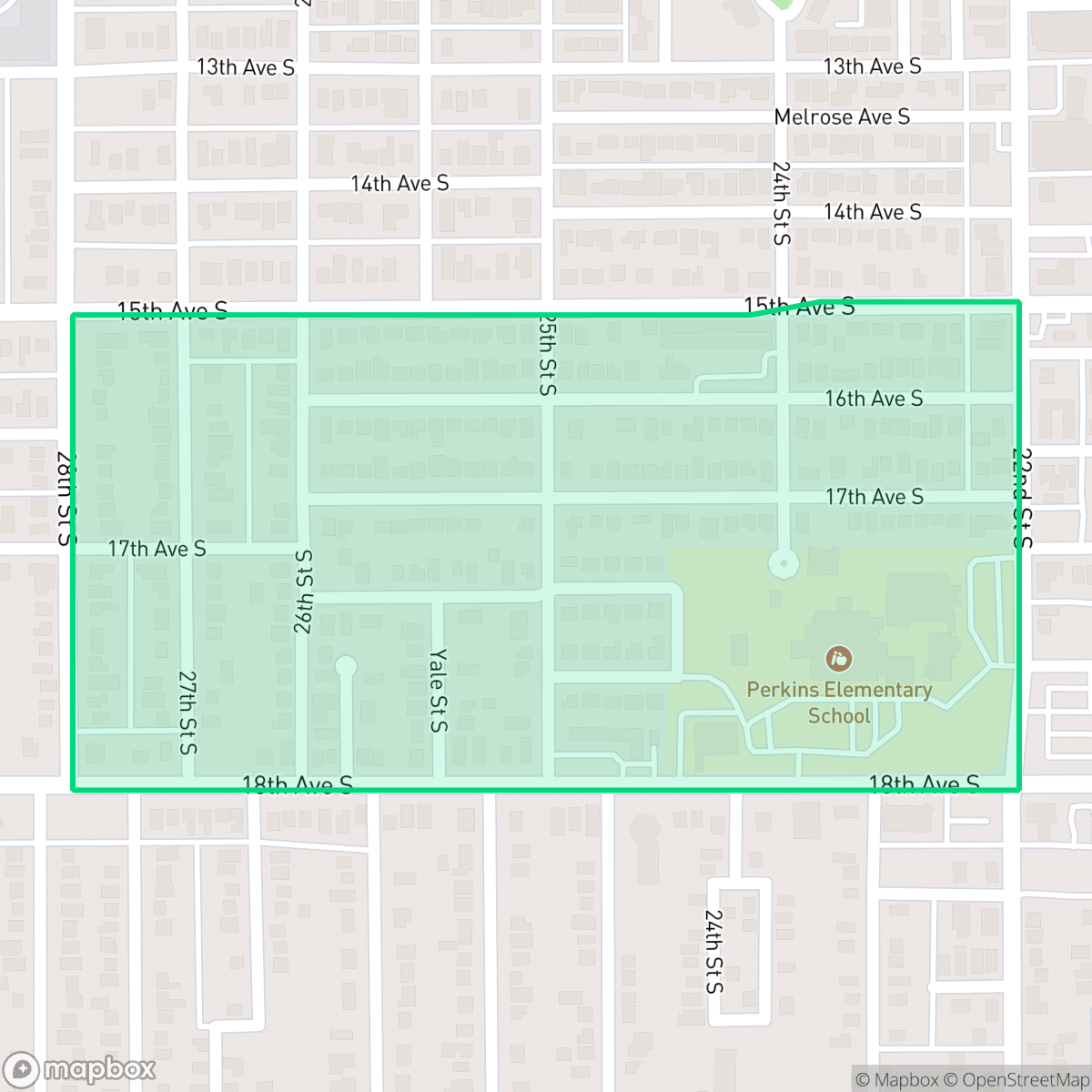
The Perkins neighborhood in St. Petersburg, Florida, is situated in one of the city's original residential sections. It is named in honor of George W. Perkins, a influential educator who served as the principal of Gibbs High School from 1929 to 1932 and again from 1938 to 1946. The neighborhood formally adopted its name in 1995 when the Perkins Neighborhood Association was established, succeeding the former Gaston Woods Association. Architecturally, the area is defined by a diverse mixture of frame, block, brick, and shingle construction, often featuring vibrant paint schemes, welcoming front porches, and mature landscaping. The community is noted for its strong sense of local identity and pride of ownership, with residents historically emphasizing a neighborhood character that balances traditional residential charm with a youthful, active demographic.
This neighborhood offers a distinct blend of traditional residential charm and a semi-rural feel, defined by its mature greenery and standard urban grid layout. While the area maintains a peaceful, steady pace of life, it is situated near major transit routes, which results in consistent ambient noise from vehicle traffic and trains. The community is notable for its strongly liberal political leaning and a diverse demographic that includes both young professionals and long-term residents. According to iHuus data, the neighborhood provides a moderate level of privacy and maintains a consistent, functional rhythm that appeals to those seeking a quiet residential environment.
The area provides moderate accessibility for pedestrians, though the heavy tree canopy and proximity to busy roads can occasionally create barriers for those on foot. While the neighborhood lacks large public parks, the presence of green verges along the streets makes pet walking manageable. Prospective residents should be aware of the localized air quality concerns common to the broader region and the moderate risk of flooding. The neighborhood is served by the Pinellas County School District, which maintains high academic standards and receives significant local financial support for its programs.
Neighborhood Scores Across 15 Qualities
Residential spacing in Perkins provides a moderate level of separation between neighbors, which is slightly higher than the St. Petersburg average. Houses typically feature an urban grid layout with standard suburban density and shared property lines.
Sidewalks are available on many residential streets, though a heavy tree canopy and nearby highway traffic can occasionally obscure paths or create barriers. This level of pedestrian accessibility is roughly in line with the average for St. Petersburg.
Standard tract housing with modest lots and uniform roof geometries characterizes this area. According to iHuus data, the visual variety is slightly lower than the St. Petersburg average.
Walking dogs is manageable due to consistent green verges between sidewalks and roads, though a lack of major public parks makes the area slightly less dog friendly than the St. Petersburg average. Most greenery consists of private yards rather than accessible public spaces.
Open land and scattered homes amidst woodland characterize this area, providing a slightly more rural atmosphere than the St. Petersburg average. According to iHuus data, the landscape features a mix of low-density residential grids and mature tree canopies.
Local activity levels are slightly higher than the St. Petersburg average, characterized by a functional mix of educational institutions and casual dining options. While some pockets offer highly walkable streets near universities, other areas remain subdued with limited commercial density.
Proximity to major transit corridors and nearby rail lines results in higher levels of ambient noise than the St. Petersburg average. Residents may experience more consistent auditory disturbances from heavy vehicle traffic and locomotives.
Frequent unhealthy air quality levels pose a significant risk to sensitive groups. This condition remains consistent with the overall air quality trends found across St. Petersburg.
Residential life remains undisturbed by heavy industry, as the area features only occasional light commercial activity and small-scale utility structures. This balance of residential and light commercial use is consistent with the broader St. Petersburg average.
Health insurance coverage among Perkins residents is slightly below the St. Petersburg average, according to iHuus data.
Voting patterns and census indicators reflect a significantly more liberal political leaning than the St. Petersburg average, according to iHuus data.
Residents live alongside a diverse range of age groups, including young professionals and seniors. This demographic spread is slightly more varied than the city average according to iHuus data.
Residual flood risk exists as some areas fall within the 500-year floodplain; however, safety levels are notably higher than the St. Petersburg average according to iHuus data.
Address-Level Insights for Perkins


iHuus Neighborhood Intelligence Insights
Get address-level neighborhood insights for Perkins
- Street-level scores — see how individual blocks compare, not just neighborhood averages
- Micro-zone boundaries — identify quiet pockets, flood boundaries, and walkable clusters before you visit
- 15 dimensions in full — walkability, noise, air quality, school quality, insurance coverage, population age profile, urban/rural index, and more
- Boundary risk alerts — know if your address sits near a block boundary where scores drop, the kind of detail no listing will ever mention
- School insights — individual school ratings and insights, not just district-level data
- Compare before you commit — side-by-side data across neighborhoods, down to block precision
No credit card required
Compare with Any Neighborhood
| Dimension | Perkins | Albert Whitted Airport |
|---|---|---|
| 🚶 Walkabilityavg 6.61 | ||
| 🔊 Acoustic Comfortavg 3.78 | ||
| 🤫 Privacy Indexavg 5.45 | ||
| 🎨 Visual Appealavg 6.33 | ||
| 🐕 Dog Friendlinessavg 5.45 | ||
| 🗺️ Urban-Rural Indexavg 6.19 | ||
| ✨ Neighborhood Vibeavg 3.5 | ||
| 🏥 Health Insurance Coverageavg 6.88 | ||
| 🌿 Air Qualityavg 1.87 | ||
| 🏭 Industrial Proximityavg 7.55 | ||
| 🌊 Flood Safetyavg 4.61 | ||
| 🗳️ Ideological Leanavg 6.01 | ||
| 👥 Population Age Profileavg 5.11 | ||
| 🔥 Fire Safety | ||
| 🏫 School Quality |
Perkins Rankings
School Districts Serving Perkins
School Insights for Perkins
Below average outcomes; significant attendance and academic challenges.
School Insights
See what's really behind every school rating near Perkins
- Individual school ratings — each school's own score with outcome context, not just a district average
- Enrollment & class size data — student-to-teacher ratio and how it compares to the state average
- Full demographics breakdown — ethnicity and gender composition for every school in the enrollment zone
- Every school in the district — all schools within the enrollment boundary ranked by rating, not just the closest one
- Grade levels & benchmarks — elementary through high school, with below/above state-average flags
No credit card required