Pasadena On The Gulf, St. Petersburg
Updated · 1,358 residents
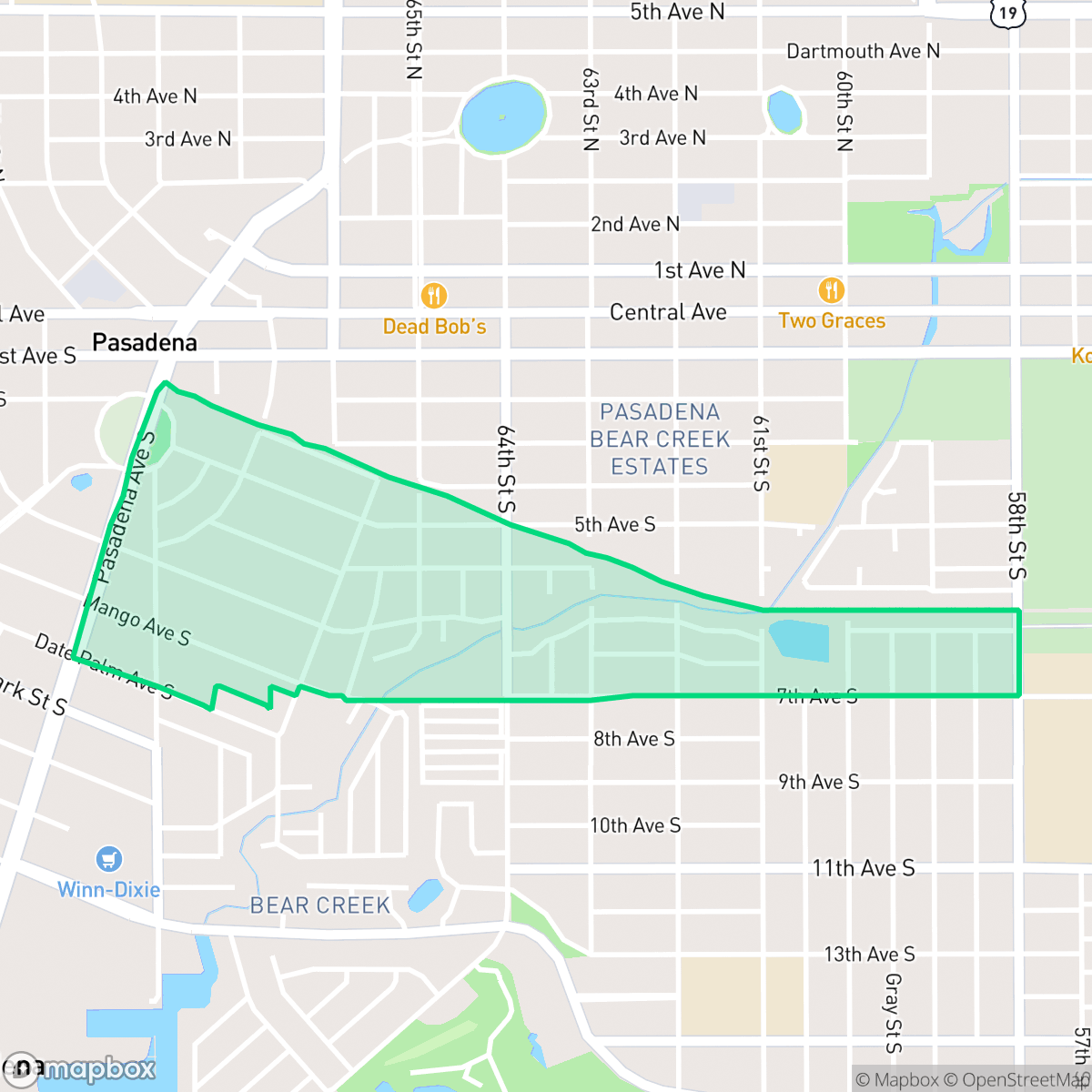
Pasadena On The Gulf is a historic coastal enclave known for its 1920s architecture and brick-lined streets near Boca Ciega Bay. The area offers a highly walkable environment with a suburban mix of homes, providing residents with convenient access to local retail and community amenities.
Key Highlights
About Pasadena On The Gulf
Pasadena on the Gulf originated in the early 1920s when developer Ivan 'Handsome Jack' Taylor acquired land previously known as Davista. Influenced by the City Beautiful movement, Taylor envisioned an aristocratic resort community, shaping the area with Mediterranean Revival architecture, including red-tiled roofs and arched doorways. The neighborhood is defined by its historic brick streets—such as Date Palm, Mango, Hibiscus, and Villa Grande—and its proximity to Boca Ciega Bay. Notable landmarks include the former Sunset Hotel and the coquina rock gate features along 64th Street. While the area was a significant early gateway to the Gulf beaches, parts of the original development later incorporated as the independent city of South Pasadena in 1955. The neighborhood retains a distinct identity rooted in its 1920s land boom origins and its historic role as a coastal residential enclave.
The neighborhood maintains a distinct residential character marked by well-manicured properties and a blend of single-family homes and low-rise apartments. Residents benefit from a highly walkable layout, allowing for easy access to nearby commercial corridors, cafes, and fitness studios. The absence of industrial facilities contributes to a purely residential feel, while the proximity to the coast provides a unique aesthetic atmosphere that distinguishes the area from denser urban centers.
Prospective residents should note that the area experiences moderate traffic noise from surrounding streets and periodic challenges with air quality. While the location offers a higher level of flood safety than many parts of St. Petersburg, it remains a consideration for coastal living. With high rates of health insurance coverage and a balanced demographic profile, the community is well-suited for individuals and families seeking a stable, accessible environment with a mix of historic charm and modern suburban convenience.
Neighborhood Scores Across 15 Qualities
Residential spacing offers a modest buffer between neighbors, providing slightly more seclusion than the St. Petersburg average. While most homes feature private backyards with typical suburban separation, some areas like local mobile home parks exhibit higher density and closer proximity.
Continuous sidewalk networks and safe street crossings make much of the area accessible on foot. This neighborhood offers significantly better pedestrian connectivity than the St. Petersburg average.
Large homes and private backyard pools characterize this area, providing a visual experience that is slightly more upscale than the St. Petersburg average. According to iHuus data, the landscape features numerous well-maintained properties and spacious amenities.
Sidewalk verges and a central park area provide decent space for walking pets, though the lack of large public parks makes this neighborhood slightly less dog-friendly than the St. Petersburg average according to iHuus data.
Residential areas feature a blend of single-family homes and low-rise apartments interspersed with small commercial corridors. This landscape offers a slightly more open feel compared to the denser urban centers found across St. Petersburg.
Local activity levels are notably higher than the St. Petersburg average, offering a variety of walkable commercial corridors and community parks alongside quieter residential pockets. Residents can access diverse amenities ranging from local coffee shops and fitness studios to seafood restaurants depending on their specific location within the area.
Steady hums from local traffic are present due to nearby busy streets, though levels remain slightly more tranquil than the St. Petersburg average according to iHuus data.
Frequent periods of unhealthy air quality pose significant risks to sensitive groups. According to iHuus data, levels in this area are slightly worse than the St. Petersburg average.
Industrial activity and hazardous facilities are absent from this area, offering a much cleaner environment than the St. Petersburg average. According to iHuus data, land use is limited to residential, institutional, and light commercial uses such as local cafes and retail.
Health insurance enrollment among residents is notably higher than the St. Petersburg average, according to iHuus data.
Political views in this area are distributed relatively evenly between conservative and liberal perspectives, appearing slightly more moderate than the St. Petersburg average according to iHuus data.
Residents live in a community with a varied demographic spread across different life stages. According to iHuus data, this age distribution is slightly more balanced than the St. Petersburg average.
Residual flood risk exists within a 500-year floodplain; however, safety levels are significantly higher than the St. Petersburg city average according to iHuus data.
Address-Level Insights for Pasadena On The Gulf


iHuus Neighborhood Intelligence Insights
Get address-level neighborhood insights for Pasadena On The Gulf
- Street-level scores — see how individual blocks compare, not just neighborhood averages
- Micro-zone boundaries — identify quiet pockets, flood boundaries, and walkable clusters before you visit
- 15 dimensions in full — walkability, noise, air quality, school quality, insurance coverage, population age profile, urban/rural index, and more
- Boundary risk alerts — know if your address sits near a block boundary where scores drop, the kind of detail no listing will ever mention
- School insights — individual school ratings and insights, not just district-level data
- Compare before you commit — side-by-side data across neighborhoods, down to block precision
No credit card required
Compare with Any Neighborhood
| Dimension | Pasadena On The Gulf | Albert Whitted Airport |
|---|---|---|
| 🚶 Walkabilityavg 6.61 | ||
| 🔊 Acoustic Comfortavg 3.78 | ||
| 🤫 Privacy Indexavg 5.45 | ||
| 🎨 Visual Appealavg 6.33 | ||
| 🐕 Dog Friendlinessavg 5.45 | ||
| 🗺️ Urban-Rural Indexavg 6.19 | ||
| ✨ Neighborhood Vibeavg 3.5 | ||
| 🏥 Health Insurance Coverageavg 6.88 | ||
| 🌿 Air Qualityavg 1.87 | ||
| 🏭 Industrial Proximityavg 7.55 | ||
| 🌊 Flood Safetyavg 4.61 | ||
| 🗳️ Ideological Leanavg 6.01 | ||
| 👥 Population Age Profileavg 5.11 | ||
| 🔥 Fire Safety | ||
| 🏫 School Quality |
Pasadena On The Gulf Rankings
School Districts Serving Pasadena On The Gulf
School Insights for Pasadena On The Gulf
Below average outcomes; significant attendance and academic challenges.
School Insights
See what's really behind every school rating near Pasadena On The Gulf
- Individual school ratings — each school's own score with outcome context, not just a district average
- Enrollment & class size data — student-to-teacher ratio and how it compares to the state average
- Full demographics breakdown — ethnicity and gender composition for every school in the enrollment zone
- Every school in the district — all schools within the enrollment boundary ranked by rating, not just the closest one
- Grade levels & benchmarks — elementary through high school, with below/above state-average flags
No credit card required