Lake Maggiore, St. Petersburg
Updated · 1,983 residents
Lake Maggiore is defined by its peaceful atmosphere and immediate proximity to the expansive Boyd Hill Nature Preserve. The area features a walkable grid layout with mature tree canopies, providing a quiet and functional residential environment for its diverse population.
Key Highlights
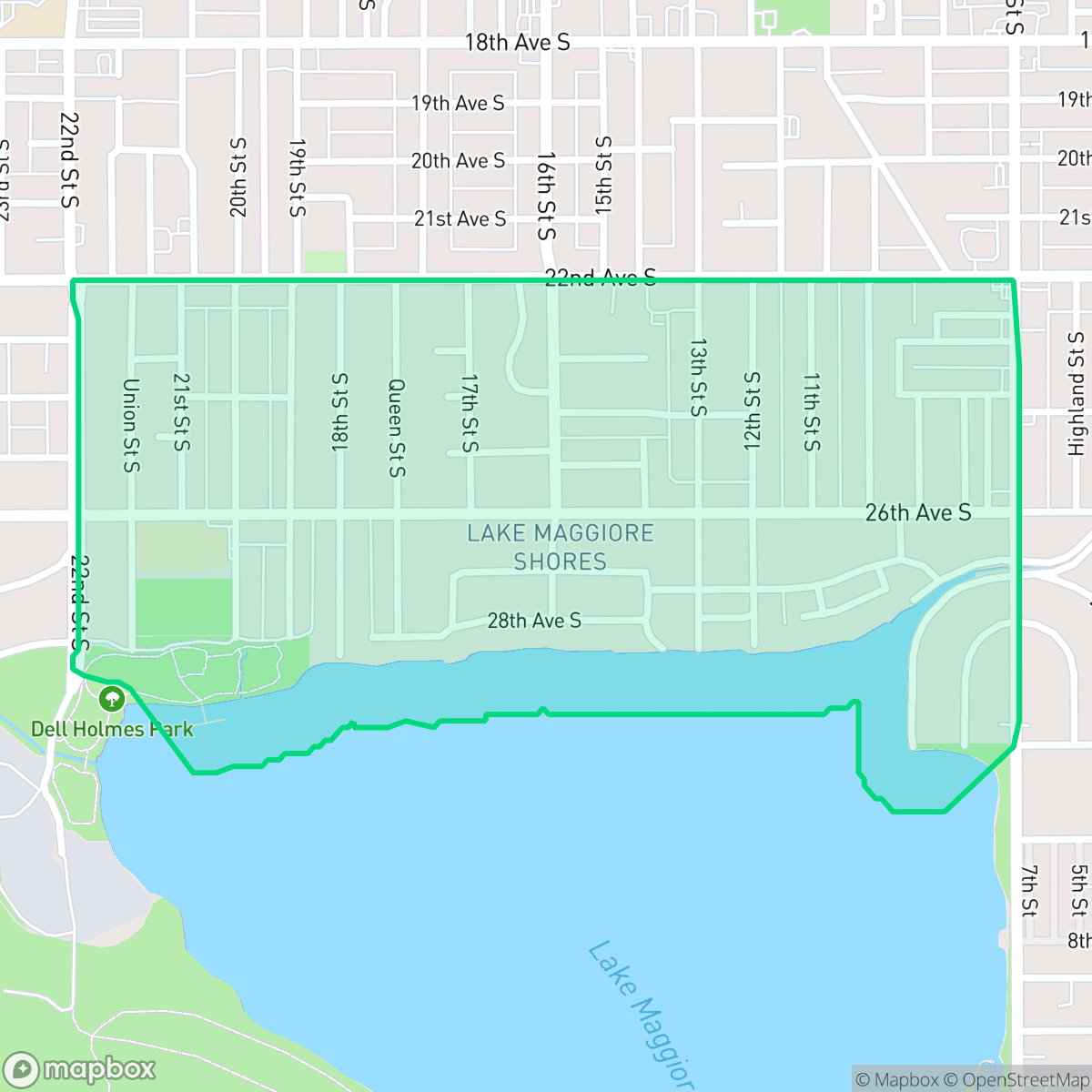
About Lake Maggiore
The Lake Maggiore neighborhood, originally known as Salt Lake, began as a tidal estuarine system before being transformed into a managed freshwater lake by a 1940 damming project. Early 20th-century developers rebranded the area with its current Italian-inspired name to promote real estate growth, though the lake's natural tidal fluctuations and associated odors initially hindered development. The neighborhood's residential character solidified between the 1920s and 1950s, featuring a mix of bungalow and ranch-style architecture. A defining cultural and environmental landmark is the adjacent Boyd Hill Nature Preserve, which evolved from parkland initiatives in the 1930s. Today, the neighborhood is defined by its serene lakefront setting, balancing mid-century residential charm with the preservation of natural habitats that were once central to the city’s early flood-control and drainage history.
The neighborhood maintains a tranquil character, characterized by modest single-family homes and a balanced suburban layout. Residents benefit from a consistent street grid that supports pedestrian movement, making it easier to navigate on foot than many other parts of the city. While industrial activity is minimal, the area remains a quiet pocket that prioritizes daily convenience over high-intensity commercial development, creating a consistent and low-key living experience. Prospective residents should note that while the environment is notably quiet and features a strong sense of community, air quality can occasionally reach unhealthy levels for sensitive groups. The area is served by the Pinellas County School District, which provides stable academic options despite ongoing district-wide enrollment shifts and campus consolidations. It is best suited for those who value a serene, established residential setting and proximity to natural habitats over a fast-paced urban lifestyle.
Neighborhood Scores Across 15 Qualities
Residential spacing varies throughout the area, with some sections featuring closely set houses on a grid and others providing more moderate backyard buffering. According to iHuus data, this level of density is roughly in line with the city average.
Pedestrian movement is supported by a consistent grid system with many visible sidewalks and safe crossings. This level of walkability is slightly above the St. Petersburg average, though some residential blocks may lack dedicated paths due to heavy tree canopy.
Standard tract housing and small yards define the area, which offers slightly less visual variety than the St. Petersburg average. According to iHuus data, the landscape consists primarily of modest single-family homes and dense mobile home communities with minimal private pool density.
Walking opportunities for pets are slightly better than the St. Petersburg average due to continuous grass verges and a large central park featuring a lake and athletic fields. Some residential streets lack these wide green spaces, as greenery is primarily limited to private yards.
Residential streets and green spaces are distributed in roughly equal measure, offering a suburban layout that is very similar to the St. Petersburg average. Mature tree canopies and single-family homes characterize much of the area according to iHuus data.
Subdued residential streets and a mature tree canopy define this area, which offers a level of activity slightly below the St. Petersburg average. While some pockets near local parks provide moderate walkability to small cafes and cultural venues, much of the neighborhood remains low-key and focused on daily convenience.
Acoustic levels remain low with only infrequent sounds from distant vehicles or trains. This area provides a much more tranquil environment than the typical St. Petersburg average, according to iHuus data.
Frequent unhealthy air quality levels pose a significant risk to sensitive groups, a condition that is roughly consistent with the broader St. Petersburg area according to iHuus data.
Industrial activity is very low in this area, consisting mostly of residential streets with only minor commercial clusters near main roads. According to iHuus data, the proximity to heavy industrial zones is slightly lower than the St. Petersburg average.
Health insurance enrollment among residents is slightly lower than the St. Petersburg average, according to iHuus data.
Voting patterns and census indicators reflect a much more progressive political leaning than the St. Petersburg average, according to iHuus data.
Residents live alongside a balanced distribution of young adults, families, and seniors. This demographic profile is consistent with the broader St. Petersburg area according to iHuus data.
Flood risk levels in this area are comparable to the St. Petersburg average; however, a detailed FEMA flood study for this specific neighborhood has not yet been completed.
Address-Level Insights for Lake Maggiore


iHuus Neighborhood Intelligence Insights
Get address-level neighborhood insights for Lake Maggiore
- Street-level scores — see how individual blocks compare, not just neighborhood averages
- Micro-zone boundaries — identify quiet pockets, flood boundaries, and walkable clusters before you visit
- 15 dimensions in full — walkability, noise, air quality, school quality, insurance coverage, population age profile, urban/rural index, and more
- Boundary risk alerts — know if your address sits near a block boundary where scores drop, the kind of detail no listing will ever mention
- School insights — individual school ratings and insights, not just district-level data
- Compare before you commit — side-by-side data across neighborhoods, down to block precision
No credit card required
Compare with Any Neighborhood
| Dimension | Lake Maggiore | Albert Whitted Airport |
|---|---|---|
| 🚶 Walkabilityavg 6.61 | ||
| 🔊 Acoustic Comfortavg 3.78 | ||
| 🤫 Privacy Indexavg 5.45 | ||
| 🎨 Visual Appealavg 6.33 | ||
| 🐕 Dog Friendlinessavg 5.45 | ||
| 🗺️ Urban-Rural Indexavg 6.19 | ||
| ✨ Neighborhood Vibeavg 3.5 | ||
| 🏥 Health Insurance Coverageavg 6.88 | ||
| 🌿 Air Qualityavg 1.87 | ||
| 🏭 Industrial Proximityavg 7.55 | ||
| 🌊 Flood Safetyavg 4.61 | ||
| 🗳️ Ideological Leanavg 6.01 | ||
| 👥 Population Age Profileavg 5.11 | ||
| 🔥 Fire Safety | ||
| 🏫 School Quality |
Lake Maggiore Rankings
School Districts Serving Lake Maggiore
School Insights for Lake Maggiore
Below average outcomes; significant attendance and academic challenges.
School Insights
See what's really behind every school rating near Lake Maggiore
- Individual school ratings — each school's own score with outcome context, not just a district average
- Enrollment & class size data — student-to-teacher ratio and how it compares to the state average
- Full demographics breakdown — ethnicity and gender composition for every school in the enrollment zone
- Every school in the district — all schools within the enrollment boundary ranked by rating, not just the closest one
- Grade levels & benchmarks — elementary through high school, with below/above state-average flags
No credit card required