Lake Maggiore Park, St. Petersburg
Updated · 119 residents
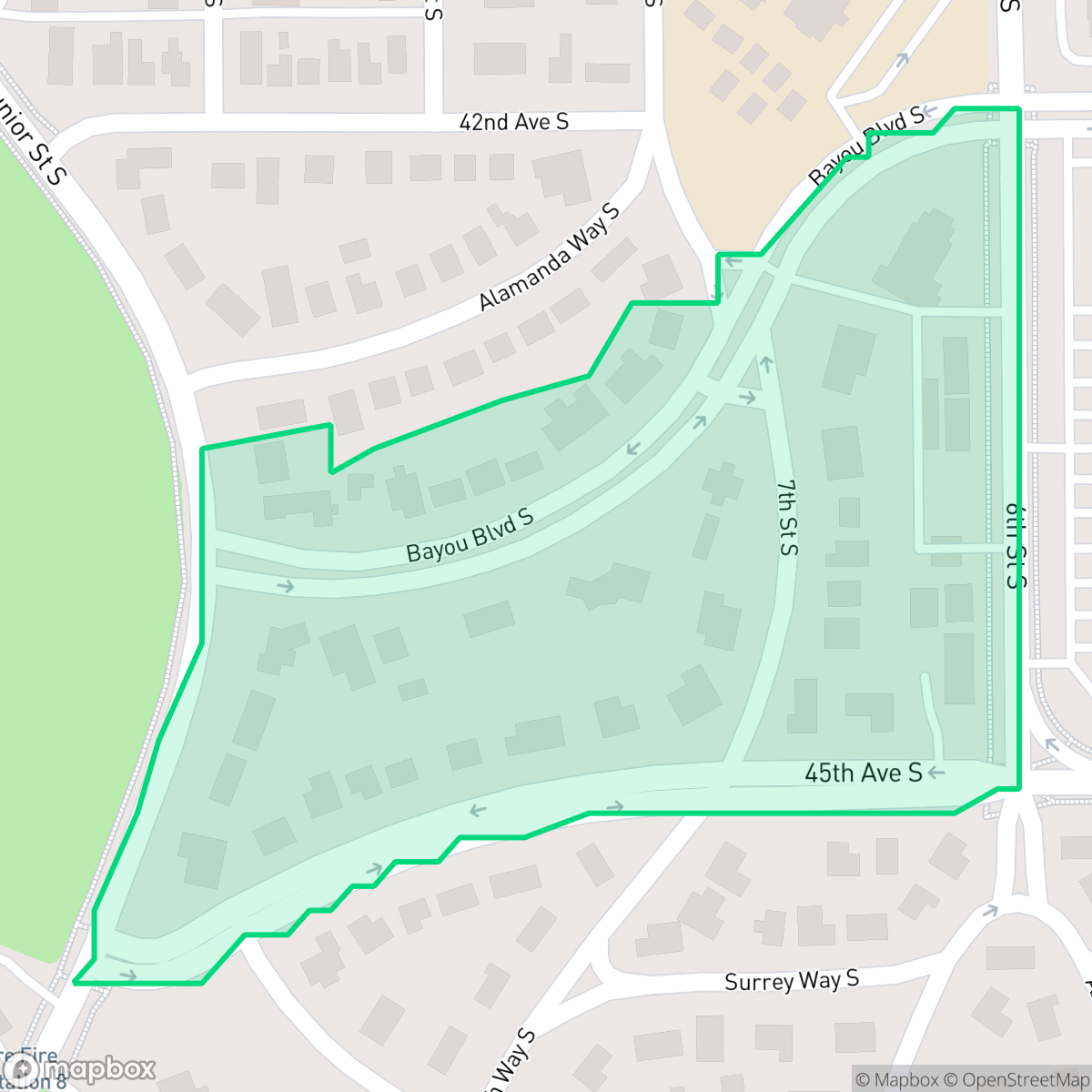
Lake Maggiore Park is a quiet, semi-rural residential enclave in south St. Petersburg defined by its proximity to the expansive Boyd Hill Nature Preserve. The neighborhood offers a peaceful, pet-friendly atmosphere with a mix of mid-century architecture and moderate walkability.
Key Highlights
About Lake Maggiore Park
Lake Maggiore Park, a neighborhood in south St. Petersburg, is defined by its namesake 363-acre lake, which was historically a tidal estuarine system known as Salt Lake. In the 1940s, the city constructed a dam to convert the tidal bayou into a freshwater reservoir, a pivotal engineering change that shaped the surrounding community. Development in the area began in the early 20th century, with housing stock featuring a mix of 1920s bungalows and 1950s ranch-style homes. The neighborhood is anchored by the adjacent Boyd Hill Nature Preserve, a 245-acre sanctuary formerly known as Lake Maggiore Park, which was renamed in 1958 to honor the city’s parks superintendent. Once a site for the Southland Regatta, the area has transitioned from a hub of mid-century recreational activity to a quiet residential enclave known for its ecological significance and proximity to natural habitats.
The neighborhood maintains a distinct semi-rural atmosphere, characterized by frequent open land and scattered homes nestled among woodland. Residents benefit from a complete lack of industrial activity, which contributes to a quiet and peaceful environment suitable for those looking to escape the noise of more urbanized sectors. The area is notably pet-friendly, with integrated green spaces and wide, low-traffic streets that encourage outdoor activity and pedestrian movement. According to iHuus data, the area offers a balanced demographic mix, making it a functional choice for a wide range of residents.
The area is well-suited for individuals seeking a subdued lifestyle, though prospective residents should consider specific environmental and economic factors. While the neighborhood provides a peaceful setting, air quality levels can occasionally pose risks to sensitive groups, and health insurance coverage rates remain lower than the city average. Additionally, while the neighborhood is generally stable, the lack of finalized flood studies means that residents should investigate specific property risks. Families moving to the area are served by the Pinellas County School District, which is recognized for academic stability and strong financial support, despite facing broader enrollment challenges.
Neighborhood Scores Across 15 Qualities
Housing density and spacing offer a moderate level of separation between neighbors, which is slightly higher than the average for St. Petersburg. According to iHuus data, this layout provides some buffer between properties without the isolation of more rural areas.
Sidewalks are available on one side of the street and safe crossings are present. This area offers slightly better pedestrian accessibility than the St. Petersburg average, according to iHuus data.
Typical tract housing characterizes the area, featuring modest yards and uniform rooflines. This visual profile sits slightly below the St. Petersburg average according to iHuus data.
Integrated green spaces and wide, low-traffic paths make this area significantly more dog friendly than the St. Petersburg average, according to iHuus data.
Frequent open land and scattered homes amidst woodland characterize this area, providing a more semi-rural atmosphere than the St. Petersburg average according to iHuus data.
Daily activity levels are slightly higher than the city average, reflecting a landscape that balances suburban convenience with peaceful outdoor spaces. Residents can find a subdued atmosphere centered around local parks and essential retail services.
Acoustic levels remain low with only infrequent sounds from distant traffic. This area is significantly quieter than the St. Petersburg average, according to iHuus data.
Frequent unhealthy air quality levels pose a significant risk to sensitive groups, with conditions remaining slightly worse than the St. Petersburg average according to iHuus data.
Industrial activity and heavy manufacturing are entirely absent from this area, providing a more residential atmosphere than the typical St. Petersburg neighborhood. According to iHuus data, the landscape consists of quiet streets, green spaces, and small-scale local amenities like coffee shops rather than warehouses or hazard sites.
Health insurance access among residents is lower than the St. Petersburg average, according to iHuus data.
Voting patterns and census indicators reflect a significantly more liberal political leaning than the St. Petersburg average, according to iHuus data.
Residents will find a varied demographic ranging from young professionals to seniors. This population spread is slightly more balanced across age groups than the typical St. Petersburg profile, according to iHuus data.
Flood safety levels in this area are slightly higher than the St. Petersburg average, though FEMA has not yet finalized a detailed flood study for this specific location.
Address-Level Insights for Lake Maggiore Park


iHuus Neighborhood Intelligence Insights
Get address-level neighborhood insights for Lake Maggiore Park
- Street-level scores — see how individual blocks compare, not just neighborhood averages
- Micro-zone boundaries — identify quiet pockets, flood boundaries, and walkable clusters before you visit
- 15 dimensions in full — walkability, noise, air quality, school quality, insurance coverage, population age profile, urban/rural index, and more
- Boundary risk alerts — know if your address sits near a block boundary where scores drop, the kind of detail no listing will ever mention
- School insights — individual school ratings and insights, not just district-level data
- Compare before you commit — side-by-side data across neighborhoods, down to block precision
No credit card required
Compare with Any Neighborhood
| Dimension | Lake Maggiore Park | Albert Whitted Airport |
|---|---|---|
| 🚶 Walkabilityavg 6.61 | ||
| 🔊 Acoustic Comfortavg 3.78 | ||
| 🤫 Privacy Indexavg 5.45 | ||
| 🎨 Visual Appealavg 6.33 | ||
| 🐕 Dog Friendlinessavg 5.45 | ||
| 🗺️ Urban-Rural Indexavg 6.19 | ||
| ✨ Neighborhood Vibeavg 3.5 | ||
| 🏥 Health Insurance Coverageavg 6.88 | ||
| 🌿 Air Qualityavg 1.87 | ||
| 🏭 Industrial Proximityavg 7.55 | ||
| 🌊 Flood Safetyavg 4.61 | ||
| 🗳️ Ideological Leanavg 6.01 | ||
| 👥 Population Age Profileavg 5.11 | ||
| 🔥 Fire Safety | ||
| 🏫 School Quality |
Lake Maggiore Park Rankings
School Districts Serving Lake Maggiore Park
School Insights for Lake Maggiore Park
Below average outcomes; significant attendance and academic challenges.
School Insights
See what's really behind every school rating near Lake Maggiore Park
- Individual school ratings — each school's own score with outcome context, not just a district average
- Enrollment & class size data — student-to-teacher ratio and how it compares to the state average
- Full demographics breakdown — ethnicity and gender composition for every school in the enrollment zone
- Every school in the district — all schools within the enrollment boundary ranked by rating, not just the closest one
- Grade levels & benchmarks — elementary through high school, with below/above state-average flags
No credit card required